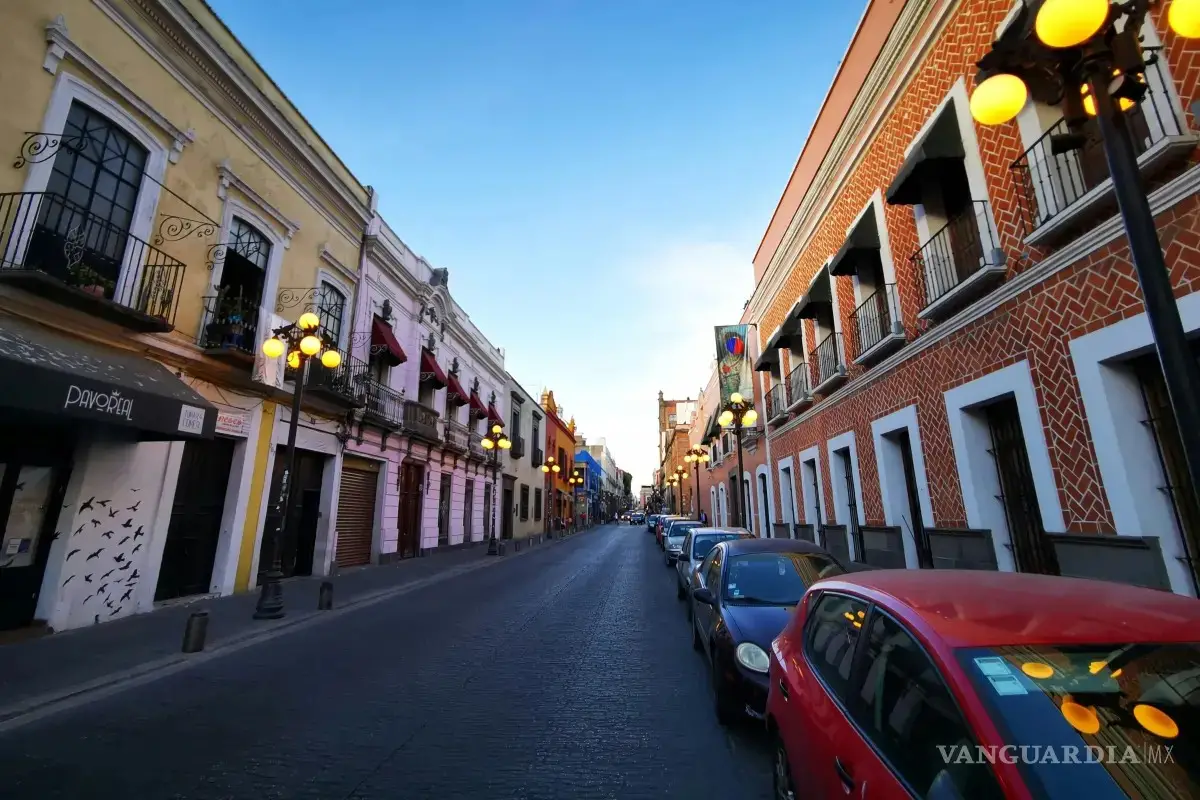

When someone dies in Heaven, the people of Puebla say, they go to Puebla. That’s what happens to me; from time to time, my fleeting attempts at virtue are rewarded with a visit to that beautiful city.
“For tongues and bells, Puebla’s are the best,” goes a Mexican saying. I don’t know about the gossip, but I do know about the morning and evening chorus of the thousand bells, chimes, and small bells that fill the sky of Puebla with their song, alongside the volcanoes.
I didn’t know that Puebla had earned the UNESCO designation of “Musical City,” a member of a very select group to which only a few cities belong, including Salzburg, Vienna, Prades, and other cities famous for their music or music festivals. Puebla has a very beautiful one: the Concert of the Bells. When that concert is played—only once a year—the city falls silent; every being and every thing is stilled; And obeying a common score and a single direction, the bell ringers of Puebla make their bells peal in a symphony that lasts an hour, in which one can hear everything from the great mother bells of the Cathedral to the small chimes of the old convents of Capuchin, Poor Clare, and Teresian nuns…
One of my speeches coincided some time ago with that unique recital. From a balcony open to the air, I heard the voices of those clear sopranos, bronze mezzos, and deep contraltos: the bells of Puebla. They sang here near and there far, an eternal and fleeting song, voices of centuries that in one instant resounded above the domes of the churches and in the next were lost among the volcanoes of Jesús Helguera.
How many cities in the world, I wonder, possess such a concert? What must the score be like for playing that music, that instrument that covers an entire city? Each bell tower is a performer; each bell a note; The whole city a concert hall.
Almost everything in life is easily forgotten. Sorrows and loves are things that, in the moment of experiencing them, seem made of rock, but with time, you discover they are made of clay. I have forgotten many things I should remember. I don’t forget, however, that concert of bells.
One of the times I went to Puebla, I arrived at a hotel that in the 19th century was a convent. The inn is small, tiny. It’s called El Mesón del Sacristán, and it has only six or seven rooms. Each one was a convent cell, I don’t know if it belonged to a monk or a nun. The window facing the street has an opening where a person can sit and read with their back to the bright daylight.
I was sitting there because the trip I was about to take was one of those “pajama trips,” that is, very early in the morning. My luggage was light—the luggage of someone who travels a lot is always light—and I was already packed. The hour was uncertain: still night, yet no longer night; already day, yet not yet day. Suspended in that uncertainty, I felt uncertain; there, by the window of that cell which yesterday knew eternities and today is an inn where nothing rests.
Suddenly, in the neighboring church, the first call to the first Mass rang out. There and at that moment, that bell rang, but its sound was not of that place nor of that time, but of all spaces and all ages. That bell returned me to my being, and I went out into the new day clothed in the music of eternity. In my solitude, I remember that now, and memories save me from loneliness.
Source: vanguardia