
From March to the present, federal and local authorities have carried out 12 cleanup and sanitation campaigns in various municipalities of Tlaxcala as part of the national project to revitalize the Atoyac-Zahuapan River Basin, implemented by Mexican President Claudia Sheinbaum Pardo.
The cleanup of the Atoyac River is included in Presidential Commitment 92 and represents one of the most significant environmental actions of the current six-year term, along with the recovery of the Lerma-Santiago and Tula rivers, all of which suffer from high levels of pollution due to industrial and urban discharges.
During the presentation of the program’s progress, the president recognized the water treatment model implemented in Tlaxcala as an innovative example that will be replicated in other regions of the country.
She emphasized that the system developed by Governor Lorena Cuéllar’s team has shown positive results, as it allows for the recycling of treated water for irrigating parks and agricultural areas.
As part of the National Water Plan, the Mexican government will invest 1.5 billion pesos in the cleanup of the Atoyac River. This investment, earmarked for the comprehensive cleanup of the Atoyac-Zahuapan River, includes an initial investment of 500 million pesos this year for actions implemented in Tlaxco, the river’s source.
The cleanup plan employs a comprehensive strategy that includes the efficient operation of treatment plants using sustainable technologies such as constructed wetlands, coordination among the three levels of government to ensure their operation, oversight of companies to ensure compliance with environmental regulations, and the replacement of drains that flow directly into rivers with marginal systems connected to treatment plants.
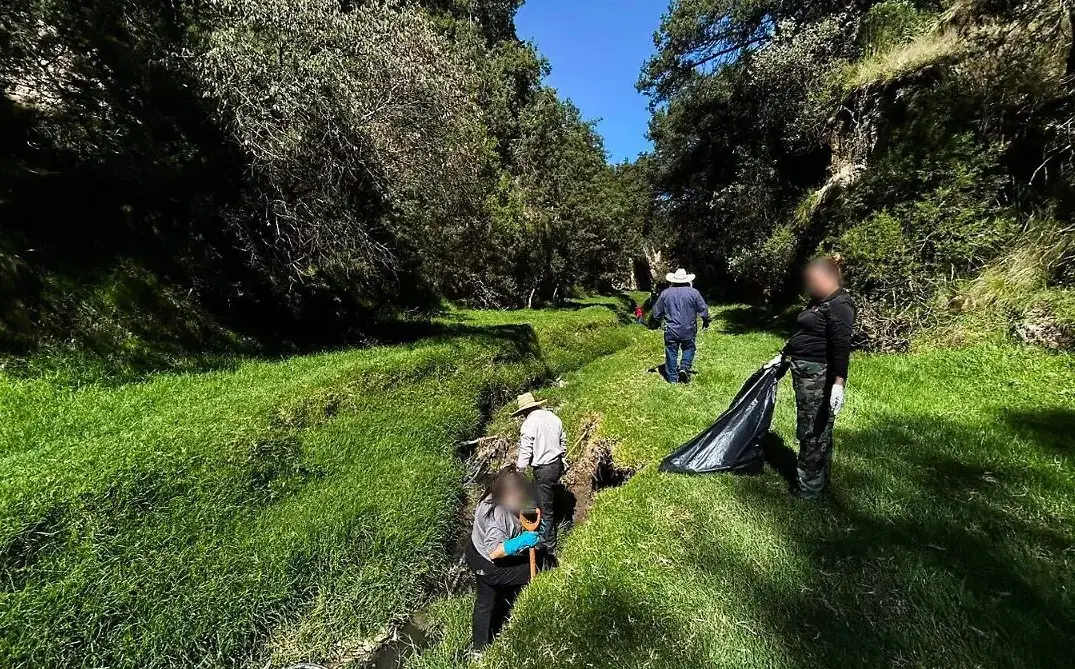
In Tlaxcala, one of the most recent clean-up efforts took place on October 29th in the Las Armas Ravine, within the Atoyac River basin, in the municipality of Tzompantepec. Personnel from the Federal Attorney General’s Office for Environmental Protection (PROFEPA), the National Water Commission (CONAGUA), the Ministry of Environment and Natural Resources (SEMARNAT), the National Forestry Commission (CONAFOR), state and municipal authorities, and local volunteers participated.
During the activity, brigades were formed to carry out trash removal, pruning, weed clearing, and dredging along an area of approximately two kilometers. The collected waste was removed from the riverbed and sent for proper disposal.
These actions aim to restore natural spaces, improve water quality, prevent pollution, and promote citizen participation in environmental stewardship. To date, 12 clean-up and sanitation efforts have been carried out in various municipalities, and three more are scheduled before the end of the year.

Source: oem