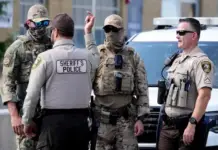

It was not a drill or a training exercise: U.S. security and intelligence forces are actively operating in Mexico to apprehend high-profile criminals.
On November 6, Texas Governor Greg Abbott, a Republican, announced that the Department of Homeland Security (DHS) had arrested the alleged leader of the Sinaloa Cartel in Ciudad Juárez. The mission unfolded in Mexican territory over nine months. According to Abbott, the operation was assisted by the Texas Department of Public Safety, as well as the Office of the Director of National Intelligence and the National Counterterrorism Center, a key program in the Trump administration’s crusade against drug cartels.
Although the arrest was carried out by the Special Forces Airmobile Group of Mexico’s National Defense Secretariat, this was an operation directed and designed by Washington. The decisions were made north of the Rio Grande. The FBI, the Texas Department of Public Safety’s Air Operations Division, and the Air and Marine divisions of the Border Protection Agency gathered intelligence throughout the year. The capture of Leonardo Daniel Martínez Vara, alias “El Pato,” stemmed from the U.S. State Department’s decision to designate six Mexican cartels as terrorist organizations. “El Pato” faces charges of murder, kidnapping, drug trafficking, and extortion. Despite this, his arrest did not appear to be a priority in Mexico. The detention reveals a paradigm shift in the security relationship between the United States and the Mexican government.
The Director of National Intelligence for the Trump administration, Tulsi Gabbard, made it clear that the capture of “El Pato” was neither the first nor the last time that Washington would deploy its security apparatus on Mexican soil. In a statement, Gabbard declared: “We will not allow the drug cartels that threaten Americans to move freely, whether in the United States or across the border in Mexico. Our team at the National Counterterrorism Center is on constant alert, preparing for the moment to strike.” Gabbard’s words are significant because she is a highly critical figure regarding the use of U.S. security forces in other parts of the world. Gabbard has publicly opposed American interventions in the Middle East and Ukraine. Now, Mexico is the exception. This represents a strong indication of how the Trump administration is rethinking its security priorities in the Western Hemisphere, particularly against the threat of cartels that control entire territories in Mexico, Venezuela, and Colombia.
Last week, two high-ranking U.S. government officials told NBC News that the White House is preparing to deploy military forces in Mexico to combat the cartels. The training exercises, involving the CIA and elements of the U.S. Army’s Southern and Northern Commands, are already underway. Publicly available information suggests the missions aim to use drones to attack high-profile criminal targets and destroy synthetic drug labs. The leak was published just hours after the assassination of Carlos Manzo, the mayor of Uruapan who stood up against the cartels and whose death has sparked a nationwide campaign of outrage in Mexican civil society.
The U.S. policy of military intervention in Mexico is being promoted by two powerful figures in President Donald Trump’s inner circle: Marco Rubio, Secretary of State and head of the National Security Council, and Stephen Miller, senior advisor to the White House. What do Rubio and Miller have in common regarding Mexico? Both have commissioned the creation of a list of Mexican politicians linked to organized crime. Those included could face anything from visa cancellations to federal indictments brought by a grand jury. Washington is preparing both a military and a political offensive.
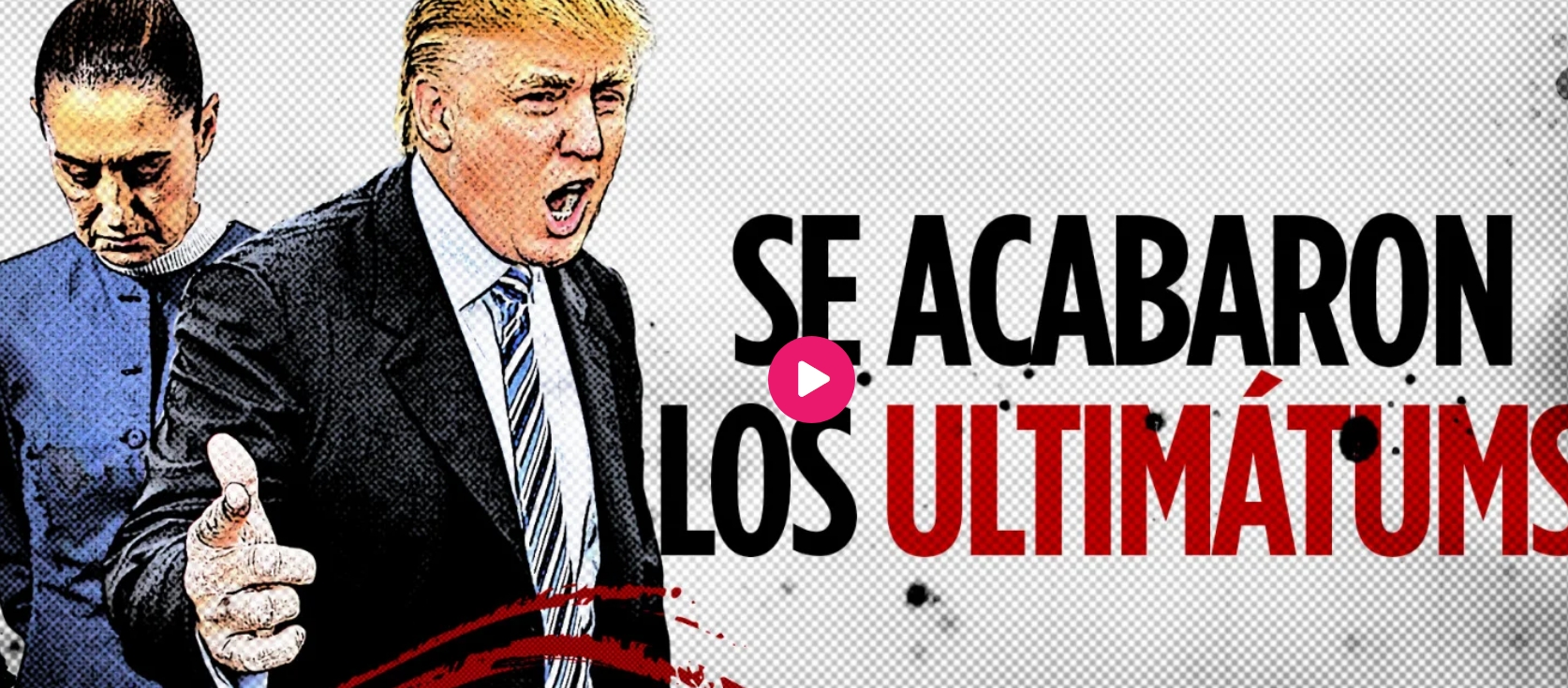
Mexican President Claudia Sheinbaum’s reaction to the possibility of a U.S. Special Forces incursion into Mexican territory was expected. The president publicly insists that she will defend Mexican sovereignty and will not allow operations by foreign agencies without her government’s authorization. However, the announcement made by the governor of Texas on November 6th demonstrates that Sheinbaum does not have the final say. Washington’s ultimatums to Mexico are over. The capture of the Sinaloa Cartel leader in Ciudad Juárez was carried out due to the determination of U.S. authorities.
In January, U.S. Secretary of Defense Pete Hegseth held a videoconference with the Mexican Secretaries of National Defense, Ricardo Trevilla, and the Navy, Raymundo Morales. According to a report in The Wall Street Journal, Hegseth threatened the Mexican officials that the Donald Trump administration would take “unilateral action” if Mexico did not adopt a more aggressive stance against criminal organizations. A month later, in February, the Sheinbaum administration transferred Rafael Caro Quintero and 28 other cartel leaders held in Mexican prisons to the United States. Subsequently, in April, Mexico sent an additional 26 criminal leaders.
Since then, U.S. security and intelligence forces have deployed aircraft in Mexican airspace to gather intelligence on the cartels. In February, a Boeing RC-135V River Joint reconnaissance aircraft from the Air Force flew over the Gulf of California. As a pressure tactic, its flight path was made public. The surveillance has not ceased. This week, a pair of Boeing CH-47 Chinook helicopters were detected flying over Mexican airspace near Nuevo Laredo, the most important land border crossing in North America for trade and a criminal stronghold of the Northeast Cartel. This is yet another example of unilateral actions taken by the U.S. security apparatus.
The Trump administration maintains an ambivalent relationship with Mexican security officials. On the one hand, the State Department publicly acknowledges that Omar García Harfuch, the Secretary of Citizen Security, has facilitated unprecedented coordination with Washington. On the other hand, the Department of Defense has expressed doubts about its counterparts in the Mexican Armed Forces. According to people familiar with the matter, this explains the leaks and unilateral measures taken by the Trump administration.
More than a year ago, the head of the U.S. Northern Command told Congress that cartels control a third of Mexican territory. This assertion was reinforced last week with the murder of Carlos Manzo in Michoacán, where the war between the Jalisco New Generation Cartel and Carteles Unidos has escalated violence to levels comparable to an armed conflict in sub-Saharan Africa: explosive drones, landmines, armored vehicles, and .50 caliber automatic weapons.
Mexico represents the new U.S. national security priority. Michoacán, the state for which President Claudia Sheinbaum just announced a pacification plan, is no exception. Open data intelligence suggests that U.S. government security agents have conducted covert operations in the region.
All signs point to the fact that ultimatums are over and patience has run out. Washington is adopting a new stance. The arrest of the Sinaloa Cartel leader in Ciudad Juárez, the statements by the Director of National Intelligence, the surveillance flights over Nuevo Laredo, the leaks about military exercises against the cartels, and the covert operations in Michoacán all lead to the same conclusion: the Americans are already in Mexico.
Source: codigomagenta