
The type of climate in a given region is determined by various conditions, including altitude, latitude, topography, distance from the sea, and ocean currents. These factors influence what is known as “weather,” which in turn relies on other elements such as temperature, pressure, wind, humidity, and precipitation to describe the atmospheric conditions in a location over a short period.
The Köppen climate classification system is generally used to classify climates, although the Thornthwaite system also exists. The latter takes into account biodiversity and the effects of climate change on it. Other systems, such as Bergeron and Spatial Synoptic, focus on the origin of the air masses that define a region’s climate.
Due to climate change, the planet is currently undergoing a process of redistribution in which even the slightest modification in the average annual temperature causes changes in habitats and their conditions.
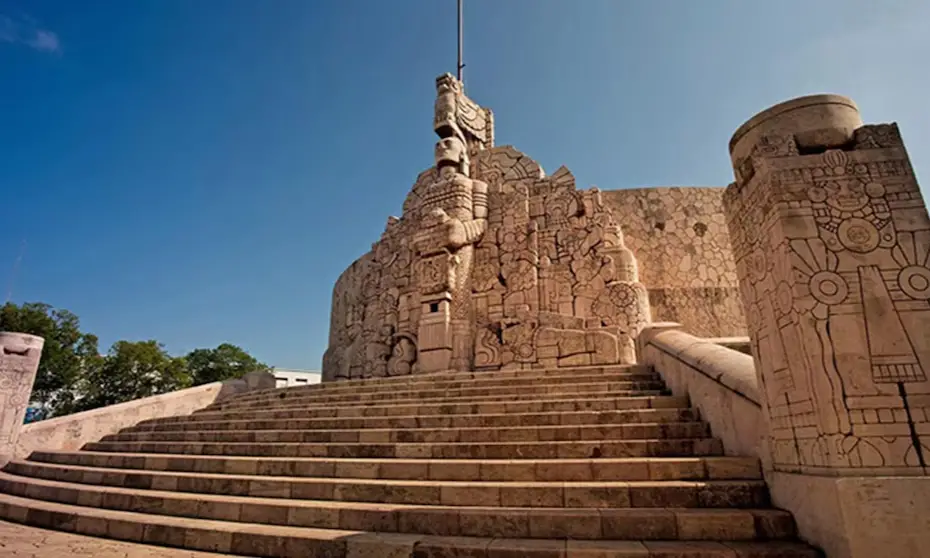
In this context, here’s the weather forecast for Mérida on November 13th.
The probability of precipitation for this Thursday in Mérida is 5% during the day and 18% throughout the night.
Meanwhile, cloud cover will be 67% during the day and 25% at night.
As for the temperature, a high of 29 degrees Celsius and a low of 21 degrees Celsius are forecast for this region. Ultraviolet radiation is expected to reach a level of up to 3.
Window gusts will reach 32 kilometers per hour during the day and 28 kilometers per hour at night.
This is the climate in Mérida
Mérida, and the Yucatán Peninsula in general, is characterized by a warm, sub-humid climate with rain during the summer. The average temperature in this region is 26.6 degrees Celsius.
This region of Yucatán also has a long rainy season, which runs from May to January, although there can also be precipitation during the dry months. However, these showers rarely last more than an hour and are not an impediment to enjoying activities on the beaches.
The hottest season is from April to August, when the temperature reaches up to 40 degrees Celsius (104 degrees Fahrenheit), while from September to January, frequent winds bring clouds and coolness to the city.
What is the climate like in Mexico?
Mexico is one of the most biodiverse countries in the world. Its geographical location, which gives it a wide variety of climates, has made it home to 12% of the world’s species (12,000 of which are endemic).
The country is located in two completely different zones, as it is crossed by the Tropic of Cancer: on one side there is the tropical zone, and on the other, a temperate climate. However, these are intertwined by the oceans and topography that surround Mexico, giving rise to even more distinct climates.
Given this, it is not surprising to find that in the highest parts of Chihuahua, temperatures can reach -30 degrees Celsius, while in the Mexicali desert, the thermometer can climb to 50 degrees Celsius.
The country has a warm, rainy zone that includes the low-lying coastal plains of the Gulf of Mexico and the Pacific; warm-humid and warm sub-humid regions that can be found on the coastal plains of the Gulf of Mexico, the Pacific Ocean, the Isthmus of Tehuantepec, northern Chiapas, and the Yucatán Peninsula; Dry climates are found in the Sierra Madre Occidental and Oriental mountain ranges, the upper basins of the Balsas and Papaloapan rivers, parts of the Isthmus of Tehuantepec, Yucatán, and Chiapas; temperate zones, mostly north of the Tropic of Cancer; and semi-desert zones, north of the Central Plateau.
The country’s average temperature is 19 degrees Celsius; however, cities like Mexicali, Culiacán, Ciudad Juárez, Hermosillo, Torreón, Saltillo, and Monterrey experience truly extreme temperatures.
Regarding record high and low temperatures in Mexico, San Luis Río Colorado, a city in Sonora bordering the Gran Desierto de Altar in Baja California, reached 58.5 degrees Celsius on July 6, 1966. In contrast, the lowest temperature was recorded on December 27, 1997, in the municipality of Madero, Chihuahua, at -25 degrees Celsius.
Experts assert that due to climate change, Mexico will experience a decrease in annual rainfall and a considerable increase in temperatures in the future. Furthermore, farmers and ranchers have suffered significant losses due to droughts and severe flooding in recent years. Meanwhile, during periods of high heat, there has been an increase in the number of environmental emergencies in major cities such as Mexico City and Monterrey.

Source: infobae