
Trailero Jarocho” learned about the Tampico bridge through a heavy vehicle driving simulation program
Itzia Rangole / The Sun of Tampico
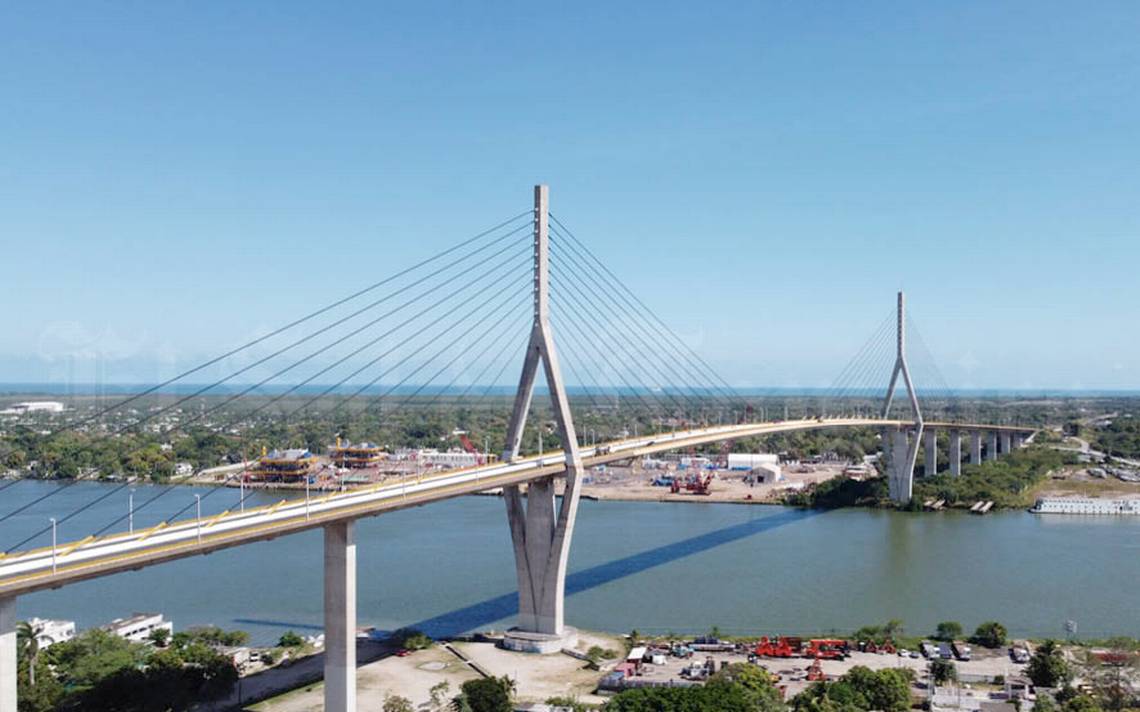
Although in the south of Tamaulipas, the Tampico bridge is a common reference point. Apparently, in other places they doubt its existence. That was the case of “Trailero Jarocho”, a “gamer” with a particular taste for simulation games, who upon seeing the cable-stayed bridge commented: “It looks cute, but I don’t know if this bridge exists in real life.”
At the beginning of the video, the man’s voice is heard saying, “I don’t think I’ve ever been through this part of the map.” On his YouTube account, “Trailero Jarocho” shares his performance in different driving simulators to just over three thousand followers.
Why do virtual reality experiences attract so much attention?
As their name indicates, virtual reality or simulation games are programs that allow players to enter a fictional scenario created to give the sensation of being real.
The Technological Institute of Castilla y León (Itcl) defines them as follows: “virtual reality games aim to reproduce the visual, auditory and physical sensations that would occur if we were really in the simulated environment.”
Benefits of driving simulation games
If “Trailero Jarocho” was able to “drive” across the Tampico bridge, which he did not even know existed, it was thanks to a truck simulation video game.
According to the Technological Institute of Castilla y León (Itcl), together with the simulation and training company Apex, driving simulators can provide the following advantages:
Be a means of training
Promote analysis of driver behavior
Safe training of high-risk scenarios (plan actions for unexpected situations)
Practice reaching maneuvers and what to do when lane invasion
Know how to operate the load in different types of environments (weight distribution)
Probable decrease in accident rates from 15% to 50%
Likely increase in driver productivity by 10% to 15%
Source: elsoldetampico