
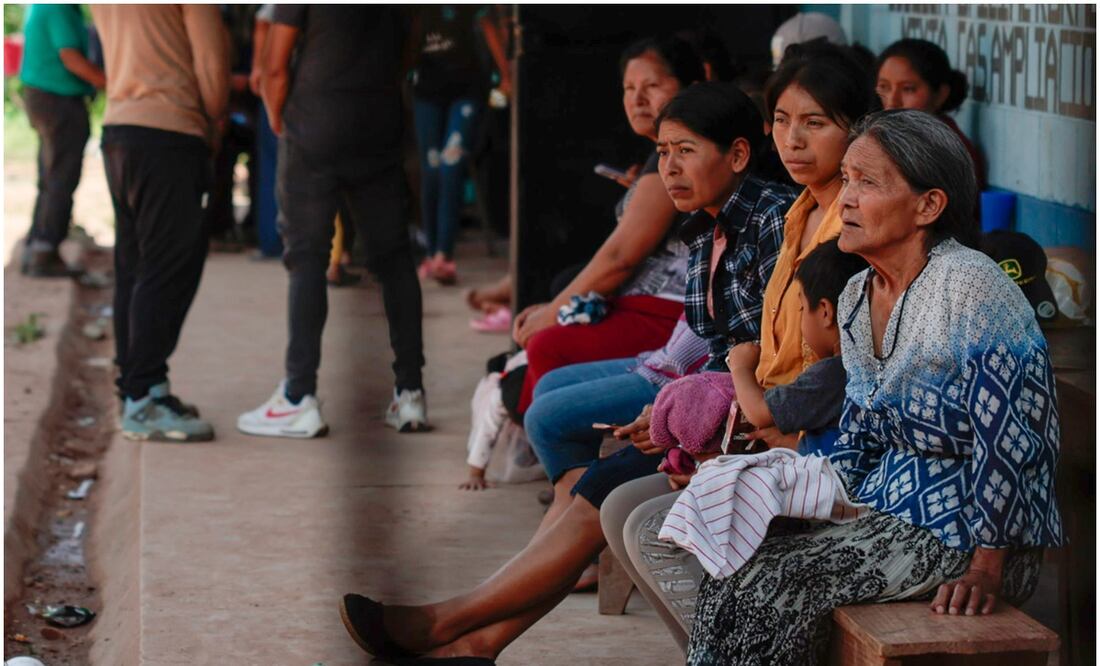
The representation of more than 700 delegates, men and women from Ocosingo who commemorated the Indigenous Congress held 50 years ago in Chiapas, agreed to strengthen unity to promote actions and develop a plan to defend the land and territory in the face of the growing destructive threat.
In a statement they said they are aware that they are damaging “mother earth,” that they must act immediately and there is a need to reconcile and make agreements to face these threats together.
They affirmed that communities and grassroots organizations must walk in unity and also build alliances that strengthen; develop a strategy to involve young people and children, because they are the most exposed to the risks.
After two days of work carried out in the Las Tazas ejido, in the Lacandon jungle, the participants recognized that social organizations are tools that must help weave the new unity of the peoples and communities, to form and animate a movement in defense of life, land and territories.
The unity agreements they adopted originated and were nourished by their roots, by religious principles and values, by the history of Quiptic ta Lecubtesel (Our strength to progress) and the Union of Unions that were inspired and supported by the 23 agreements of the Indigenous Congress held in 1974 in San Cristóbal de las Casas.
These agreements, they added, are the force that encourages them to walk in unity, as their mothers and fathers did; they are agreements that will be the basis of coordinated work plans and programs and to build alliances in the territories.
The delegates stated that the Indigenous Congress of 1974 established a new time of organization and struggle for the indigenous communities of Chiapas and Mexico.
That is to say, they said, it turned our grandmothers and grandfathers, mothers and fathers who participated into “the new Fray Bartolomé de Las Casas” who worked to defend their rights to land, health, education and good trade.
“After half a century of work and progress, we are, and continue to stand and walk towards a new land of justice, equality and happiness for all,” they stressed.
They acknowledged that during this process they have had setbacks, difficulties and pains, although the most important thing is that despite the divisions and conflicts they have the capacity, humility and strength “to reconcile and build a new union.”
Agreements on education, culture and health
In education and culture they agreed to develop an internal community regulation for good education that regulates the relationships between students, teachers and parents in alliance with this purpose.
As well as demanding that the Education Secretariat ensure that the plans and programs have educational content according to the contexts, with inclusion and respect for the language, culture and community knowledge.
That it also includes a training and updating plan for community educators with the aim of improving their performance with intercultural and bilingual education methodologies.
In terms of health they agreed to recover and implement a preventive program based on orientation and awareness to prevent diseases, incorporate traditional knowledge and medicinal plants and rescue the Tzeltal food culture.
Source: eluniversal