
On the morning of March 16, 1971, the main newspapers in Mexico published on their front pages the results of a major police operation: “20 Mexican terrorists who were bank robbers were captured.” The information detailed the modus operandi of the Revolutionary Action Movement (MAR), an organization that seemed to be taken straight from the movie Ocean’s Eleven or the series La Casa de Papel.
That operation managed to stop the guerrilla group specialized in bank robberies. Although at that time there were “bank robbers” all over the country, none of them had confessed to having participated in 19 bank robberies in a period of two years.
This criminal record was unprecedented considering that a study by the universities of Sussex and Surrey revealed that statistically it is more likely to go to jail than to achieve a third successful robbery in a row.
According to press reports declassified by the Ministry of the Interior (SEGOB) and consulted in the National General Archive (AGN) by Infobae Mexico, members of the MAR guerrilla group were arrested in areas called “Guerrilla Schools” located in different parts of the country, in Xalapa, Veracruz; Acapulco, Guerrero; Pachuca, Hidalgo; and even Mexico City.
The group trained to rob banks
Press reports extracted from the AGN in possession of Infobae Mexico recorded the capture of a guerrilla group trained in North Korea.
The effectiveness of MAR in its robberies was not a coincidence. After their capture, the assailants revealed that they received military training sponsored by the government of North Korea, one of the countries along with the Soviet Union that were sympathetic to the guerrilla struggle in Latin America. The main objective of the robberies was to raise funds for social mobilizations and other activities of the MAR group.
“These individuals (all of Mexican nationality) confessed before the General Directorate of Preliminary Investigations of the Attorney General’s Office that they received military-type training for guerrillas, handling of weapons and explosives, sabotage, robbery and assault in Pyongyang,” reads the press report compiled by the SEGOB.
One of the key pieces for the effectiveness of this group of assailants was its leader: Alejandro López Murillo, a 26-year-old who had worked at the Banco de Comercio in Morelia, who knew exactly how financial institutions operated, as well as the weak points of their security in order to be able to commit the robberies.
The members of the MAR dedicated themselves to watching banks and commercial houses for weeks to facilitate their robberies, in addition, they often used stolen cars and taxis for their operations.
After the robbery, they took the money to the border to exchange the dollars for Mexican pesos and distribute it. Part of the “loot” was sent to the National Revolutionary Civic Association (ACNR), led by Genaro Vázquez, and Lucio Cabañas’ guerrilla group.
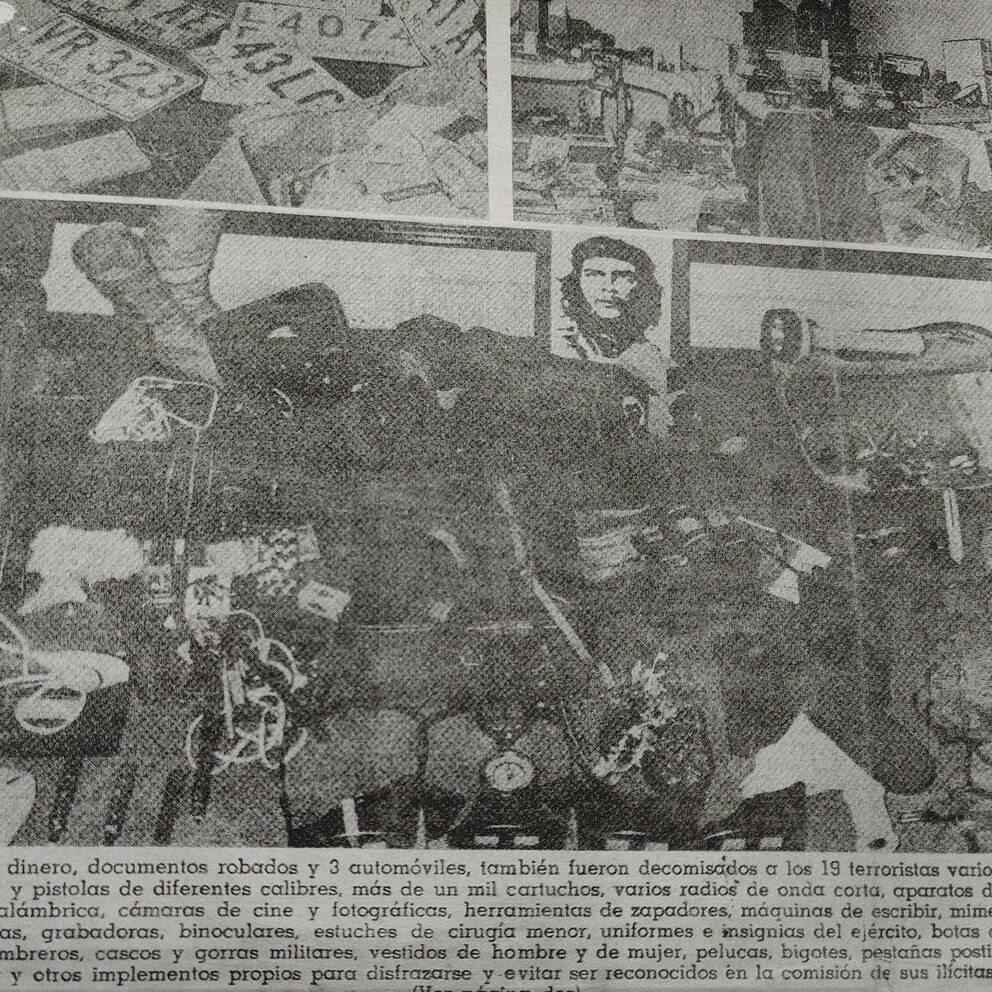
The MAR group devoted a large part of its resources to cover-up and identity theft to carry out its robberies. At the time of their arrest, they were even seized documents with false identities, cloned license plates, wigs, false nails and moustaches, disguises and weapons.
“When they were arrested, they were found with several M-1 automatic rifles and pistols of different types; more than a thousand cartridges, shortwave radios; wireless intercom devices; film and photographic cameras, flashlights, binoculars, minor surgery kits, army uniforms and insignia, clothing; wigs, moustaches and false eyelashes among other accessories for disguises,” reads the reports extracted from the AGN of the SEGOB dated March 16, 1971.
The last great assault of the MAR
Upon being captured, some of the MAR members confessed to the General Directorate of Preliminary Investigations of the Attorney General’s Office that they participated in 19 bank robberies in the states of San Luis Potosí, Michoacán, Querétaro and Mexico City.
Their last major robbery was on a bus with money from the Banco de Comercio in Morelia, Michoacán, on December 19, 1970, which required a plan drawn up with members in different parts of the city.
According to the report published in the newspaper La Prensa on March 16, 1971, the “Expropriation Command,” headed by Alejandro López Murillo, traveled to the city of Morelia and set up their base of operations in a room located on 49 Brasil Street, for which they paid 150 pesos at that time, and determined that one of its members would stay at the York Hotel on 5 de Mayo Street, two days before, on the night of December 17.
Hilda, one of the women who ended up detained, had been ordered to notify them of the departure time and the number of the bus that carried the money. After the warning, the assailants learned that the shipment would arrive at 7:00 a.m. Four of the accomplices went to a bus terminal divided into pairs.
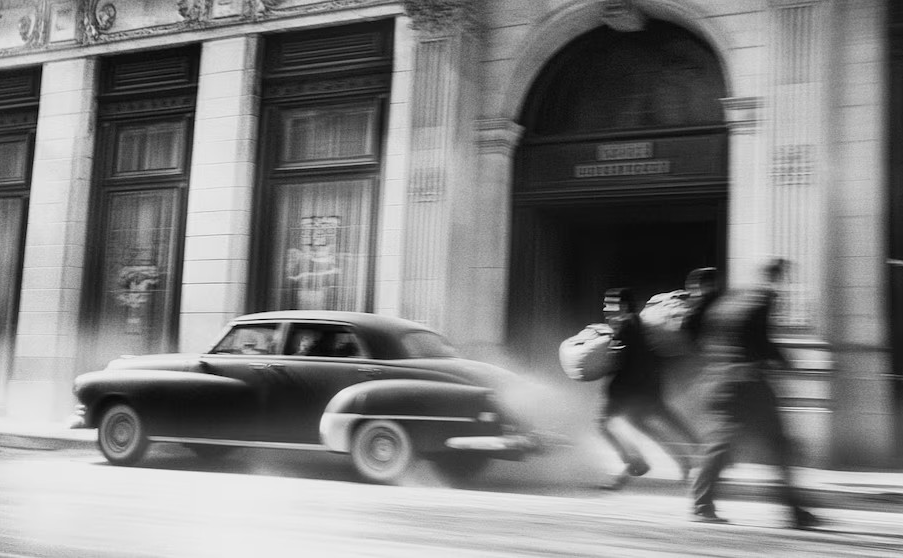
One of the pairs arrived at the terminal disguised as “Secret Service agents” in a cloned MAR van. They were tasked with guarding the entrance gate, while other members planned to steal a vehicle to go to the terminal. When they were unable to do so, they decided to call a taxi and when they reached their destination they tied up and gagged the driver to take the car.
When the passengers got off the bus carrying the money, the members who were in the taxi assaulted the bank employees carrying an M-2 machine gun, then they stole the boxes and packages without knowing in detail how much money it was. It was not until they found out, through the newspapers in the days after the robbery, that they had taken more than a million pesos, which they had begun to distribute since they fled in their vehicles.
Source: infobae