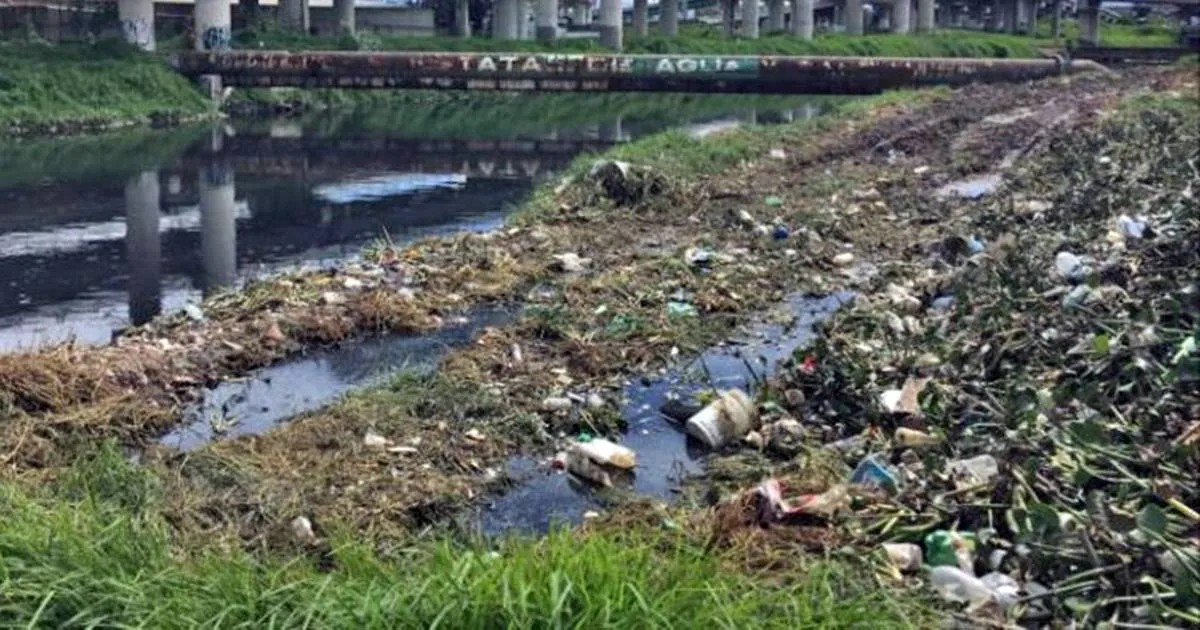

The heavy rains recorded in the Toluca Valley, State of Mexico, have increased the runoff of solid waste, oils, and pollutants into water systems.
Specialists point out that this situation worsens the degradation of water bodies such as the Lerma River, which receives waste from multiple municipalities. The lack of infrastructure to manage these flows puts water quality and public health at risk in the region.
Stormwater pollution causes blockages and overflows
Sebastián Rodríguez, an environmental specialist at the Autonomous Metropolitan University (UAM), explained that the accumulation of trash in streets and sewers, combined with stormwater runoff, causes blockages and overflows. This, he stated, leads to the mixing of wastewater with industrial and domestic waste.
“When the rains are intense, they carry away everything in their path: plastics, vehicle oils, chemicals, and trash. The drainage system collapses because it doesn’t have the capacity to handle the flow and pollutants. The result is that this waste ends up in rivers like the Lerma, which already has critical levels of degradation,” he commented.
The specialist highlighted that the Lerma River receives discharges from at least 12 municipalities in the Toluca Valley, including Toluca, Lerma, and Metepec. He emphasized that untreated waste accumulates in its channel, affecting its biodiversity and natural water cycles.
“The problem is not just the amount of water, but what it carries with it. Pollutants from urban, industrial, and agricultural areas converge in the Lerma. This generates a toxic saturation that impacts aquatic species and, in the long term, the communities that depend on these resources,” he noted.
Rainwater harvesting systems would help reduce velocity
Rodríguez emphasized the need to implement green infrastructure to mitigate the impact. He mentioned that projects such as rain gardens, green roofs, and rainwater harvesting systems would help reduce the velocity and volume of water reaching drains.
“Traditional infrastructure is no longer sufficient. We must integrate nature-based solutions: areas that absorb water, retain sediment, and filter chemicals. A rain garden, for example, reduces the load on drainage and improves the quality of the water that reintegrates into the hydrological cycle,” he emphasized.
Finally, the researcher called on authorities and citizens to address the problem comprehensively. He noted that without proper waste management and sustainable urban planning, episodes of rainwater pollution will recur.
“It’s not just about building more infrastructure, but about changing how we manage waste and design cities. If we don’t reduce waste generation and control the substances that end up on the streets, rain will continue to be a vehicle of pollution. Community engagement is key to protecting our water resources,” he concluded.
/https://wp.lajornada.prod.andes.news/wp-content/uploads/2025/05/contaminacion-pluvial-edomex.jpeg)
Source: lajornadaestadodemexico