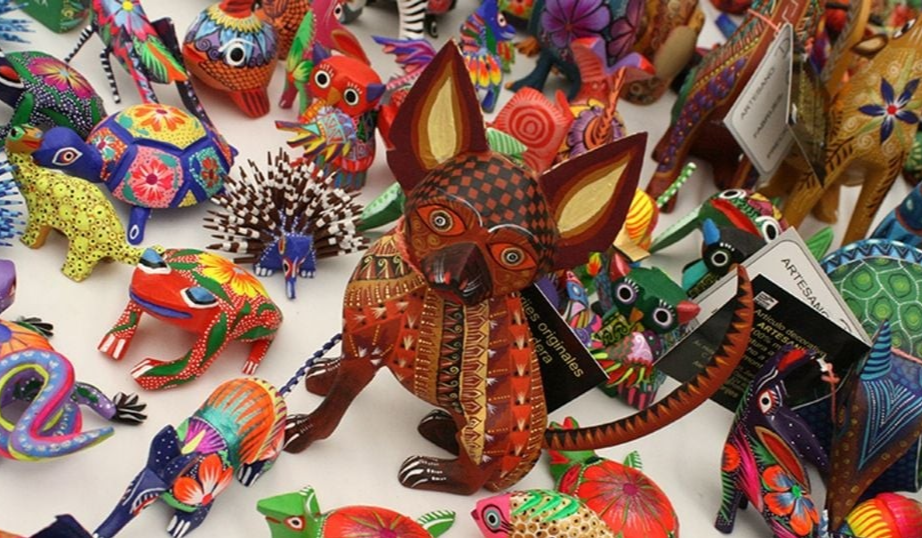

San Antonio Arrazola, a corner nestled in the Central Valleys of Oaxaca, has become a global symbol thanks to its distinctive production of alebrijes: figures carved in softwood that combine the real and the imaginary.
These pieces, recognized for their intense colors and hybrid compositions, have achieved prominent placement in both international galleries and high-profile cultural events, such as the Parade of Monumental Alebrijes in Mexico City. For the tourism and cultural sectors, this phenomenon represents an exemplary case of territorial branding and sustainable economic development anchored in local identity.
The Alebrijes of Arrazola
Arrazola, located at the foot of Monte Albán and less than half an hour from Oaxaca City, is much more than a picturesque town; it is a community where creativity has been inherited as a daily craft.
Its history began with an old sugar plantation, but it was the visionary talent of Don Manuel Jiménez Ramírez that forever transformed its destiny. Inspired by the wildlife that surrounded him and with Zapotec and Mixtec roots, this master craftsman molded the first alebrijes in wood, combining indigenous tradition with dreamlike expression.
Through meticulous artisanal processes, from the selection of fresh copal to freehand painting without stencils, the families of Arrazola have made this discipline a source of income, pride, and global exposure.
Currently, the Don Manuel Jiménez House Museum also offers workshops, exhibition spaces, and guided tours that promote community-focused cultural tourism.
Thus, the creations not only tell a story of visual fantasy, but also one of resilience, artisanal innovation, and economic empowerment.
This universe of unreal forms and vibrant colors continues to be, from Oaxaca to the world, the living symbol of the identity that the alebrijes of Arrazola represent with unparalleled force.

Source: elmanana