
The company estimated that the average cost per night in the capital will be $68, or 1,289 pesos at yesterday’s exchange rate, while in Monterrey, Nuevo León, it will be $58 (1,099 pesos), and in Guadalajara, Jalisco, it will be $46 (872 pesos).
The platform announced, through its analysis “The Role of Airbnb in the 2026 FIFA World Cup,” that Mexico City will receive 299,000 tourists seeking to attend the five World Cup matches to be held between June 11 and July 5 in the city, of which 44,000 will use its service.
In the country’s capital, the government is working with neighboring states, such as Puebla, Morelos, and the State of Mexico, to expand tourism offerings for international visitors.
“Airbnb’s contribution to the economic impact of the World Cup in Mexico City depends largely on the number of guests using the platform. (…) This figure includes approximately 44,000 Airbnb guests, who are expected to contribute 274,000 nights of accommodation,” the study detailed.
The platform estimated that temporary accommodation rentals in the capital will generate a revenue of 246.4 million pesos, meaning each host will earn 34,000 pesos for stays of less than 14 nights.
“These revenues could have an especially significant impact on women, who represent 50 percent of Airbnb hosts in Mexico, and on older adults, who represent 13 percent. This opportunity may increase people’s willingness to host on Airbnb,” the report stated.
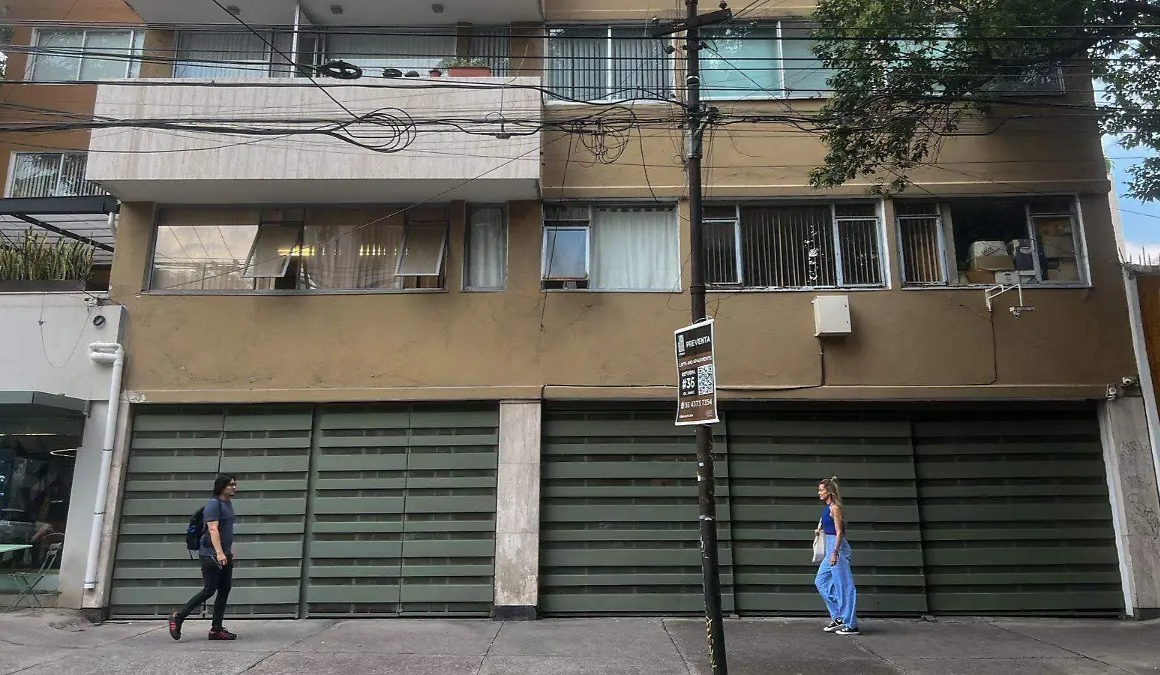
Although a specific number has not been specified, it is expected that due to the World Cup, more hosts will join the platform near the Azteca Stadium, located in the Santa Úrsula Coapa neighborhood, south of Mexico City.
According to the study, its guests will generate a total of $345 million in revenue in service sectors, or more than 6.541 billion pesos. The most benefited sectors will be hospitality establishments, such as restaurants; tourism activities, followed by retail businesses, such as stores, shopping centers, and markets; beverages and tobacco; and finally, culture and sports.
In addition, Airbnb users will contribute 197 million pesos to the GDP and 13,070 new jobs will be created in all essential tourist needs.
“A portion of the tourist population will stay in accommodations rented through Airbnb. Consequently, guest spending on Airbnb during the World Cup strengthens the economic sectors of host cities through increased revenue, added value, and job creation,” the company stated after signing an agreement with FIFA, which plans to expand its services.
The companies anticipate that the World Cup will generate high demand for Airbnb use among tourists, and this effect will last five years, as tourists arriving in Mexico City will decide to return. Therefore, they estimate that 178,000 additional room nights will be generated during this period, in addition to the 274,000 that the World Cup will generate in June and July 2026. This will generate an economic impact of $37 million, or 26.6 billion 520 thousand pesos, from 2026 to 2030.
“The World Cup will have an impact on tourism in Mexico City for the next five years. In particular, FIFA estimates that 65 percent of World Cup tourists will return to the host cities. Within this group of visitors, some tourists will stay in accommodations rented through Airbnb,” the analysis stated.
And what about housing for Mexico City tenants?
For housing specialists, these predictions are not encouraging for the population living near the Azteca Stadium.
Silvia Emanuelli, general coordinator of the civil society organization Habitat International Coalition Latin America, pointed out that Airbnb’s offerings could have negative impacts on the local population, such as labor exploitation, environmental exploitation, and displacement of indigenous populations, since tourism extracts wealth from the territories and tends to take advantage of the location, beauty, and vitality of the areas promoted for tourist stays and entertainment.
“Airbnb housing listings could increase in areas closer to the Aztec state, such as Santa Úrsula Coapa in the Coyoacán borough. This borough is already the fourth with the highest density of Airbnb listings in the city after Cuauhtémoc, Miguel Hidalgo, and Benito Juárez.
“Even so, studies such as those conducted by the Boston University Economics Department have shown that for every 12 listings on short-term rental platforms per census tract, there is a 5.9 percent loss of homes in the traditional market,” the specialist explained.
Given this, she asked that local authorities continue to address the needs and concerns of the town of Santa Úrsula and ensure that housing is not lost for the residents of Mexico City. She also urged that the Tourism Law, which limits the number of properties offered by hosts, be respected.

Source: oem