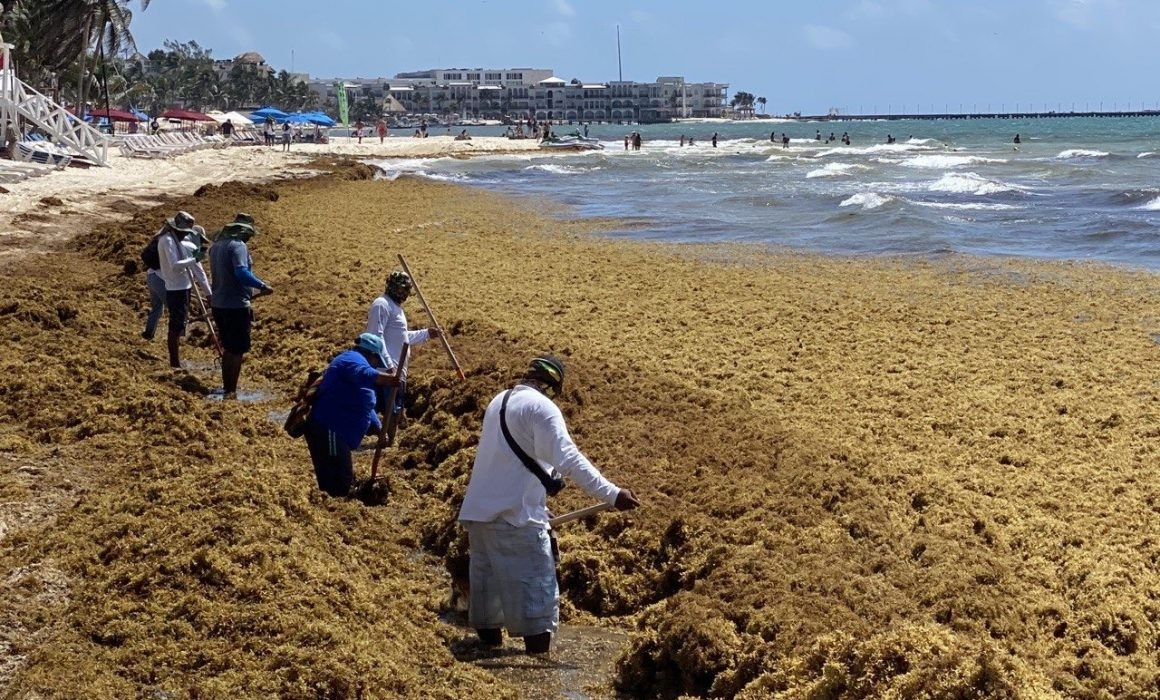

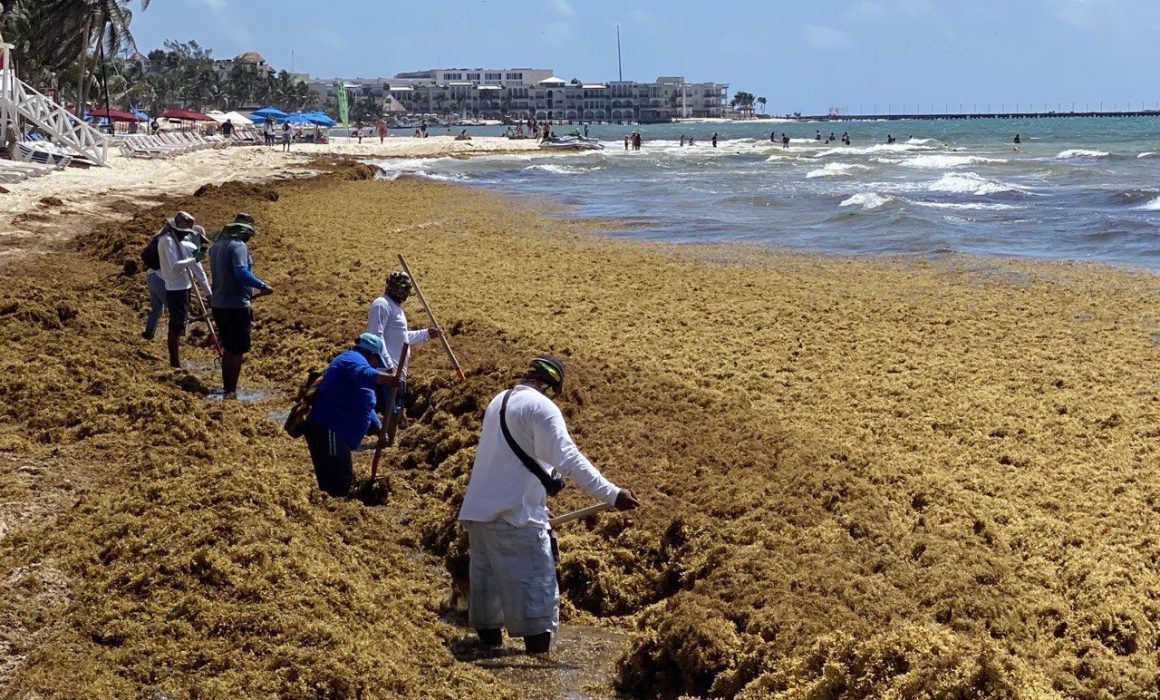
With summer vacations underway and tourism in full swing, beaches are under threat from sargassum, which is washing up with unprecedented intensity, covering vast expanses and imposing its characteristic unpleasant odor. The director of the Sargassum Monitoring Center, Esteban Jesús Amaro Mauricio, explained that the most severe sargassum cycles apparently last three to four years: the first massive washout was in 2015, the second in 2018, followed by 2022 and this year, “which has been the most tremendous in history.”
Meanwhile, a team of researchers from the University of South Florida (USF) and NASA warned that, “during July 2025, an increase in the arrival of sargassum on the coasts of the Mexican Caribbean is expected, following a slight decrease in June.”
For example, Mahahual reports 70 percent hotel occupancy and 5 percent cancellations due to the accumulation of seaweed, of which the Ministry of the Navy (Semar) has removed 52,000 tons from the coasts of Quintana Roo during the first half of the year. Because of this, and because it also darkens the water and causes fish kills, its effect is devastating for the tourism industry, as it also impacts activities such as fishing, as well as diving and snorkeling.
The Ministry of the Navy (Semar) announced that the current season, which concludes between September and October, is unprecedented due to the amount of seaweed collected so far this year, a historic record and at the same time a constant threat to tourism.
Source: quintanaroo.quadratin