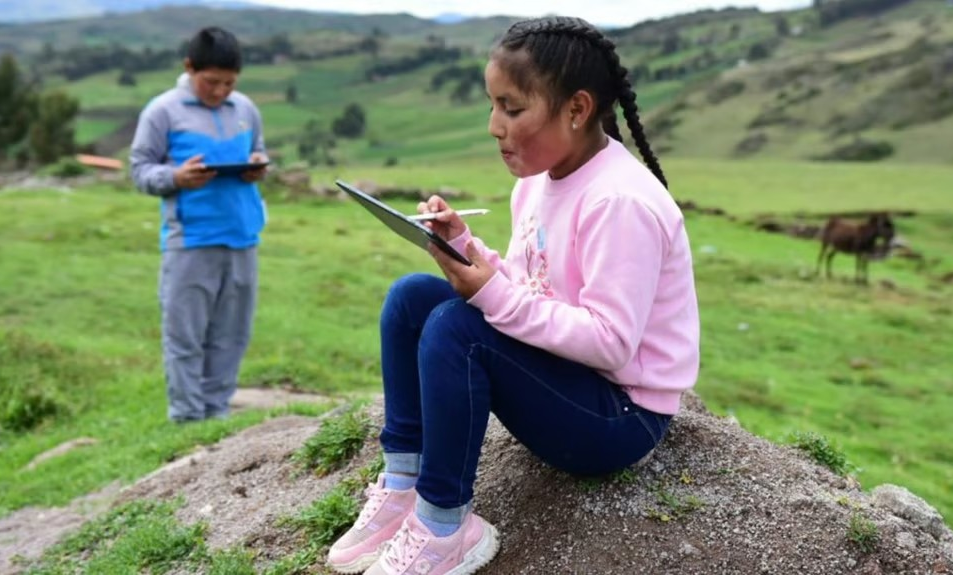

Problem. Rural areas are where internet access is most difficult to access, and people have to search for places to find a signal.
In Durango, between 60 and 70 percent of the population has internet access, a figure well below the national average of 83 percent. The internet not only connects people but also drives growth, innovation, and the creation of opportunities.
The 2024 National Survey on the Availability and Use of Information Technologies in Households (ENDUTIH), published by INEGI, placed Durango among the states with the greatest lag in internet access.
Much of this lack is explained by the low connectivity in rural areas, especially in the most remote and difficult-to-reach areas.
In the context of Internet User Day, celebrated on August 23, the importance of this tool in daily life and in all economic sectors is remembered, due to its potential to generate employment and development worldwide.
According to World Bank data, in Latin America, approximately 38 percent of the population still lacks internet access, either due to economic limitations or because they live in rural areas. Durango is part of this scenario, especially due to its vast territory and the difficulty of reaching remote communities.
During the COVID-19 pandemic, connectivity became the driving force that kept economic and social life active thanks to the operation of data centers. From remote work and online classes to streaming entertainment and e-commerce, the internet allowed millions of people to continue producing, learning, and interacting without leaving home.
However, in Durango, rural areas remained disconnected, deepening the digital divide during those years.
The commemoration of Internet User Day invites us to reflect not only on the current dependence on this tool, but also on the enormous development potential it can still achieve.
Source: elsiglodedurango