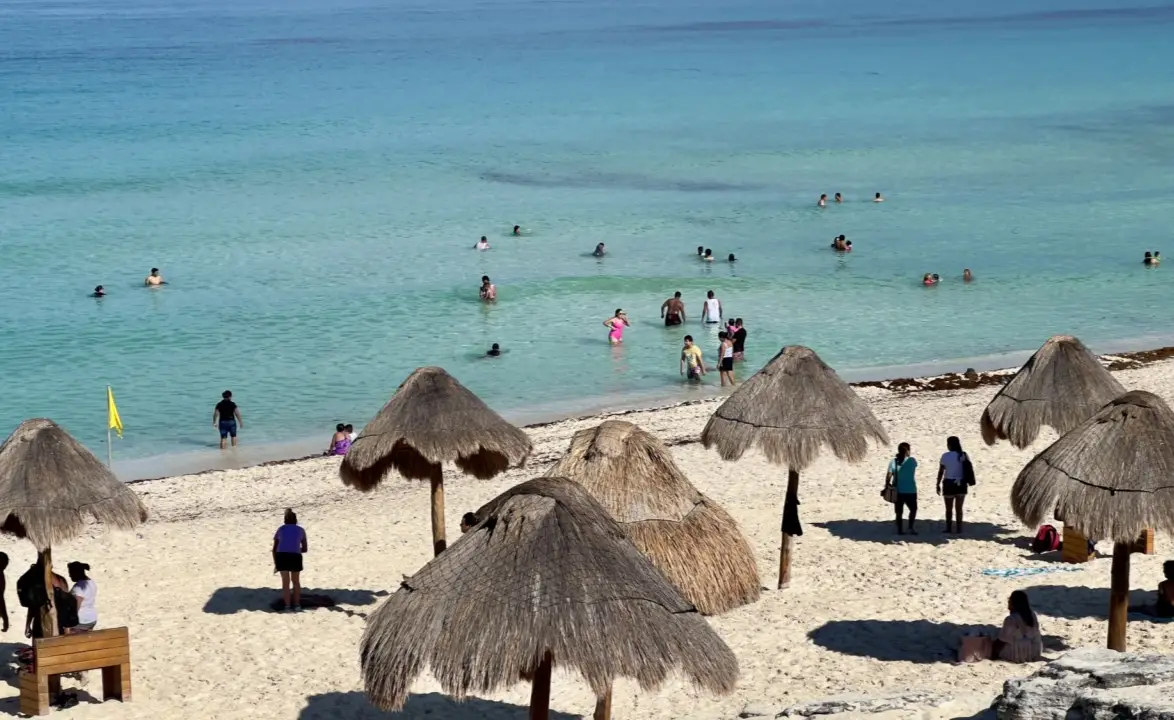

The Quintana Roo hotel sector has somewhat disparate positions regarding the law reform that seeks to guarantee free access to the beaches.
On the one hand, the president of the Cancún hotel industry, Rodrigo de la Peña, believes that, pending a thorough understanding of the initiative, it seems “complicated” to open beach access to all hotels.
“There are indeed several hotels that don’t have direct access. So it’s a significant challenge. Of course, the beach is a federal zone and everyone can walk there freely, but I see access to all hotels as complicated. But, well, we’ll analyze how the initiative is going, and from there, I think the right thing to do would be to have multiple access points, but not all hotels can.”
For his part, David Ortiz Mena, president of the Mexican Caribbean Hotel Council, considered it positive that the way this bill was finally proposed will help generate an improvement in this long-standing social demand. “In Tulum, for example, we’ve seen a lack of public access to the beach due to the lack of planning for this destination.”
He recalled, however, that the responsibility for guaranteeing free access to beaches falls on the municipalities, so “the reform will help us improve beach access, without placing sole responsibility on the private sector.
“We see it as a positive development; we believe it will not be a reform detrimental to tourism, and it can indeed enhance the social desire for greater public access to the beach.”
On September 1, with the support of all parties, the Plenary Session of the Chamber of Deputies approved amendments to the law to guarantee free access to beaches and protected natural areas throughout the country, as well as to prohibit the imposition of fees, quotas, or restrictive conditions for entry.
With 470 votes in favor, the lower house amended various provisions of the general laws on National Assets and on Ecological Balance and Environmental Protection. The ruling was forwarded to the Senate for analysis.
This ruling, derived from an initiative by Ricardo Monreal, leader of Morena in San Lázaro establishes that access to maritime beaches and the adjacent federal maritime-terrestrial zone shall be free, free of charge, and permanent for all persons without distinction of origin, nationality, or social status, and may not be inhibited, restricted, hindered, or conditioned except in cases established by other laws or administrative regulations.
It also establishes that federal, state, and municipal authorities, within the scope of their powers, shall guarantee access from public roads to maritime beaches and the adjacent federal maritime-terrestrial zone, which must be safe and well-signposted.
In addition, the imposition of fees, quotas, or restrictive conditions for access to maritime beaches and the adjacent federal maritime-terrestrial zone shall be prohibited, except in those zones that expressly prohibit it for environmental prevention and protection, public safety, and national interest.
Source: eleconomista