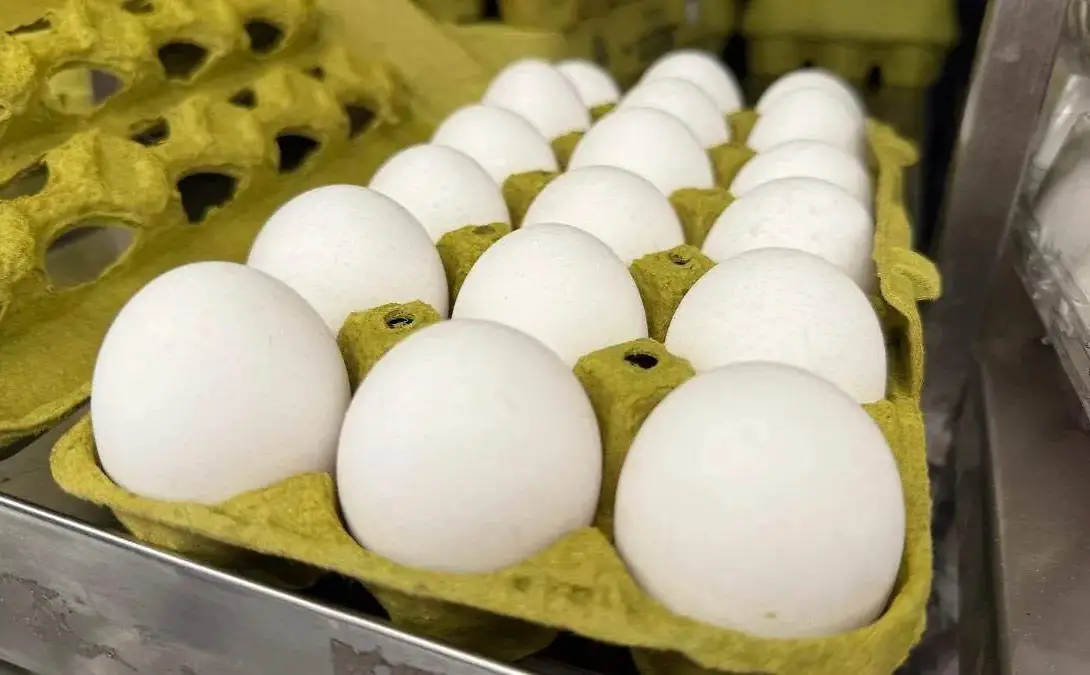

Every second Friday in October is World Egg Day. Eggs are considered a staple food in Mexico and the most consumed in Southern Californian households, despite their volatile prices.
Receive the most important news from Baja California Sur through our newsletter!
According to the General Directorate of the Agri-Food and Fisheries Information Service (SIAP), eggs are part of the basic food basket and are among the most in-demand livestock products in the country.
In 1996, the International Egg Commission established in Vienna that every second Friday in October would recognize the importance of this food in global nutrition.
In Baja California Sur, the price of eggs has shown significant fluctuations. According to the Federal Consumer Protection Agency (Profeco) “Who’s Who in Prices” program, as of October 6, 2025, a kilo of bulk white eggs is offered for between 49.5 and 60 pesos in the main markets of La Paz.
At the Central de Abastos (Bakery Market), located in the Puesta del Sol neighborhood, the price per kilo ranges between 49.5 and 56.99 pesos, while at the Public Market in the city center, prices of up to 60 pesos per kilo are recorded, depending on the supplier.
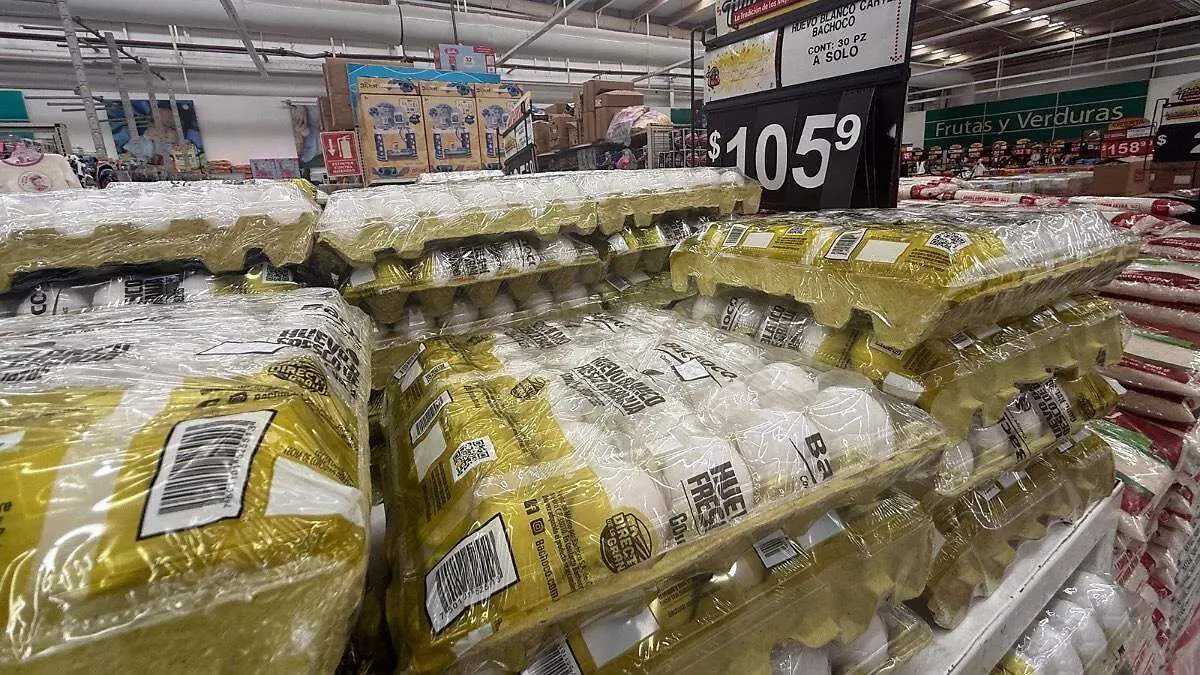
In self-service stores, the cost of a 30-piece bag ranges between 90 and 110 pesos, according to surveyed consumers. Compared to the national average of 54 pesos per kilo, according to Profeco, the price of eggs in Baja California Sur is slightly higher; however, families continue to consume them due to their nutritional value and their regular presence in their diet.
Ericka Arteaga, a resident of La Paz, noted that the price of eggs has shown a slight decrease compared to previous months. “I normally buy a 30-piece bag at Tienda Ley for around 96 pesos. Before, it was more expensive, around 110 or 115 pesos, so I think the adjustment is fine,” she commented.
Meanwhile, Jorge, another consumer, indicated that eggs remain an essential part of his daily diet, even with the increase in price. “It’s very expensive, but logically, I still buy them because they’re my morning meal. I buy a bag a week, and it was in January that I noticed the highest price increase,” he said.
In the case of specialty products, such as organic eggs, the cost may be higher. Abigail, a resident of the capital, shared that her family prefers this option for health reasons.
“We buy organic eggs; they cost around 60 pesos a dozen. In supermarkets, I’ve seen them for up to 105 pesos, but they’re an essential breakfast item, especially for children, so we continue to buy them regardless of the price,” she said.
Eggs are considered an important source of protein, lipids, and minerals. According to information from SIAP (National Institute of Agricultural Research and Food Sciences), the egg white is composed of 88% water and protein, while the yolk contains approximately 50% water, protein, and fat. Furthermore, the proteins in the egg white are better assimilated by the body when cooked, as opposed to when consumed raw.
According to the Ministry of Agriculture and Rural Development (Sader), Mexico ranks as the world’s leading consumer of eggs, with an annual average of 345 eggs per person, equivalent to more than 26 kilograms.
In Baja California Sur, daily consumption—whether for breakfast, home-cooked meals, or in restaurants—reflects the importance of this food in families’ diets.
Every second Friday in October, the poultry industry and international organizations promote World Egg Day to highlight its contribution to nutrition and food security.
In the local context, the product continues to be a benchmark in the domestic economy and a measure of the purchasing power of families in Baja California Sur.
Source: oem