
The Royal Spanish Academy (RAE) tells us that a Spanish speaker is someone whose mother tongue or native language is Spanish. While it is the third most spoken language in the world, the Spanish we speak in our country is unique for several reasons, one of which is the use of the ch.
Spanish is the third most spoken language in the world. Photo: OEM Archive. El Sol de México
This phoneme is formally known as a digraph, as it is a double spelling composed of the letters c and h; which together make up a highly expressive sound. Technically, it is defined as a voiceless palatal affricate sound produced when the tongue closes against the teeth and then releases air.
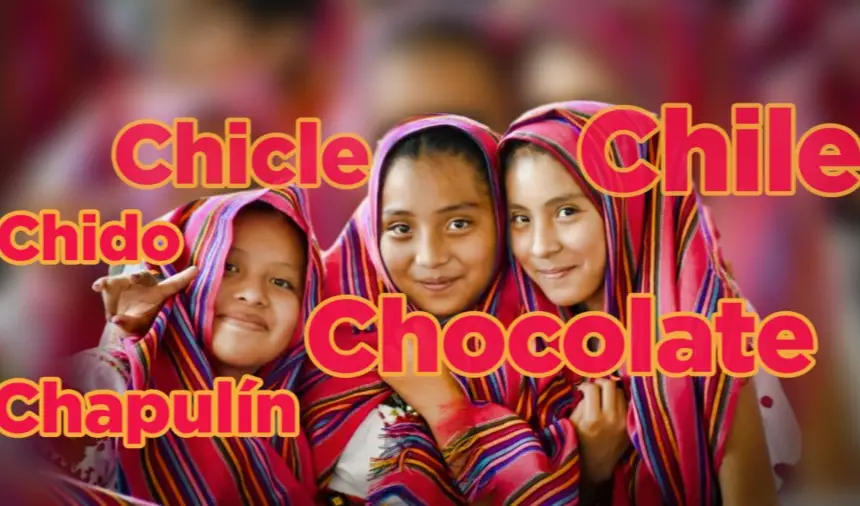
According to Concepción Company, an emeritus philologist at UNAM, in an interview with Verne, the sound originates in Latin, but in Mexican Spanish it was reinforced with words from indigenous languages, especially Nahuatl, which contains many words with ch, such as chichi, chahuistle, chachalaca, chapopote, chapulín, chicle, chilaquil, chile, chinampa, chamaco, chilpayate, and chocolate, among others.
Between 1754 and 1803, the ch was considered the fourth letter of the Spanish alphabet. However, at the Tenth Congress of the Association of Academies of the Spanish Language, held in 1994, it was decided to eliminate it, along with the double l, from the alphabet. The reason is that it was concluded that both are not letters but digraphs.
Whether it’s a letter or not, its importance in Mexican Spanish remains undeniable, adding flavor and color to the way we speak: “qué chido” (what’s cool), “chale” (chale), “ya chole” (already done), “vámonos de pachanga” (let’s go party), and so on.
Likewise, the phoneme is very present in the nicknames we use to affectionately refer to people close to us, for example, “Nacho,” “Pancho,” “Concha,” and of course, “Chonita.”
Finally, it’s worth noting the use of the “ch” (letter) in one of the words with the most meanings in Mexican Spanish: “chingar” (fuck). As writer Octavio Paz mentions in his book El Laberinto de la Soledad (The Labyrinth of Solitude):
It’s a magical voice. A change in tone, a mere inflection, is enough to change the meaning. There are as many nuances as intonations: as many meanings as feelings.”
Chingón, chingado, chingadera, and chingonería are just some of the derivatives of this word with a ch, so complex and rich in nuances that it even has a dictionary in its honor. Mexican Spanish is so cool, isn’t it?

Source: mexicodesconocido