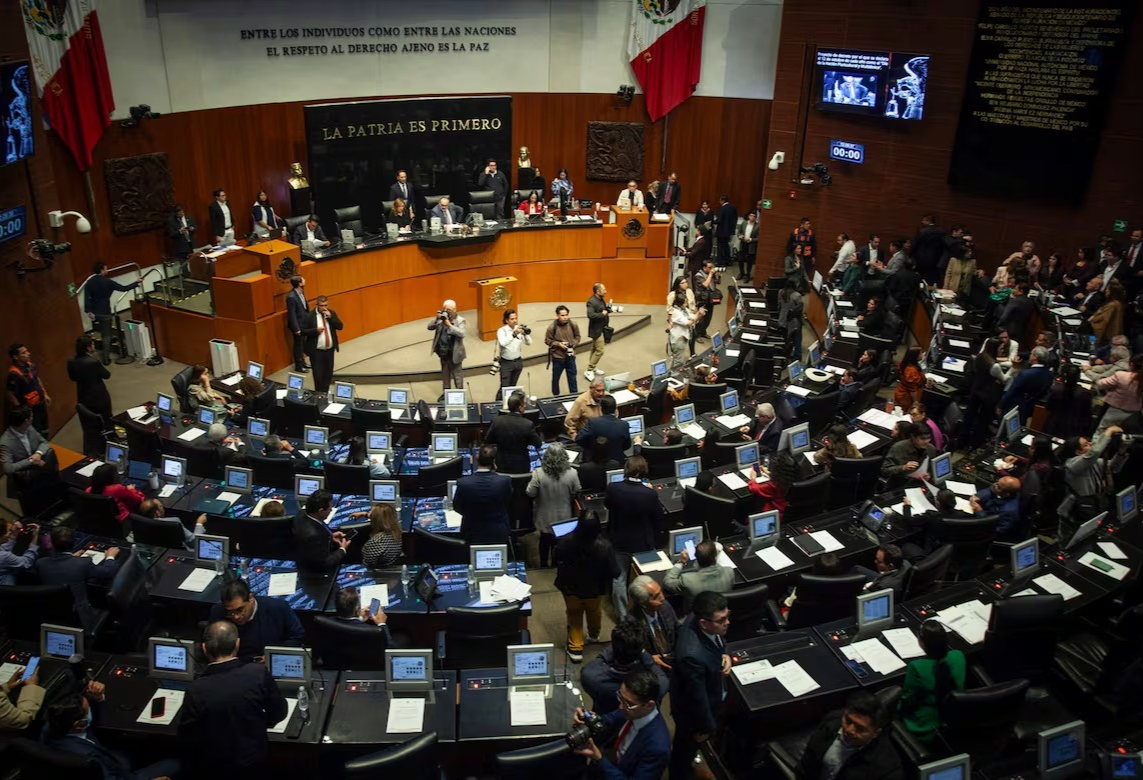

The final push to launch the crusade against extortion in Mexico has found fertile ground in the Mexican Senate, which unanimously approved on Wednesday, both in general and in particular, some twenty significant changes to the bill sent by the Chamber of Deputies. The amendments have delayed the implementation of the General Law to…
Prevent, Investigate, and Punish Extortion Offenses, submitted in October by Mayor Claudia Sheinbaum, but in return, they have strengthened it. The new law establishes the standardization of the crime so that it is prosecuted in all 32 states of the country and is investigated ex officio, that is, without the need for a fully identified complainant. Senators from both the ruling party and the opposition have supported the toughening of penalties for extortionists, with a maximum sentence of 42 years in prison, depending on the thirty aggravating circumstances involved, as they have determined. The lower house, with votes from the ruling party and opposition against, had softened the penalties for various forms of the crime. Among them is extortion, a fee charged by criminal groups to allow businesses to operate without interference. This affects shops and services, transportation and distribution of goods, medium and large companies, municipal governments, and street vendors. Staged traffic accidents—known as “montachoques”—and coercive phone calls originating from prisons are also considered variations of the crime.
The opposition bloc has been heard in the second round of the legislative process. The demands of members of the PAN, PRI, and MC parties, who since the beginning of the discussion in October warned of the leniency of the penalties for a crime that severely impacts all sectors in Mexico and is growing exponentially, have resonated with the majority bloc in the Senate. The minimum sentence has been set at 15 to 25 years, with aggravating circumstances that can raise it to 42 years. In the previous text, the sentence was six to 15 years. The penalties for officials—police officers, public prosecutors, prison directors, and others—who fail to report known extortion crimes have also been modified. The original proposal submitted by Sheinbaum, which suggested 10 to 20 years in prison, has been reinstated instead of the five to 12 years approved by the deputies.
The ruling party (Morena, PT, and PVEM) and the opposition bloc (PAN, PRI, and Movimiento Ciudadano (MC)) voted almost unanimously. The broken unanimity in the lower house was revived this Wednesday. The new law, classified as an arm of the National Security Strategy, has achieved unity, albeit momentarily, between the two blocs in the country. “We want to acknowledge that these changes fundamentally alter concerns we had,” said Senator Alejandra Barrales of Movimiento Ciudadano.
The lack of earmarked funding for the Sheinbaum administration’s much-touted crusade against extortion has been the most contentious point of contention. “If we don’t guarantee sufficient resources for the implementation, monitoring, and prosecution of extortion, this will remain nothing more than a catalog of good intentions,” declared Guadalupe Murguía, a member of the National Action Party (PAN). The new law has not deemed additional resources necessary. This has cast doubt on the effectiveness of the guidelines, which, among other things, include the creation of specialized offices within state prosecutors’ offices. Consequently, the Institutional Revolutionary Party (PRI) caucus took the same stance. “It is necessary to strengthen the police and public prosecutors’ offices. We want this law to work, and it will work better if it is properly funded,” concluded Carolina Vigiano on behalf of the PRI.
During the discussion of proposed amendments to the bill, submitted by legislators from all political parties,

Source: elpais