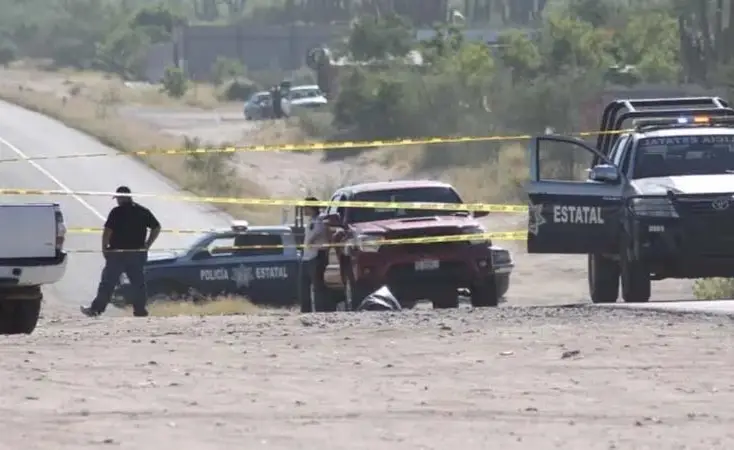

Baja California Sur is experiencing a contradictory moment. Although its economy shows signs of recovery, this growth coexists with a serious surge in violence and a crisis of disappearances, pointing to an overwhelmed governance under the administration of Governor Víctor Manuel Castro Cosío.
Currently, the state is going through one of its most difficult periods in terms of security. From January to July 2025 alone, 128 homicides were recorded, a significant increase compared to the same period of the previous year, when 85 cases were registered. This has raised alarms due to the speed with which violence has spread in municipalities that used to boast of tranquility.
The problem of disappearances has also worsened. In just the first four months of the year, reports of disappearances doubled, rising from 16 to 34. For families, institutional slowness and the lack of results have been yet another blow: many groups report that they continue to conduct searches virtually alone, while the authorities maintain a prolonged silence.
Likewise, the discovery of clandestine graves has exposed the extent of the deterioration, as 66 human remains have been recovered in various parts of the state in less than a year. These findings reveal a persistent criminal dynamic that has not been stopped by the state administration, and each discovery once again places Baja California Sur on the national map of extreme violence.
But the crisis is not limited to security. In the economic sphere, although the government boasts of growth, the public perception is different. Almost half of the population—45.5%—believe their economic situation has worsened, pressured by the increase in the cost of services and fuel.
Baja California Sur continues to depend almost entirely on tourism; the service sector alone contributes more than 70% of the state’s Gross Domestic Product (GDP), leaving the state vulnerable to any external fluctuations.
Even the arrival of more than one billion dollars in foreign investment for the tourism sector in 2024 has not translated into structural improvements for the population. Development is progressing, but only in certain areas and under a model that prioritizes large corporations.
Meanwhile, complaints about the lack of strategy are mounting, as activists, business leaders, and legislators have pointed out that the Castro Cosío administration operates with delays, slow responses, and little clarity on how it is addressing the rise in crime. For many residents of Baja California Sur, the government seems more focused on maintaining a tourist image than on recognizing and addressing the urgent needs of hundreds of families.
Unfortunately, Baja California Sur faces a visible deterioration in both security and quality of life, and although the official discourse emphasizes stability, the data, collective searches and social weariness show the opposite.

Source: diarioelindependiente