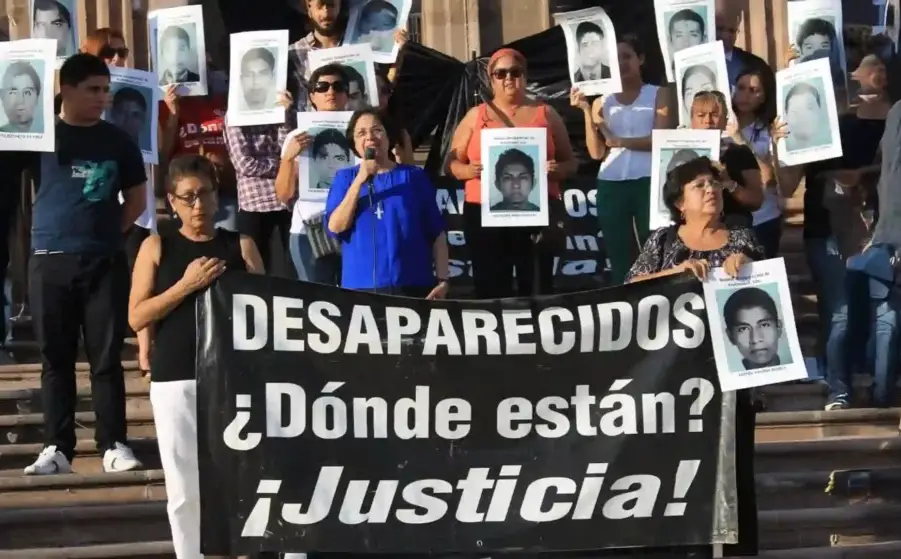

This article examines the crisis of enforced disappearances in Mexico following the activation of Article 34 by the UN Committee against Enforced Disappearances, which reveals a systematic practice and a pattern of state impunity.
The human rights crisis in Mexico has reached a turning point: the UN Committee against Enforced Disappearances (CED) has invoked Article 34 of the Convention, concluding that enforced disappearance could be widespread or systematic. This unprecedented step elevates the Mexican crisis beyond routine monitoring and becomes a litmus test: can a G20 democracy accept effective international oversight and produce verifiable results, or will it retreat into denial?
On September 18, 2024, investigators discovered clandestine graves on a ranch in Teuchitlán, less than 60 kilometers from downtown Guadalajara. Local authorities initially denied any further findings until March 5, when six sets of human remains were confirmed at four different sites within the same property. The public outcry was immediate, and the site became known as the “Mexican Auschwitz.”
This discovery is not an isolated incident, nor is it confined to one region of the country. On March 11, 2025, more clandestine graves in similar conditions appeared in Reynosa, Tamaulipas, in the north. Just three months earlier, 72 bodies had been exhumed in Chihuahua. These sites are not only evidence but also symptomatic of how easily and routinely people disappear in Mexico.
Between 2006 and 2024, the National Search Commission registered more than 5,000 clandestine graves across the country. These figures demonstrate both the magnitude of the violence and the systematic nature of disappearances as a recurring practice, sustained by near-total impunity that hovers around 99%.
Understanding what is at stake requires distinguishing between two dimensions of responsibility: the criminal responsibility of individuals—determined primarily in national courts—and the international responsibility of the State, which is triggered when it fails to prevent, investigate, punish, and provide reparations. Blurring this boundary distorts responsibility and entrenches impunity.
It is not surprising that this phenomenon has generated deep concern within the Committee on Enforced Disappearances (CED) and other international monitoring bodies.
Following its visit to Mexico in 2021, the CED had already identified worrying patterns: persistent disappearances, the involvement of local authorities, and a justice system incapable of responding effectively. The Committee urged Mexico to strengthen its search capabilities, protect those searching for their loved ones, and adopt a genuinely preventive approach.
On April 4, 2025, for the first time in history, the Committee activated the procedure established in Article 34 of the Convention with respect to Mexico, which provides for bringing the matter to the attention of the General Assembly and recommending measures to halt the practice, guarantee reparations, and strengthen prevention. On October 21, 2025, during the session of the Third Committee of the 80th General Assembly, the Special Rapporteur on the Rights of Persons with Disabilities confirmed that the case of Mexico had been formally submitted to this process.
In a “time of monsters,” Mexico stands as a defining case: one that will reveal whether international human rights law can still translate norms into consequences within democracies, on a meaningful scale and in real time.
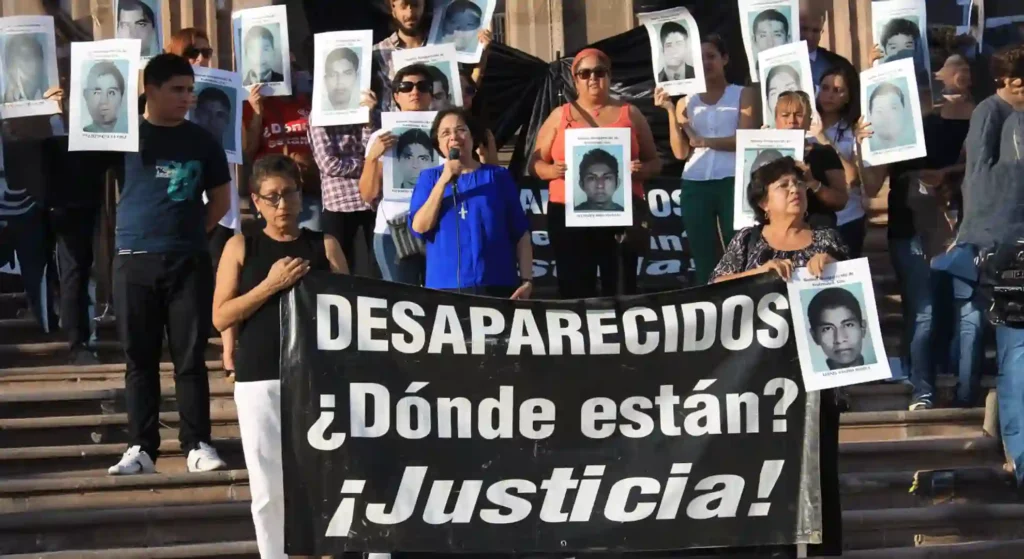
Source: agendaestadodederecho