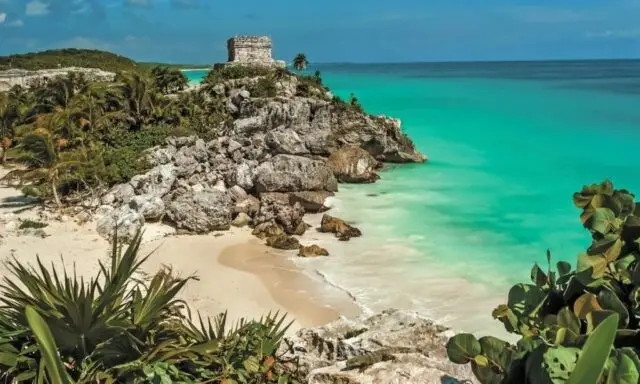

For 2026, the National Institute of Anthropology and History (INAH) set the entrance fee to Tulum and Cobá at 209 pesos per person, practically double (101 percent) the cost compared to 2025, when it was around 104 pesos.
INAH announced that starting January 1, 2026, the entrance fee to both archaeological sites will increase because they belong to category one, along with Teotihuacan, Chichén Itzá, and Palenque, according to its new fee schedule.
According to the agency, the measure responds to the need to guarantee resources for the conservation, research, and operation of the sites. The increase is part of a general price update at 193 archaeological sites, 165 museums, and one paleontological site managed by INAH throughout the country.
Category I sites, considered the most important and popular tourist destinations—such as Chichen Itza, Teotihuacan, Palenque, and Tulum—were the most affected, with an adjustment that practically doubled the entrance fee. The agency emphasized that the increase is supported by the Federal Law of Rights, reformed in October 2025, which established new fees for the 2026-2027 period.
Despite the increase, the National Institute of Anthropology and History (INAH) confirmed that free admission on Sundays for Mexican nationals and residents remains in place, as do exemptions for children under 13, adults over 60, students, teachers, and people with disabilities with valid identification.
The adjustment in Tulum and Coba, two of the most visited sites in Quintana Roo, has generated discontent among tourism service providers and Mexican visitors, who consider it a significant financial burden for Mexican families.
With the update to the Federal Law of Rights, which was approved on October 15 by the Chamber of Deputies, it was announced that the value of the entrance to the archaeological zone of Tulum would be doubled for foreign tourists, that is, more than 200 Mexican pesos (about 11 dollars) would be paid to enter the area of Mayan monuments.

Source: reportur