
Headline inflation in Mexico slowed in December 2025, falling short of market expectations and reaching its lowest annual level since 2020, according to data from the National Institute of Statistics and Geography (Inegi).
According to data from the National Consumer Price Index (INPC), released by Inegi this morning, headline inflation in Mexico closed 2025 at 3.69 percent annually, below market expectations of 3.8 percent for December 2024. This represented its lowest annual rate since 2020, when it registered 3.15 percent; it also fell within the Bank of Mexico’s price stability target range (3 percent +/- one percentage point).
Consumer prices rose 0.23 percent in December compared to November, the lowest monthly inflation rate for the last month of the year since 2012 (0.23 percent).
The core inflation rate, which excludes energy and fresh food and determines the medium- and long-term price trajectory, registered an annual increase of 4.33 percent in 2025, exceeding the monetary authority’s stability target and marking the highest increase since 2023 (5.09 percent annually).
Education (5.82 percent annually); food, beverages, and tobacco (5.22 percent); and other services—including lunch counters, small restaurants, and similar establishments, mobile phone service, car maintenance, medical consultations, and package tours, among others—(5.11 percent) all exceeded 5 percent, significantly higher than headline inflation and driving the core inflation rate.
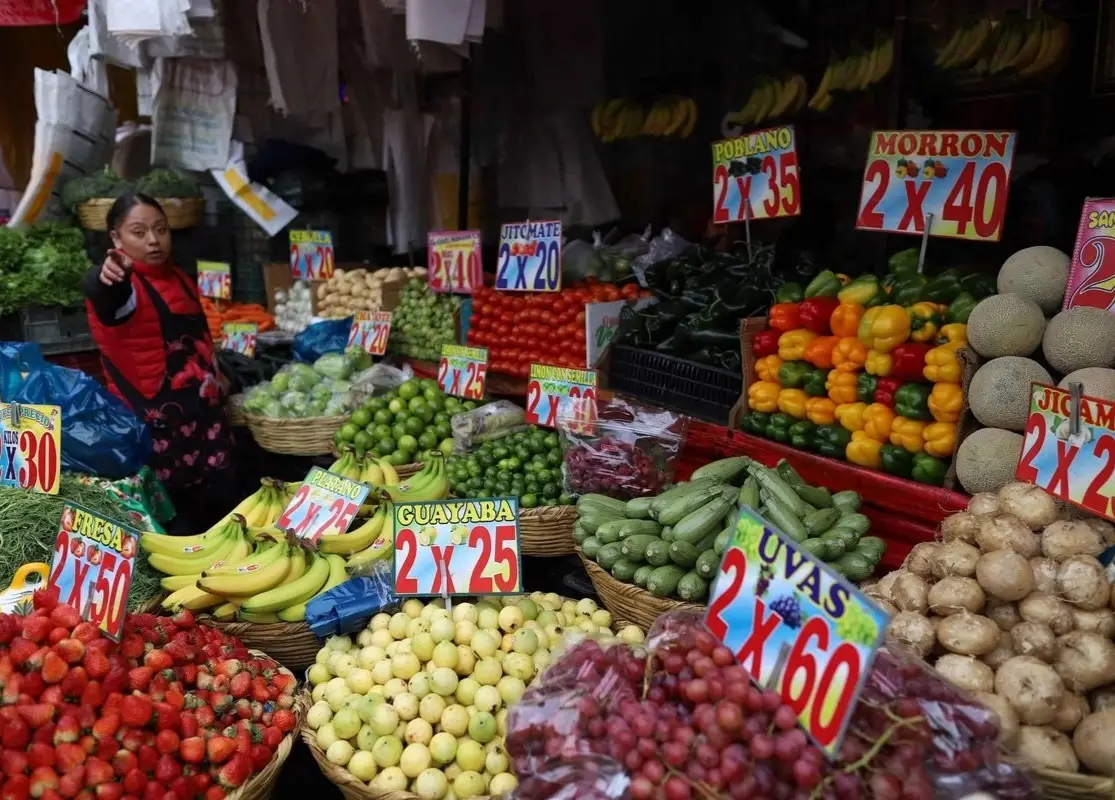
Meanwhile, the non-core inflation index, which includes agricultural and energy products, slowed to 1.61 percent year-on-year, down from 1.73 percent in November. This was its best level since 2020 (1.18 percent year-on-year). This was supported by the decline in fruit and vegetable inflation, which fell 5.62 percent year-on-year, due to the absence of droughts in the country in 2025.
Inflation in 2025 was supported by volatile agricultural prices, which showed declines last year; while food goods and services related to eating out were reluctant to decrease.
Analysts still see room for the Bank of Mexico to further lower its benchmark interest rate, currently at 7 percent; however, the core inflation rate, which is the one that monetary policy (interest rate adjustments) affects, is resisting a faster decline.
The total national producer price index (PPI), which measures the price evolution of a fixed basket of goods and services representative of national production for domestic consumption and export, including oil, increased 0.47 percent month-on-month and 2.06 percent year-on-year in December 2025. In the same month of 2024, it rose 0.77 percent month-on-month and 7.45 percent year-on-year.
Meanwhile, the index for intermediate goods and services, including oil, increased 0.48 percent month-on-month and 1.41 percent year-on-year. In the last month of 2024, it rose 1.28 percent and 8.51 percent, respectively.
The index for final goods and services, including oil, increased 0.46 percent month-on-month and 2.33 percent year-on-year. In December 2024, it increased 0.57 percent on a monthly basis and 7.05 percent on an annual basis.

Source; jornada