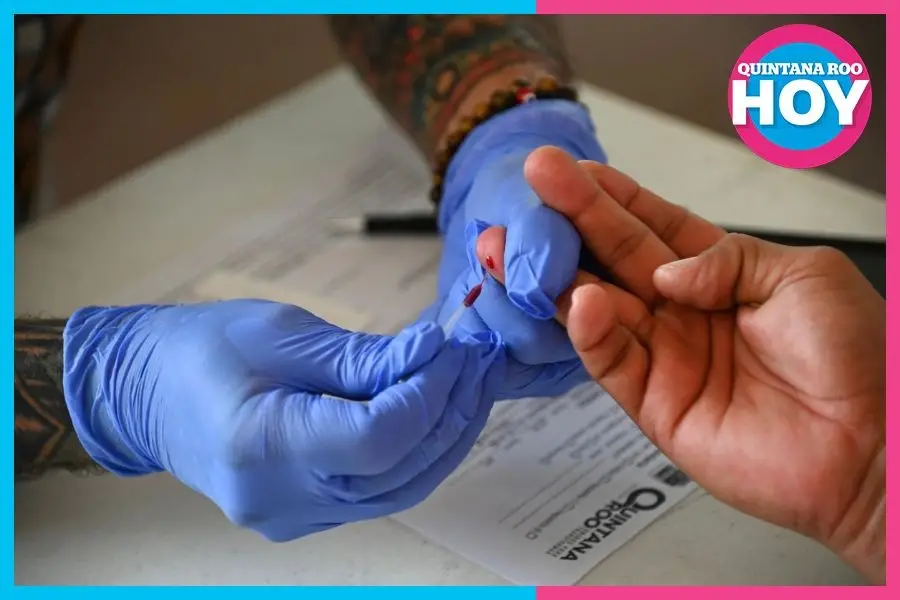

Despite prevention strategies, Quintana Roo ended 2025 with a high number of cases of sexually transmitted infections, such as the Human Immunodeficiency Virus (HIV). The state registered 1,189 confirmed diagnoses during the year.
HIV is a virus that affects the body’s immune cells, called CD4 T lymphocytes. If left untreated, the infection can rapidly progress to AIDS. The virus is found in blood, sexual fluids (pre-ejaculate, semen, vaginal secretions), and breast milk.
Once HIV enters cells, it uses them to replicate without causing symptoms. This phase is known as asymptomatic.
There are three main routes of transmission:
Unprotected sexual contact with a person with HIV.
Exposure to infected blood.
Perinatal transmission, when a pregnant woman with HIV transmits the virus to her baby at any point during pregnancy.
Although there is no official breakdown of infections by cause, Quintana Roo ended 2025 as one of the states with the most HIV cases, according to the Ministry of Health. For example, the State of Mexico reported 2,352 cases; Veracruz, 1,714; Mexico City, 1,370; and Quintana Roo, 1,189.
In terms of rate, Quintana Roo registers 66 cases per 100,000 inhabitants, one of the highest in the country. In contrast, the State of Mexico has a rate of 13.9 cases per 100,000 inhabitants, despite its larger population.
HIV can affect women, men, young people, and children, regardless of race, sexual orientation, socioeconomic status, or religion, as long as there is exposure to any of the transmission routes.
According to civil society organizations, there are no targeted prevention campaigns or sufficient early testing in Quintana Roo. This leads to many young people being unaware of the issue or neglecting preventive measures.
“I only saw health personnel providing information about HIV at school once. We didn’t receive any further information or talks. My mother is the one who keeps me informed because she worries about my health,” commented José, a high school student in Chetumal.
José emphasized that, although the topic is sensitive, more official information is needed, since many teenagers get their information from social media, where it can be inaccurate or incomplete.
Currently, the Quintana Roo Health Secretariat is running a social media campaign for those who want to get free HIV testing at the UNEMES CAPASITS clinics in Chetumal and Cancún.
For his part, Roberto Guzmán, president of the Red Positiva network, explained that, although with limited resources, the organization conducts HIV tests. They detect between 15 and 16 cases each month, which are then referred for treatment.
However, with the Federal Government’s proposal to eliminate the fund for cancer or HIV patients, even this response from the Ministry of Health would be at risk.

Source: quintanaroohoy