
Mexico faces a real risk of losing its measles-free certification, a situation that worries public health specialists given the spread of outbreaks in different regions of the country.
This warning was issued today by Andreu Comas García, a scientific researcher at the Autonomous University of San Luis Potosí (UASLP), after analyzing the current situation of this highly contagious disease.
The specialist explained that, although the initial outbreak identified in Chihuahua was contained, the virus has already spread to other states, raising alarms not only nationally but also in North America.
Mexico, the United States, and Canada currently share a high risk of losing the sanitary status that certifies the elimination of measles.
According to the university researcher, the main cause of this resurgence is the sustained decline in vaccination coverage recorded over the last nine years.
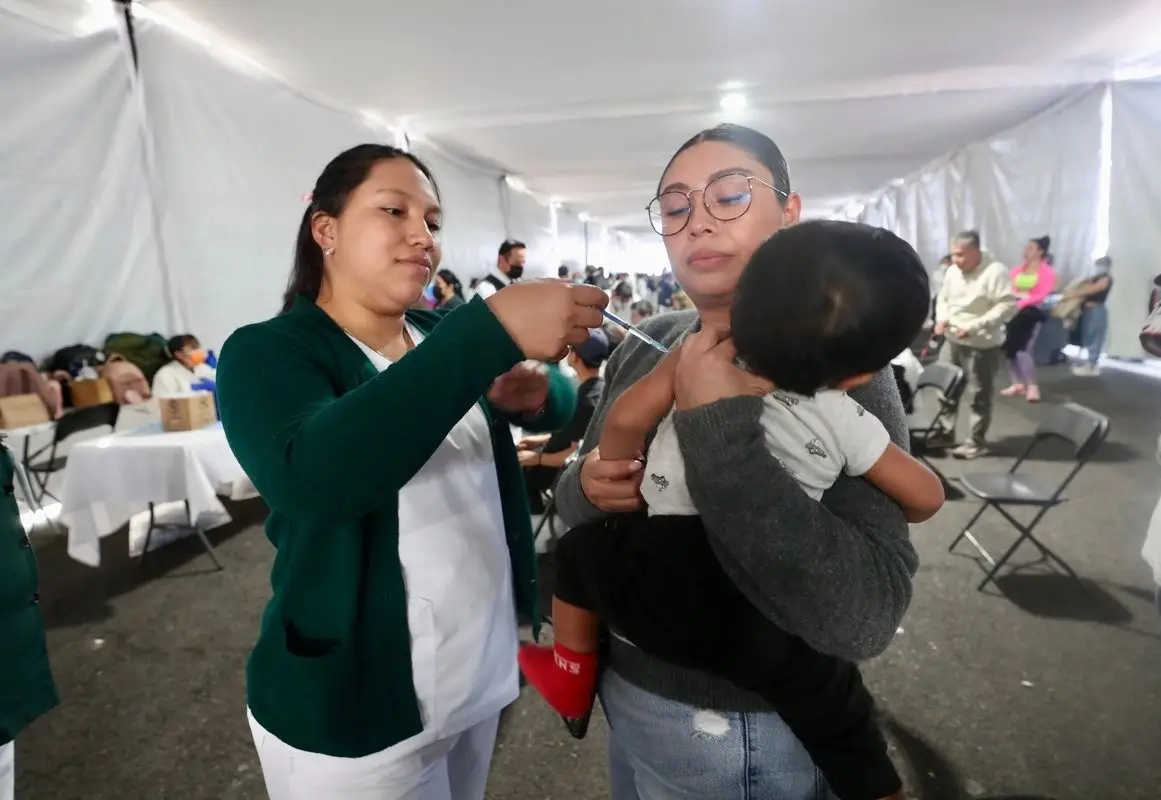
In other words, to keep a country protected, coverage exceeding 95 percent is required. However, in Mexico, this figure began to decline dangerously and gradually, reaching levels of 80 and 90 percent.
He added that, by 2021 and 2022, it was documented that only one in three six-year-old children had a complete vaccination schedule.
Although these percentage variations may seem small, the researcher emphasized that, when translated into unprotected individuals, the impact is alarming. This phenomenon has favored the resurgence of measles and other vaccine-preventable diseases.
Another cause for concern is the upcoming World Cup, which will be held in the states of Nuevo León, Jalisco, and Mexico City.
Currently, Jalisco accounts for nearly half of the confirmed cases in the country, while the capital, although with a lower percentage, maintains an upward trend. This is compounded by high internal mobility and the international flow of people between Mexico, the United States, and Canada, regions where measles is currently one of the continent’s main health problems.
Scientist Comas emphasized that measles is not exclusively a childhood disease. Nine out of ten cases occur in people under 40 years old. While 37 percent of cases are in children under nine, nearly 60 percent are concentrated in the 10-39 age group, reflecting the accumulated deficiencies in vaccination programs since 2015.
The elimination of the measles and rubella booster at age 12 has also contributed to the prevalence of the disease among young people and adults.
Regarding symptoms, the specialist noted that they usually begin with general malaise and a high fever, which can exceed 40 degrees Celsius (104 degrees Fahrenheit). Later, a rash appears, starting on the face and spreading to the rest of the body, along with cough, sneezing, red eyes, sore throat, swollen lymph nodes in the neck, and marked weakness.
He specified that although most patients recover, measles can cause serious complications such as pneumonia, brain infections, and even lead to a partial loss of immunological memory, weakening previously acquired protection against other diseases.
Measles is also extremely contagious. In contexts of low vaccination rates, a single person can infect between 14 and 16 individuals. Therefore, the research scientist emphasized that it is not enough to vaccinate young children; it is essential to review and complete vaccination schedules for people over six years of age.
Regarding the situation in San Luis Potosí, three cases have been confirmed so far this year: two in infants aged two and eleven months, and one in an adult woman. The infections are linked to a case imported from Chiapas. Comas García explained that states like Guerrero, Chiapas, and San Luis Potosí have a high mobility of seasonal workers, which facilitates the spread of the virus.
In the case of babies, the risk is greater when mothers were not vaccinated before pregnancy, since infants depend on the protection that is naturally transmitted during gestation. If this protection is absent, children are left vulnerable to developing the disease.
Finally, the university researcher made a call to both authorities and the public. He pointed out that, while government action is key, shared social responsibility is essential. He urged people who are not vaccinated or who are unaware of their vaccination status to go to health services and seek immediate medical attention if they suspect they may have the virus, as well as to respect isolation guidelines to prevent its spread.

Source: jornada