
More than 530 house fires were attended to by the Ensenada Fire Department during 2025, in addition to 1,400 emergencies related to fire and gas leaks. These incidents put the property of families at risk, potentially causing them to lose everything in a matter of minutes.
Each of these incidents represented a direct threat to homes and people in a city where the risk of fires is particularly intensified by the presence of the Santa Ana winds, a phenomenon characteristic of the region, explained Armando Félix Bermúdez, a researcher at the Autonomous University of Baja California (UABC).
“It’s a condition known as the Santa Ana wind because these are very particular winds—dry winds with gusts that can reach hurricane force, sometimes exceeding the strength of a Category 1 hurricane—and occur during the fall and winter seasons in this region. It’s dry air that travels from the mountains, from the highest areas in North America, in the southwestern United States,” the researcher explained.
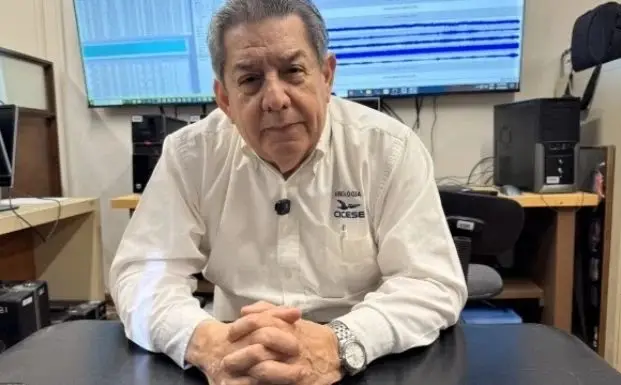
However, fires are not the only risk to which homes in Ensenada are exposed. The threat also lies dormant underground and in the sea, warned Luis Mendoza Garcilazo, a researcher at the Center for Scientific Research and Higher Education of Ensenada (CICESE).
“If we’re going to talk about Ensenada, we’re exposed to significant seismic activity. We’d call it a seismic shock lasting around 40 seconds, maybe a minute. And with accelerations that some objects might experience. We’re also exposed to tsunamis, because tsunamis originate in the Pacific Ocean; they travel from the other side of the Pacific to here. It takes hours, but they will arrive,” the specialist pointed out.
These risks are compounded by forest fires and floods that occur recurrently in specific areas of the city, as well as constant seismic activity, indicated Julio Obregón Angulo, head of the Municipal Civil Protection Coordination.
“We consistently experience forest fires, very specific flooding in certain parts of the city, and, of course, seismic activity that can affect us,” the municipal official explained.
Given this situation, the Risk Atlas for the municipality of Ensenada was updated in 2025. This technical document identifies the areas most exposed to earthquakes, floods, fires, and coastal hazards, with the goal of informing residents about the condition of their homes so they can make informed decisions to protect their property and make necessary adjustments in future construction.
Obregón Angulo emphasized that this assessment will improve the structural safety of new real estate developments in the city.
“The project is complete. We now have a comprehensive assessment so that when high-rise buildings are constructed, regulations and engineering formulas can be applied to ensure that future buildings are more sensitive to seismic activity and perform adequately, making them safe for the municipality of Ensenada,” he explained. In addition to natural disasters, Ensenada homes are also exposed to anthropogenic risks, such as crime, especially in Baja California, one of the states with the highest crime rates, where a culture of prevention remains deficient.
In this regard, Luis Juárez Muñuzuri, an insurance specialist, believes that one of the main challenges is the lack of public awareness regarding asset protection.
“It’s very sad, I think that’s the issue. An agent’s primary job isn’t sales, as I mentioned, that’s the outcome, but our job is to educate, to transmit information and raise awareness. The culture of prevention, as you mentioned, is far below what we would like. And I’m not just talking about home insurance,” he stated.

Source: elvigia