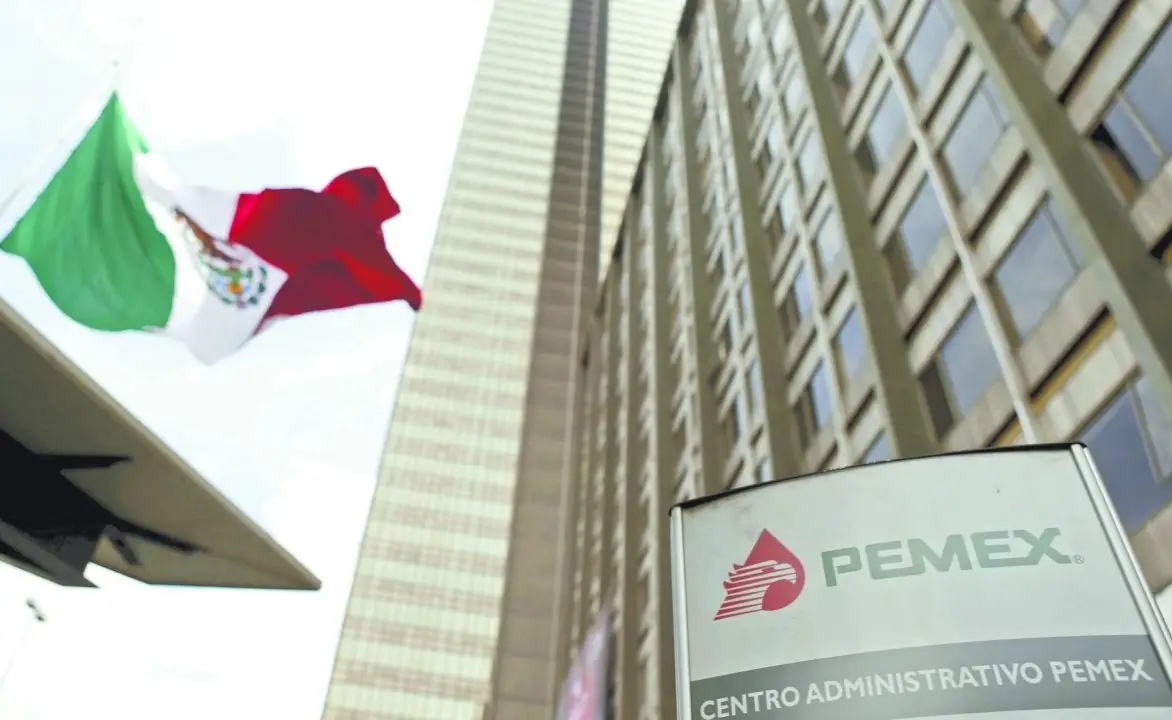

In 2025, the federal government suffered its first-ever net loss from Petróleos Mexicanos (Pemex).
Last year, the Mexican state’s net oil revenue was -156.4 billion pesos, according to an analysis by the organization México Evalúa.
Jorge Cano, coordinator of the public spending and accountability program at México Evalúa, explained that this figure results from subtracting the transfers made by the Ministry of Energy (Sener) to Pemex from the federal government’s oil revenues.
During 2025, the federal government obtained 239.8 billion pesos in oil revenue from Pemex, according to data from the Ministry of Finance and Public Credit.
However, during the same period, the government provided Pemex with 396.16 billion pesos in support through Sener.
Therefore, the Mexican State’s net oil revenue resulted in a loss of 156.4 billion pesos.
“In 2025, for the first time in the entire commercial history between Pemex and the Mexican State, the federal government came out on the losing end,” Cano explained.
Total oil revenues in 2025 amounted to 968 billion pesos, a 2.73% drop in real terms compared to the previous year, due to lower oil production by Pemex.
Of the total oil revenues, Pemex kept 728 billion pesos, that is, 75% of the total oil revenue, while the federal government received only the remaining 25%.
Total oil revenues are the income that Pemex obtains from the exploitation and sale of our country’s oil resources.
Since oil is a resource owned by the Mexican state and Pemex is a state-owned company, a portion of the revenue it generates is given to the government so that it can allocate it to the country’s development through public spending.
Pemex delivers this revenue through royalty payments, which, starting in 2025, will be a single Oil Royalty for Well-being, consisting of a 30% tax on the revenue that Pemex or any other oil company earns from oil in Mexico.
Until Andrés Manuel López Obrador’s presidency, the federal government retained the majority of oil revenue.
During Vicente Fox’s presidency (2000-2006), the federal government received 64% of oil revenue, while Pemex kept only the remaining 36%.
During Felipe Calderón’s presidency (2006-2012), the government received 61% of oil revenue, and the remaining 39% went to the state-owned oil company.
Starting with Peña Nieto’s six-year term (2012-2018), the trend began to change. During those six years, the government kept 54% of oil revenue, while Pemex received the remaining 46%, almost a 50/50 split.
Finally, during Andrés Manuel López Obrador’s six-year term, the distribution reversed completely. From 2018 to 2024, the government retained only 34% of oil revenue, while Pemex kept the remaining 66%.
Jorge Cano explained that the distribution of oil revenue is important because the less the federal government receives and the more Pemex keeps, the fewer resources the federal government can allocate to areas such as education, health, security, and social services.
He also stated that if the Mexican government’s net oil revenues are negative, it means that Mexicans are having to use their own taxes to support Pemex, instead of the state-owned company contributing to the country’s development.
Furthermore, he emphasized, there is no transparency regarding how Pemex uses the government support it receives.
“There is no transparency whatsoever; it seems like the oil company is given a blank check. They’ve used it to pay off their debt or for investment,” Cano concluded.
Source: eleconomista