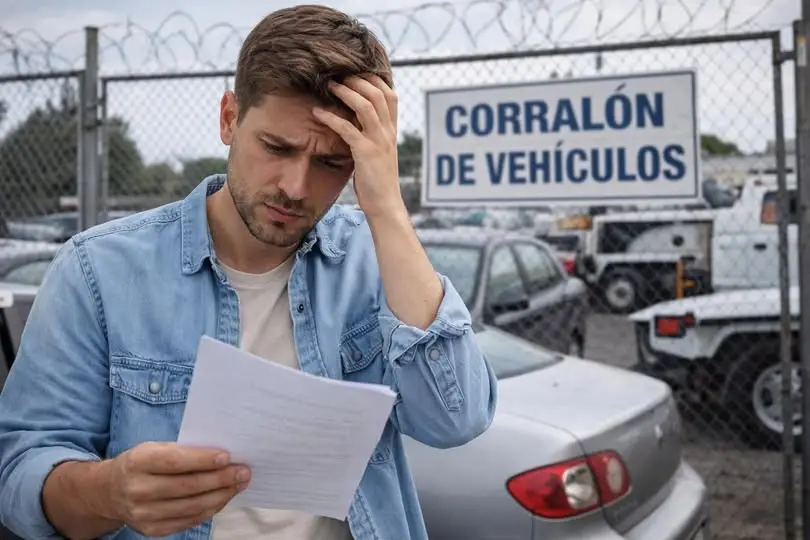

A person’s vehicle is stolen, and they file a police report. Days later, the police locate the car and impound it as part of an investigation, taking it to a private impound lot.
Later, the person proves ownership, and the Public Prosecutor’s Office orders the vehicle’s release. The victim goes to the impound lot to pick it up, but is told:
“Yes, we’ll release it, but first you have to pay for the towing and storage fees.”
Solution: Even though it’s a private company, the tow truck or impound lot can be considered an authority for the purposes of an amparo proceeding.
RESPONSIBLE AUTHORITY FOR THE PURPOSES OF THE ADMISSIBILITY OF AN AMPARO PROCEEDING. Tow truck or impound lot operators are considered responsible parties when they are charged for the towing, custody, and safekeeping of a vehicle related to an investigation file, for which the Public Prosecutor’s Office has ordered its release and delivery to the complainant in their capacity as victim (Legislation of the State of Puebla).
Article 5, section II, second paragraph, of the Amparo Law establishes that private individuals will be considered responsible authorities when they perform acts equivalent to those of an authority, affecting rights as defined in said section, and whose functions are determined by a general rule. In this regard, when the complainant, as a victim or aggrieved party, demands payment from the towing company for the towing, custody, and safekeeping of a vehicle belonging to them, which is subject to an investigation and for which its release and delivery have been ordered, the latter has the status of an authority for the purposes of the admissibility of the human rights protection lawsuit. This is because, by conditioning the release of the vehicle on the payment of a sum of money, it establishes a relationship of superiority to subordination with the complainant. In assisting the Public Prosecutor’s Office (in towing and safeguarding the vehicle), it acts on a higher level than the owner, for the benefit of public order and the social interest; so much so that the safekeeping of the vehicle is not carried out at the complainant’s request.
In addition to the above, in these cases, the concessionaire’s authority to charge for the transfer, custody, and safekeeping of a vehicle is provided for in a general regulation, namely the Revenue Law of the State of Puebla. This law stipulates that services provided by the State Attorney General’s Office may be granted to private entities, which, in turn, must adhere to the fees established in said legislation.
Finally, it is evident that by conditioning the release of the vehicle on the payment of a sum of money, the concessionaire unilaterally and obligatorily creates and modifies legal situations that may affect the complainant’s rights (their property), without requiring recourse to the judicial system or the consent of the affected party.
Therefore, it is determined that crane or impound lot concessionaires have the character of responsible authority for the purposes of the admissibility of the amparo trial, in accordance with articles 1, section I and 5, section II, of the law of the matter, when they are claimed for the charge for transfer, custody and safekeeping of a vehicle related to an investigation file, with respect to which the Public Ministry ordered its release and delivery in favor of the complainant in his capacity as victim.

Source: germanmontoya