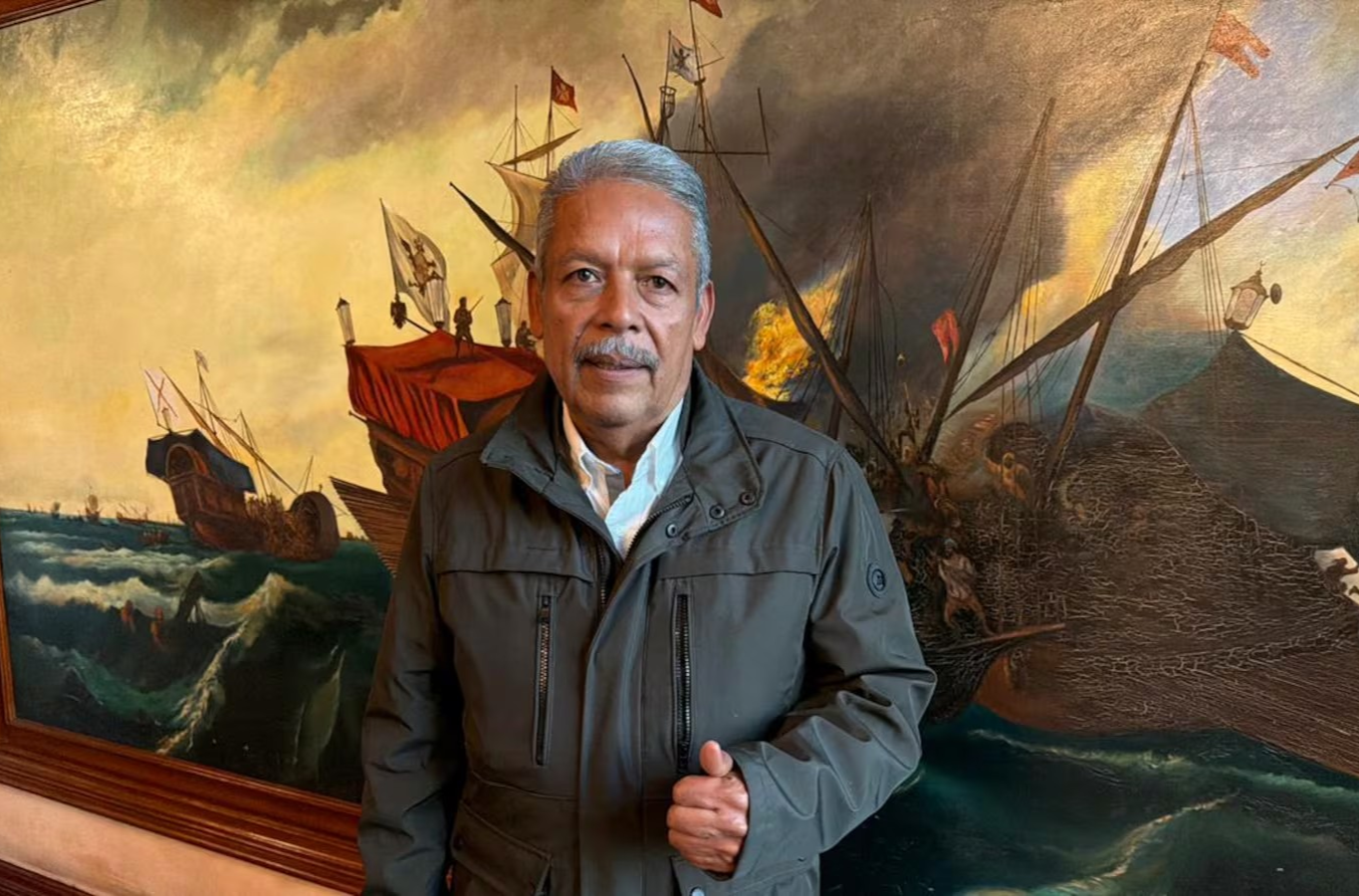

February 24th will be a significant anniversary for the Confederation of Mexican Workers (CTM). Turning 90, the country’s largest labor federation will face an unprecedented transition: the replacement of its leadership while its current leader, Carlos Aceves del Olmo, is still alive. In this context, Tereso Medina, a key figure in the automotive union movement and deputy secretary general, has stepped forward to lead a unity candidacy.
Far removed from the old guard, Medina proposes an urgent renewal. His vision is clear: the CTM must move beyond protest and focus on technical solutions to the challenges of the 21st century, such as Artificial Intelligence, the renegotiation of the USMCA, and the defense of an overburdened healthcare system. In an exclusive interview, Medina outlines the future of Mexican unionism, warning that the low-wage model for attracting investment is outdated.
—We are facing a historic renewal following the announcement of Carlos Aceves del Olmo’s departure. Why are you deciding to step forward now to lead the CTM?
This is a pivotal and unprecedented moment. Historic because the CTM celebrates its 90th anniversary this February 24th, and unprecedented because it’s the first time the national leadership transition has taken place while the current leader is still alive. After learning of Don Carlos Aceves’ decision not to seek reelection, and after deep reflection and receiving the support of federations and unions, I decided to take this step forward.
My goal is to build “National Unity.” I’m not seeking confrontation, but rather to create a single slate that strengthens internal cohesion. The CTM must look to the future, preserving its legacy, but understanding that workers expect proposals, not just protests.
— You mention the future and technological changes. Artificial Intelligence and automation threaten jobs. How will the CTM address this?
That’s the real challenge. I come from the automotive and metalworking sectors, and I see how robotics is displacing labor. The labor movement must answer: What will happen to collective bargaining with AI? How do we mitigate job losses when a robot replaces 50 workers? Mexico can no longer offer cheap labor as a competitive advantage. We must abandon the outdated notion that the country grows with low wages. We must invest in productivity, training, and raising the quality of life. Mexican workers should be recognized for their skill and expertise, not for their low cost.
The CTM (Confederation of Mexican Workers) must regain its international prestige. I am proposing the creation of a pluralistic labor council of unions to have a voice in the renegotiation of the USMCA (United States-Mexico-Canada Agreement) in mid-2026. The current treaty was implemented without taking workers’ opinions into account. A new international division of labor is urgently needed, one where companies’ commercial profits translate into decent jobs here. We want to be active participants, not spectators.
— An urgent issue is the reduction of the workweek to 40 hours. We are awaiting the official proposal. What is your position?
I am a strong advocate for Mexico to finally transition to a 40-hour workweek. We are among the countries with the longest working hours per year, over 2,800. This is a historical debt. However, we must be careful about the “how.” We need flexibility in sectors like tourism and food service, where mandatory weekend rest isn’t possible, but two rotating days off should be guaranteed. We also need to resolve what will happen to Sunday and Saturday premiums when adjusting the days off. I trust that legislators will not politicize this issue; it’s about social justice, not electoral politics.

Source: publimetro