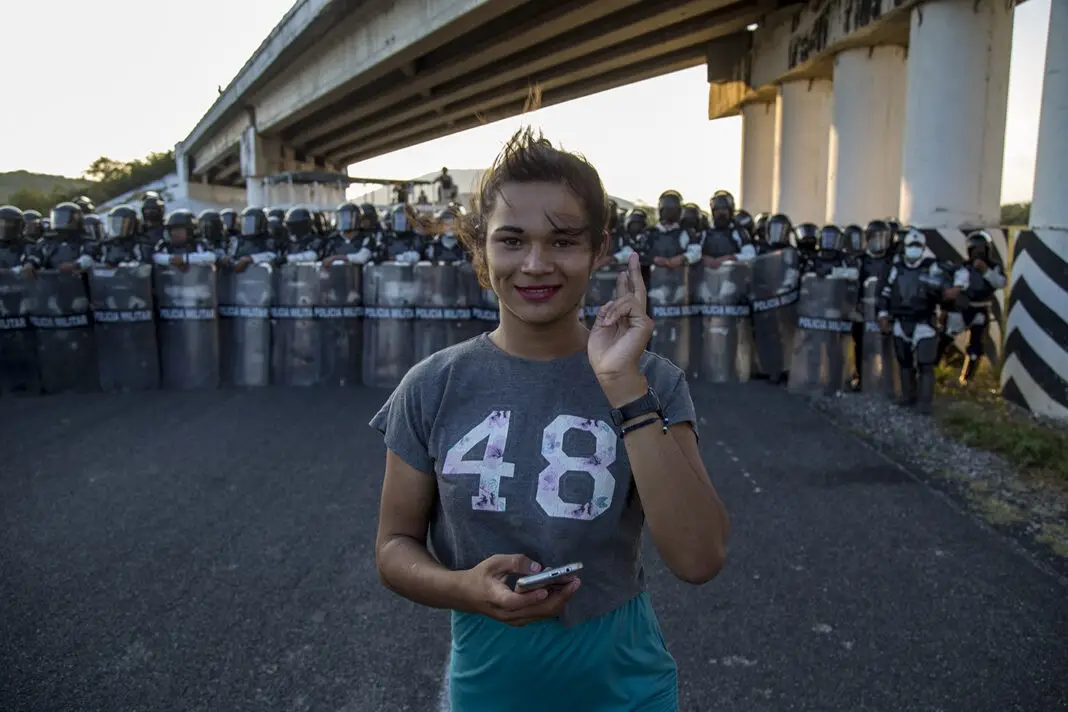

For many migrant women, the most difficult border is not the one they cross on foot, but the one they cross with fear. Before leaving their countries, they face such everyday and extreme violence that migration ceases to be a project and becomes a necessity for survival. The brutal certainty that, if they stay, life could end not only for them, but also for their families.
In Venezuela, Alba understood this long before packing some of her belongings. Surveillance, institutional pressure, and workplace harassment had ceased to be isolated incidents: they had become a direct message from the State to her and many others. She belonged to the group of Venezuelans who disagreed with the government, and she paid for it with suspicion, layoffs, and harassment.
The complaint she filed did not protect her. On the contrary, it placed her in an even more vulnerable position. With the 2025 Venezuelan elections just around the corner, Alba felt the city where she had lived her entire life shifting in temperature.
“A disaster was going to happen here, and it did. Thousands of people are missing, others are being held in inhumane conditions in basements without light or sun, and they don’t have the right to speak with their lawyers. I thought it through very carefully and said, ‘I’m leaving.’”
Leaving wasn’t an impulsive act. It was a painful conclusion: staying was more dangerous than crossing the Darién Gap—located between southern Panama and northern Colombia—which is known for the extreme risks faced by those who cross it: the presence of venomous and wild animals, hostile natural conditions, and the control exerted by organized crime, which charges for passage.
In that place, Alba had to face unknown police officers, sleep in makeshift shelters, or travel along roads where no one is responsible for anyone. She took her two children, ages 14 and 28, and they began a land journey that promised to be long, but they couldn’t imagine how dark it could become.
As soon as they crossed into Colombia, they faced their first extortion attempt. Alba remembers it with the cool detachment of someone who quickly learns the rules of the road: “Thank God I had money there.”
She knew that without paying, they wouldn’t be allowed to continue. And they also knew they were on their own: the law on the road is weak, unpredictable, and sometimes part of the risk itself.
But the truly unimaginable happened in Mexico, a country no one had spoken to her about with the necessary candor. She came prepared to face difficulties, but not to experience what she did.
Within hours, she and her family were kidnapped in Suchitlán. She spent five days with a group that moved her from place to place: simulated brothels, motels, and short-stay rooms. They subdued her, touched her, and threatened her.
“I was held captive for five days. They pretended to go to a brothel and then to a motel where they groped me, tore my bra, and that’s how it was until I had the $12,000 and they let us go.”
That horror, where women’s bodies become territory for exchange or punishment. In 2024, the Network for Documentation of Migrant Advocacy Organizations (Redodem) documented that among migrant women registered in its shelters, the types of violence reported during their journey included kidnapping (50.8%), physical assaults (31%), sexual violence (14.3%), and psychological torture (9.5%).
According to the Institute for Women in Migration, A.C. (IMUMI): “The violence they are fleeing does not end at the border crossing, but rather pursues them throughout their journey.”
Mexico often represents the most critical point, as summarized by Mariangel Vielma, a migrant woman from Venezuela and member of Caminantas, an organization in Guadalajara that supports and guides migrant and refugee women: “Many people have reported to us that they have made the entire journey from Colombia, crossing the Darién Gap, Panama, and arriving in Mexico, and they say that the most difficult part is Mexico.”
Under these conditions, reporting the situation is not a realistic option. Women traveling without papers face the paradox of needing protection from a system that, in practice, excludes them. Alba expresses it this way:
“If it were up to me, I would report it, but who will protect the safety of my family and my children, even if I already have a residency permit, the right to vote, or an identity here? Will any action actually be taken, or will there simply be a ruling against me?”
The fear of reporting does not only stem from institutional distrust: it also comes from the empirical experience of those who disappear without a trace, as explained by Gauri Porras, Co-executive Director of FM4 Paso Libre (an organization in Jalisco that offers humanitarian, legal and psychosocial assistance to migrants in transit and refugees within the state): “it is no longer necessary to erase their identity, because they are without identity.”
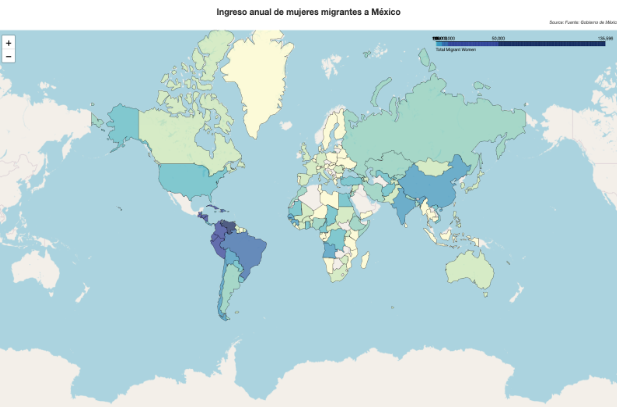
In this context, another scenario emerges for people in situations of human mobility passing through Mexico: prolonged transit.
Now the country has also become a territory of waiting, as the arrival of new US immigration policies has imposed a change in mobility dynamics, causing migrants to postpone, in most cases, their stay in the countries that were initially transit points.
According to researcher Iliana Martínez, from the Migration Affairs Program at ITESO, “with the change of administration, the programs to request asylum in the US were canceled, so people now have to reformulate their migration plans.”
She adds that part of these changes includes evaluating whether the best option is to cross without documents or to remain in Mexico under international protection. This has profoundly altered the plans and possibilities of those who migrate.
The change has transformed the stay of migrants in different states of the republic, such as Jalisco, which is no longer just a transit point.
Karina Arias, also a researcher at ITESO, summarizes it this way: “In Jalisco, all four facets of human mobility are present: it is a state of origin, transit, destination, and now also of return.”
In Guadalajara, these functions lead to understanding it as a city with diverse opportunities, such as educational and employment opportunities. Mariangel comments that: “Some women migrate here for studies and because it is a place where there are transnational companies that seek people from all over, highly specialized in certain areas.”
However:
“Many times, when you don’t have support, they can take advantage of you in these areas, and people also take whatever work they can find. Let’s be clear that here in Mexico, people work long hours and the pay, at least in Guadalajara, is not high,” she affirms.
These experiences, reflecting the complexity of remaining in an unfamiliar territory and now this prolonged transit, open up diverse situations. The reality is that for migrant women, arriving in and remaining in Mexico means facing risks that arise from their displacement from their region, during the transit process, and upon arrival in the country.
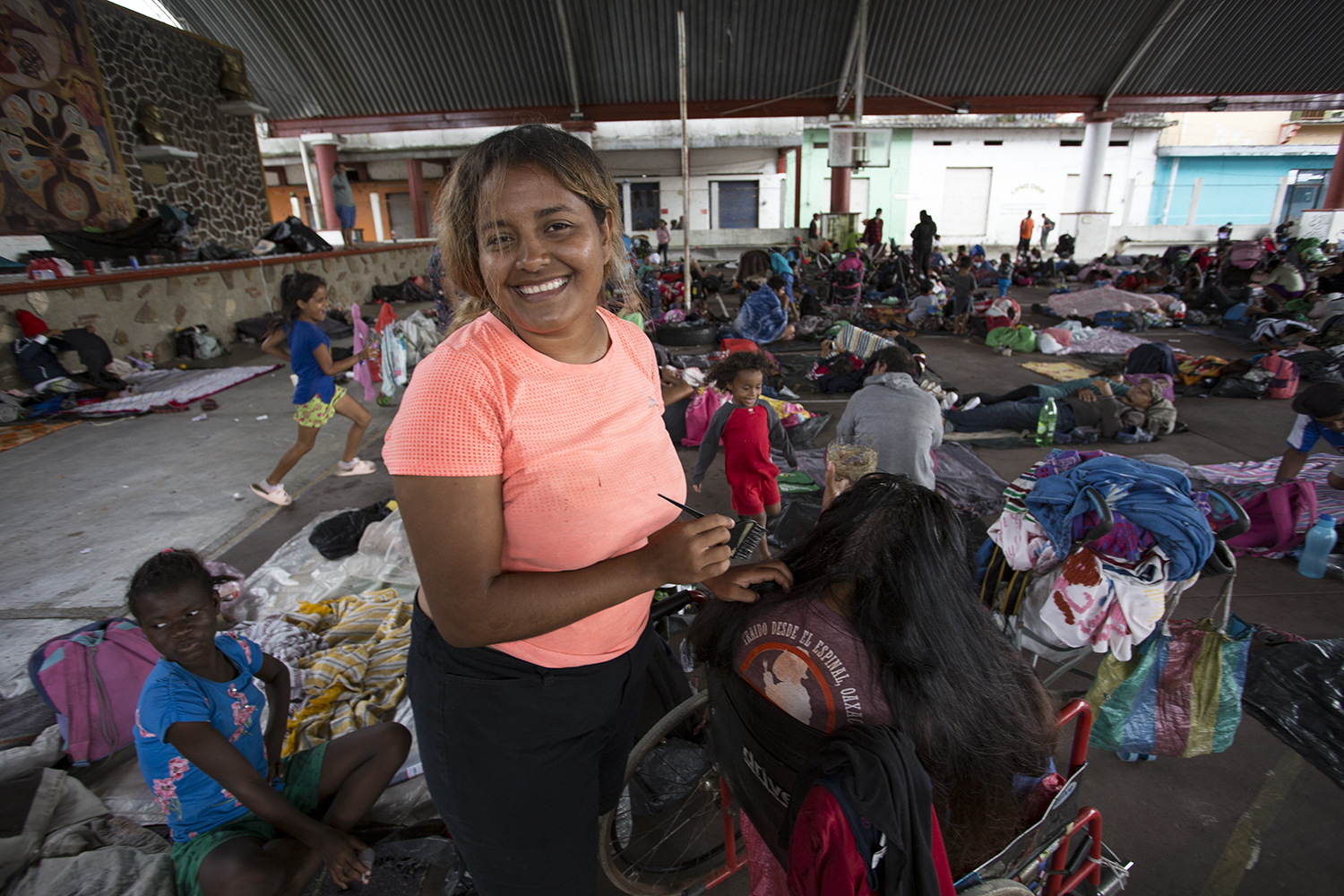
In the last decade, migration in Mexico has transformed. What was once perceived as a male phenomenon now increasingly includes women traveling alone, women who support their families, and entire families moving together.
This change, observed in shelters, as well as in testimonies and civil society organizations, stems from diverse reasons: political conflicts, inequality, lack of access to education, organized crime, economic crises, forced displacement, persecution, and, as evidenced in this work, also gender-based violence. According to data collected by REDODEM from women entering shelters in Mexico, some of the reasons that motivated their migration were domestic violence, as well as having been victims of assault and sexual violence.
Mariangel explains that 10 or 15 years ago, “the migration we saw was almost exclusively male,” but today there is a clear increase in women traveling alone or with their entire families.
This change, she asserts, is a response to extreme pressures: political violence, insecurity, and economic crises, circumstances that have made daily life “unlivable” in their countries of origin, forcing entire families to abandon their homes. In other cases, she notes, “it is single mothers who migrate alone, leaving their children in the care of grandmothers, aunts, or sisters.”
Although many women migrate due to violence or necessity, there are also trajectories marked by studies, scholarships, and academic opportunities. However, even in these cases, women face legal, economic, and symbolic barriers that complicate their integration into Mexico.
Marina, originally from Lima, Peru, knew from a young age that she wanted to study abroad: “I was always a real bookworm, or as we say in Peru, a studious type. I loved learning, traveling, and knowing more.”
Her first experience in Mexico was through a research stay. She chose Guadalajara because she was looking for a less stifling pace than that of a capital city. “I fell in love with the curriculum and the whole experience,” she says. Over time, she achieved stability, although she still faces daily challenges like commuting: “To start at eight, I have to take the bus at five-thirty.”
Alongside her is the story of Laura Mahecha, a doctor originally from Bogotá, Colombia:
“I came to study pediatrics on a scholarship, and although I had the privilege of migrating for my studies, it wasn’t easy.”
Source: zonadocs