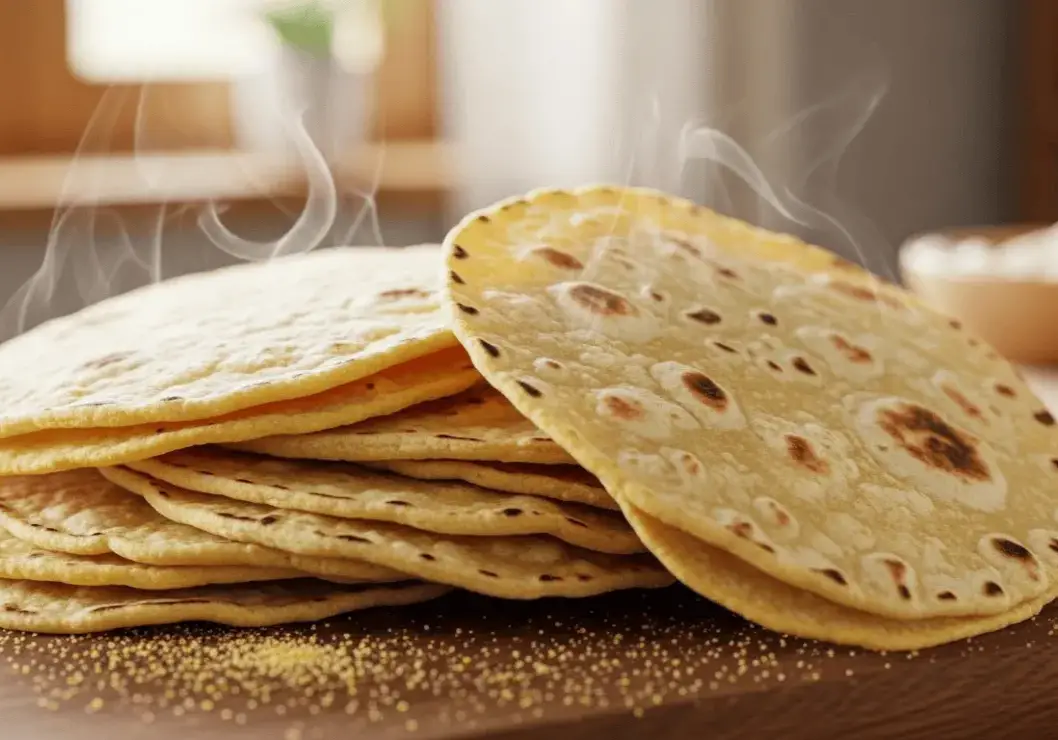

The Mexican Social Security Institute (IMSS) has cleared up one of the most frequent questions at Mexican family dinner tables: how many tortillas can be eaten per day without affecting one’s health?
In its recent Healthy Eating and Exercise Guide, the institution specified that, for a person who maintains regular physical activity, the recommended limit is between 6 and 7 tortillas per day.
This food, a fundamental pillar of national cuisine and a cultural symbol, not only acts as a source of energy, but is also a nutritional complex that provides vital benefits at various stages of life, from childhood to old age.
Nixtamalized corn tortillas are much more than a simple side dish; they are classified as an essential grain within the Institutional Basic Food List.
Contrary to the popular myth that suggests this food is the main culprit behind weight gain, IMSS experts point out that its caloric content is moderate and balanced.
A standard 45-gram serving, roughly equivalent to two tortillas, provides just 92 calories, along with 1.7 grams of protein and a significant amount of fiber (2.4 g), which promotes digestive health.
The true value of tortillas lies in their richness in microminerals. They are a primary source of calcium (70.8 mg per two tortillas), and also contain iron, phosphorus, magnesium, and B vitamins, such as niacin, thiamine, and riboflavin.
These nutrients are key to preventing diseases like rickets and pellagra, conditions directly associated with calcium and niacin deficiencies in the daily diet.
Although the general limit is set at 7 tortillas for active individuals, the Mexican Social Security Institute (IMSS) advises that consumption should be strictly monitored in patients with specific medical conditions.
People diagnosed with diabetes mellitus, obesity, or hypothyroidism should adjust their carbohydrate intake under medical supervision, as an excess could disrupt their blood sugar or metabolic levels.
On the other hand, for people with a sedentary lifestyle, it is imperative to consult a nutritionist to calculate the exact portions their body requires based on their low caloric expenditure.
In contrast, the Mexican Social Security Institute (IMSS) strongly recommends tortillas for patients with hypercatabolic diseases due to their high energy density and complex carbohydrates.
Likewise, due to their high calcium content, they are an indispensable ally in the prevention of osteoporosis and hypocalcemia. Their consumption is suggested from seven months of age and is considered vital during pregnancy, breastfeeding, and menopause.
To maximize the benefits of tortillas, the IMSS suggests following simple preparation guidelines.
Ideally, they should be heated on a griddle or steamed, strictly avoiding frying or adding extra fats. Combining them with legumes like beans, lean proteins like chicken or fish, and a good portion of vegetables creates a nutritionally complete dish.
Furthermore, nixtamalized corn tortillas will always be a superior option to white bread or refined flour tortillas thanks to their higher fiber and essential mineral content.
Source: debate