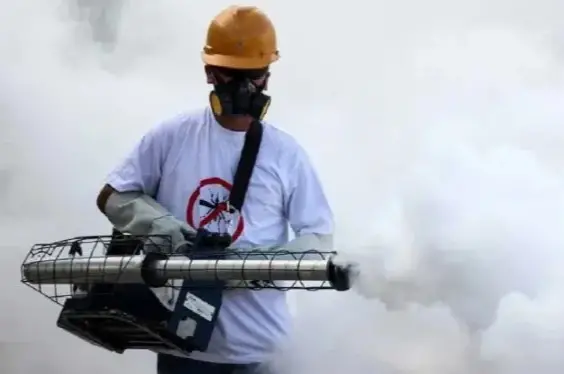

Dengue fever remains a concern on the health radar of the Yucatán Peninsula. In the first five weeks of 2016, Quintana Roo and Yucatán remained among the 15 states in the country with the highest number of confirmed cases.
The active cases detected during this period have once again positioned the region as one of the most vulnerable to infections from the virus transmitted by the Aedes aegypti mosquito.
Although the figures do not represent a scenario of hospital saturation or deaths associated with this infection, they do show active circulation of the virus in a region where climatic conditions such as heat, humidity, and intermittent rain favor the reproduction of the transmitting mosquito.
Breakdown by state, Quintana Roo reported 13 confirmed cases so far in 2016, Yucatán added 7, and Campeche 3, for a regional total of 23 laboratory-confirmed infections.
Compared to the same period in 2015, the peninsula had accumulated 28 cases: 5 in Quintana Roo, 19 in Yucatán, and 4 in Campeche. This means that, although the regional total was slightly lower this year, Quintana Roo showed an increase compared to 2015, rising from five to thirteen confirmed cases.
The epidemiological report indicated that in Quintana Roo, the most affected municipalities are Playa del Carmen, Othón P. Blanco, and Benito Juárez, areas with high population density and significant internal and tourist traffic.
In Campeche, cases were concentrated mainly in Ciudad del Carmen and the municipality of Campeche, while in Yucatán, Mérida and Progreso stand out as the areas with the highest number of positive diagnoses.
The confirmed patients sought medical attention after presenting symptoms consistent with dengue. Following clinical evaluation, healthcare personnel ordered diagnostic tests, either a rapid test or a complete blood count.
Once the virus was confirmed, patients began outpatient medical treatment at home, without requiring hospitalization, indicating that, so far, mild cases predominate.
Currently, the number of suspected cases exceeds these figures, so the dengue situation could be different, with more cases than those reported in the region. In the Yucatán Peninsula, 488 suspected cases have been registered, of which 294 are in Quintana Roo, 121 in Yucatán, and 73 in Campeche.
These records are of people who sought medical attention with an infectious condition characteristic of dengue, with symptoms such as fever, muscle pain, pain behind the eyes, and general malaise, but who did not undergo diagnostic testing. Therefore, their status could not be officially confirmed or ruled out.
This difference between confirmed and suspected cases is significant, as it could indicate a greater circulation of the virus than reflected in official records. Furthermore, each undiagnosed case represents a potential link in the chain of transmission if preventive measures are not taken in the patient’s environment.
Health authorities reported that the DENV-2 and DENV-4 serotypes of the dengue virus are currently circulating on the peninsula.
Both cause symptoms similar to those of other serotypes: high fever, severe headache, pain behind the eyes, muscle and joint pain, nausea, vomiting, and the appearance of a rash.
However, DENV-2, along with DENV-3, has been associated with more severe forms of the disease, such as dengue hemorrhagic fever and dengue shock syndrome, especially in people who have already had a previous infection with another serotype. This means that those who have had dengue in previous years may be at greater risk of complications if they become infected again.
Although DENV-4 is generally considered less aggressive, it can also cause complications, especially when warning signs appear, such as severe abdominal pain, persistent vomiting, bleeding, or drowsiness.
The Yucatán Peninsula has environmental conditions that favor the proliferation of the Aedes aegypti mosquito, the dengue vector. High temperatures, constant humidity, and the accumulation of water in patios, rooftops, or open containers create a favorable environment for its reproduction.
In addition, movement between municipalities and the constant flow of tourists can facilitate the spread of the virus between communities.
Therefore, although confirmed cases in 2026 remain at moderate levels, the fact that Quintana Roo and Yucatán are among the states with the highest incidence at the beginning of the year reinforces the need to maintain ongoing preventive measures.
Eliminating breeding grounds, covering water containers, cleaning yards, and seeking medical attention at the first sign of symptoms are important measures to prevent an increase in infections in the coming weeks, especially as the hottest and rainiest season progresses.
It’s worth noting that, nationally, Mexico has accumulated 552 confirmed cases distributed across 20 states. Of that total, 23 are located on the Yucatán Peninsula, representing approximately 5% of the active cases nationwide.
Nationally, the states with the most cases were Sonora with 157, Sinaloa with 107, Veracruz with 92, and Tabasco with 74. Other states with intermediate numbers include Quintana Roo with 13 cases and Yucatán with 7, placing them among the states with the highest incidence in the country at the start of this year.

Source: laverdadnoticias