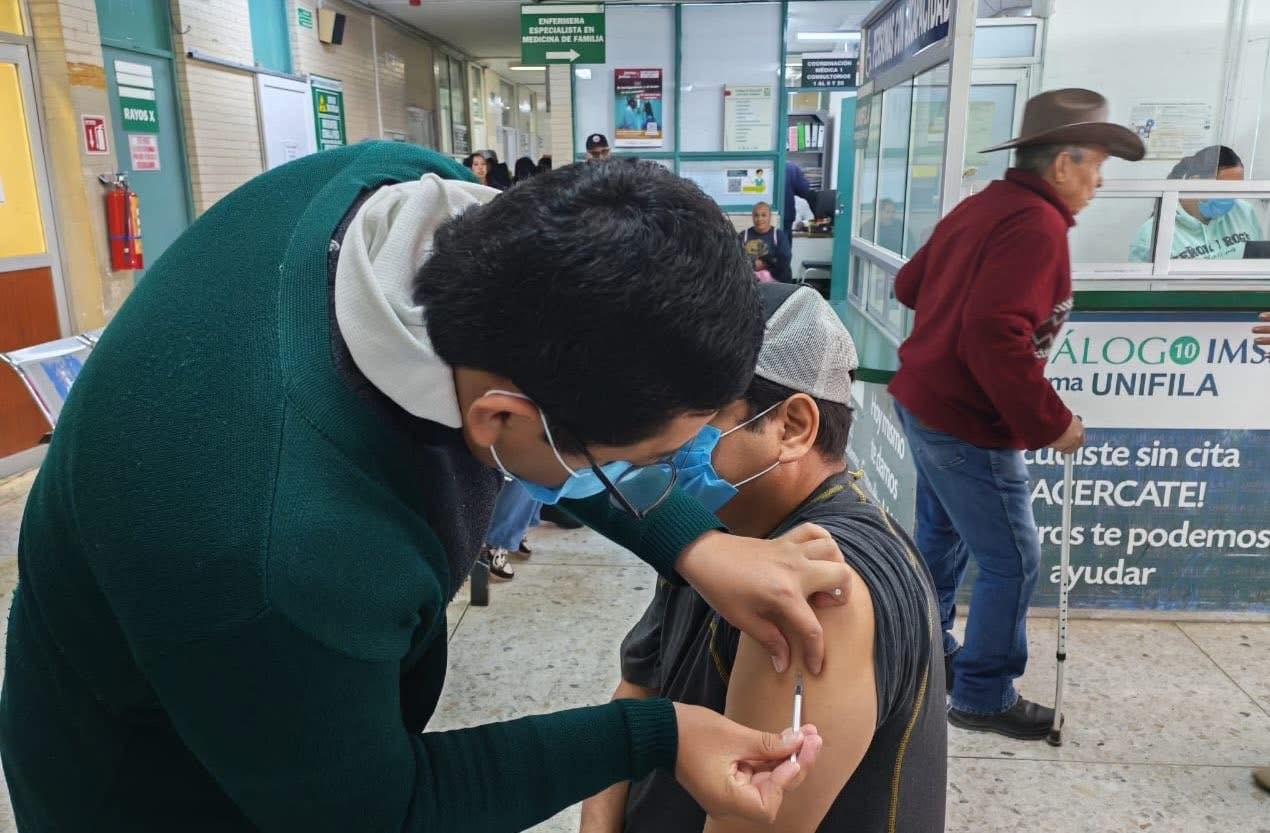

The Durango State Health Secretariat (SSD) updated the measles case count in the state; the number has risen to 51 infections. Authorities assure that those affected are under constant monitoring and receiving medical attention, in accordance with federal guidelines.
The confirmed cases are distributed across five municipalities in the state: 22 in Guadalupe Victoria, 22 in Durango City, 5 in Mezquital, 1 in Gómez Palacio, and 1 in Vicente Guerrero. In an official statement, the SSD detailed that in each case, the epidemiological surveillance protocol was activated, an epidemiological cordon was implemented to interrupt the chain of transmission, and contacts are being monitored. Additionally, 19 suspected cases are under investigation, and 41 have been ruled out.
State health authorities added that hospitals throughout the state are providing specialized care to patients who require it, and those under observation are reported to be in stable condition. Simultaneously, vaccination efforts are being strengthened both within and outside healthcare facilities, in coordination with institutions such as the Mexican Social Security Institute (IMSS) and the Institute for Social Security and Services for State Workers (ISSSTE), prioritizing children with incomplete vaccination schedules according to the National Health Card.
The Ministry of Health (SSD) added that, as a preventative measure and to optimize the distribution of available vaccines, an operational adjustment will be made this weekend at some vaccination sites. During this time, the supply and logistics will be reorganized to strengthen the application strategy in priority areas. Vaccination will continue according to the schedule, which will be announced in due course through official channels.
Measles is a highly contagious viral disease caused by the measles virus, which belongs to the Paramyxoviridae family of the Morbillivirus genus. Humans are the only reservoir of the virus. It is transmitted through the dissemination of respiratory secretions from infected individuals, directly or indirectly, to susceptible populations.
It is characterized by the presence of high fever, maculopapular rash, accompanied by at least one of the following signs and symptoms: cough, coryza (acute inflammation of the nasal mucosa), conjunctivitis or lymphadenopathy (retroauricular, occipital or cervical); and Koplik spots (small white bumps, often on a reddish background, that appear on the inner surface of the cheeks in the early stages of measles).
The incubation period for measles is 7 to 21 days, with an average of 14 days. The period of transmissibility is four days before and four days after the onset of the rash, according to the Federal Ministry of Health’s Rapid Response Plan for the Interruption of the Measles Outbreak.
The World Health Organization (WHO) states that there is no specific treatment for measles and that care should focus on relieving symptoms, providing comfort to the affected person, and preventing complications. The good news is that community vaccination is the most effective way to prevent this disease.

Source: elsiglodetorreon