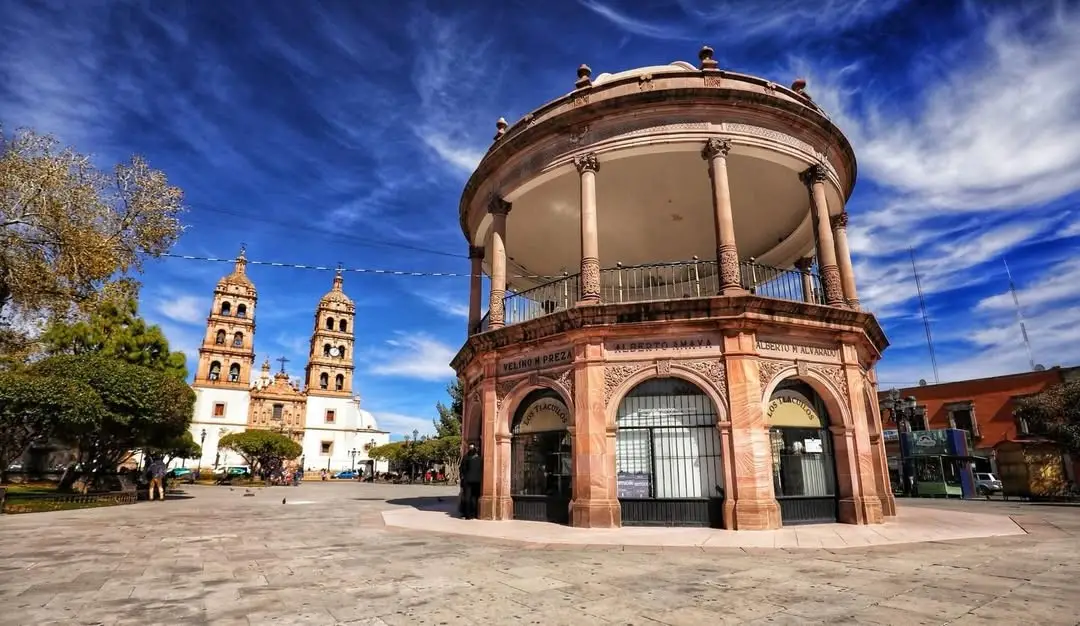

In Durango, you’ll find cathedrals and colonial architecture, charming towns, mountain forests, semi-desert landscapes, and delicious regional cuisine.
In the northwest region of Mexico, Durango has become a favorite tourist destination for the holiday season, especially during Holy Week, as its municipalities reflect the history, culture, and natural landscapes characteristic of the state.
If you’re planning to take advantage of the upcoming holiday period, this city, also known as the “Land of Scorpions,” could be your top choice for exploring new tourist destinations in this part of the country.
Durango City
The municipality of Durango, whose capital is the city of Victoria de Durango, is the heart of the state. Its Historic Center is famous for its colonial architecture, plazas, and buildings dating back centuries, which are part of the Camino Real de Tierra Adentro (Royal Road of the Interior), a UNESCO World Heritage Site.
Here you can visit:
Cathedral Basilica
Francisco Villa Museum
Old West Walk
Guadiana Park and the Bebeleche Museum
This municipality combines history with modern activities, making it an ideal starting point for your tourist route within the state.
Pueblo Nuevo
The municipality of Pueblo Nuevo is one of the most impressive natural destinations in the state. Its main town, El Salto, serves as a starting point for exploring the Santa Bárbara Gorge, an area with mountainous landscapes ideal for ecotourism and hiking.

Mapimí
Mapimí, recognized as a Pueblo Mágico (Magical Town), is a must-see destination if you’re drawn to a blend of history and culture. Here you’ll find colonial architecture such as the Santiago Apóstol Church and the Bolsón de Mapimí (Mapimí Basin).
Gómez Palacio
The municipality of Gómez Palacio, located in the La Laguna region, is known for its culinary offerings, parks, plazas, and cultural centers.

Cuencamé
Finally, Cuencamé is a municipality with interesting natural and cultural attractions. Among its highlights are landscapes with unique rock formations and hiking trails for observing flora and fauna.
Source: noro