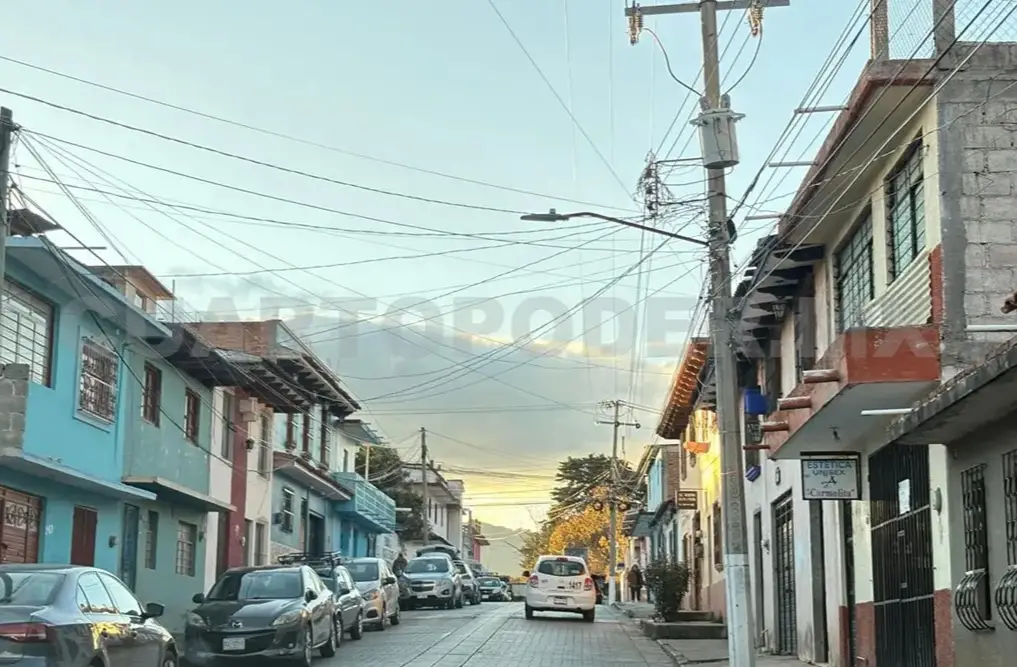

Faced with the impossibility of continuing to build towards the city’s outskirts, various real estate companies belonging to the Mexican Association of Real Estate Professionals (AMPI) have indicated that they have begun conducting studies to determine which areas of the city can accommodate buildings of up to five stories, a development that some architects consider a natural progression.
Historic Center, Almost Untouchable
When asked about this proposal, two architects emphasized the importance of preserving the historic center.
San Cristóbal was declared a zone of historical monuments in 1974 by the then-President of Mexico, Luis Echeverría Álvarez, and in 1986 Miguel de la Madrid ratified the declaration.
Eduardo Díaz, former delegate and active member of the Chiapas New Generation College of Architects, points out that without this law, the historic center would have undergone more alterations than are visible today.
In this regard, he mentions the phenomenon of shopping malls being built within historic buildings.
Something that, according to architect Jorge Ruiz Cacho, causes the city itself to lose its essence.
“They become buildings that are out of place in an architectural context, and that makes the city lose its identity.”
A natural process or the consequence of bad decisions?
For Eduardo Díaz, the real estate developers’ proposal is a natural result, while Ruiz Cacho points to the city’s exorbitant growth, which, in his opinion, has caused it to lose its historical character.
Ruiz Cacho believes that the appropriate solution would have been a clear demarcation of the city’s historical area and its adjacent, more contemporary urban development.
However, Eduardo Díaz is more optimistic about the construction of taller buildings, because they can pave the way for what are known as compact cities and other theories that propose that through vertical growth and the use of mixed-use buildings (where housing, shops, and offices converge), citizens can reach any location in 15 minutes, on foot or by bicycle.
Underlying this is the main concern: the right to housing. In tourist cities like San Cristóbal, this right faces challenges such as those posed by Airbnb.
In this regard, Eduardo Díaz mentions that there are many buildings in the city dedicated exclusively to lodging.
“Most people who own homes downtown see a business opportunity in offering accommodation,” Díaz points out, adding that this situation also reduces the profits of hotel owners.
Given these issues, Jorge Ruiz Cacho emphasizes the importance of the municipality developing a sound urban development plan that clearly defines where growth is feasible.
Source: cuartopoder