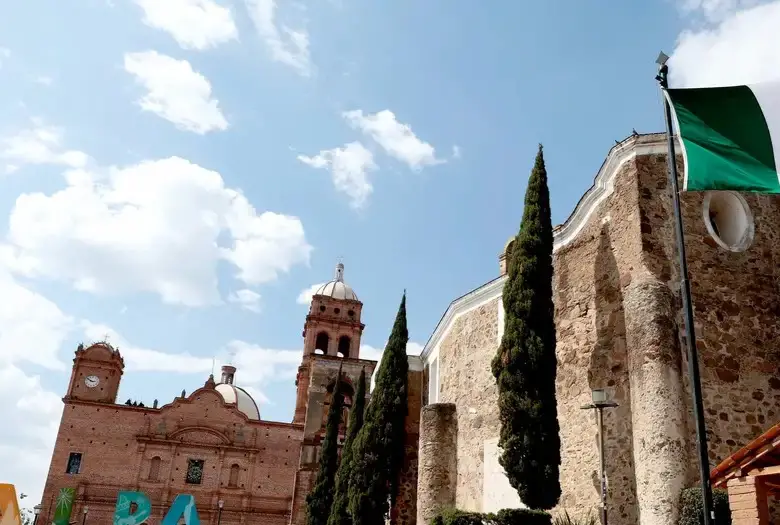

The Frankfurt am Main newspaper FAZ published an opinion piece on the death of Nemesio Oseguera, alias “El Mencho”, leader of the Jalisco New Generation cartel, who fell on Sunday, February 22, 2026 at the hands of the military in Tapalpa, after being wounded while trying to escape. This is how FAZ assesses the situation:
“For Mexican President Claudia Sheinbaum, the elimination of the powerful cartel leader is, to date, the most visible blow against organized crime. (…)
In four months, Mexico wants to present itself as one of the three hosts of the World Cup. Four matches are also scheduled in Guadalajara, the capital of Jalisco, but the almost warlike images from Sunday are hardly appealing. Nor should they be overestimated, since these waves of violence tend to be very isolated. Mexico’s major cities and popular tourist destinations are safer than many other places in Latin America, and will probably be even safer during the World Cup.
What is decisive for Mexico is not the short-term outlook, but the long-term dynamic. (…) Mexican cartels are part of a political economy based on corruption, money laundering, logistical infrastructure, and the cooperation of local power elites.
A sustainable strategic shift would have to begin there. Mexico needs rigorous financial investigations, an independent judiciary, and effective municipal administrations.” transparency and an effective fight against corruption are essential. However, a political contradiction arises here. The leftist Morena party, led by López Obrador and Sheinbaum, has weakened or eliminated autonomous oversight bodies and promoted a controversial judicial reform that strengthens political influence over the courts.
Anyone who wants to structurally combat organized crime must strengthen institutional independence, not weaken it. The United States also bears responsibility. Without a reduction in drug demand, without effective control of arms exports to Mexico, and without consistent prosecution of illegal financial flows, any security demands remain incomplete.
Spectacular raids generate images of strength, but they do not change the incentives that make the drug trade and violence profitable. As long as these foundations remain and institutions continue to be vulnerable, new actors will emerge. The true turning point does not begin with the death of a cartel leader. It begins with strengthening the rule of law. Without it, the death of ‘El Mencho’ is nothing more than a spectacular event within an ongoing conflict.
“Drug trafficking cannot be fought with a military mindset.”
For its part, the German newspaper Die Zeit writes about the explosion of violence unleashed after the operation to capture “El Mencho”:
“Mexico is offering images typical of a civil war. At the beginning of the week, heavily armed members of the most powerful drug cartel paralyzed numerous cities with arson and road blockades.
It was a show of force after the Army killed their leader, Nemesio Rubén Oseguera. Both local residents and tourists had to barricade themselves in homes or hotels, and schools were closed. ‘This is what happens when you mess with us,’ is the carefully calculated message being sent to the State. Carefully calculated because the cartel has not yet unleashed all the violence of which it is capable.
The death of a drug kingpin at the hands of the police or the Army usually provokes a defiant, triumphant reaction in the media and in politics, as if the State had finally struck a blow.” The table was closed and order was restored. (…)
The ‘war on drugs’ has failed spectacularly. After hundreds of thousands of deaths and extremely serious human rights violations, including those committed by the Army, it is clear that drug trafficking cannot be combated with a military mindset. The same is true for the strategy of eliminating cartel leaders. Generally, even more brutal groups emerge to fill the vacuum, and violence escalates in succession wars. That is precisely what now threatens to happen after Oseguera’s death.
Source: dw