
With 100 days until the 2026 World Cup, the violence following the death of “El Mencho” reignites doubts about security in Mexico. The government and FIFA are calling for calm, but experts warn of structural risks.
Just over 100 days before the 2026 World Cup, security in Mexico has returned to the center of international debate. The death of Nemesio Oseguera Cervantes, alias “El Mencho,” leader of the Jalisco New Generation Cartel (CJNG), sparked riots and roadblocks in various states. Although the situation appears to have stabilized, the question remains: Is it viable to organize a global event in a country marked by daily violence and more than 130,000 missing persons?
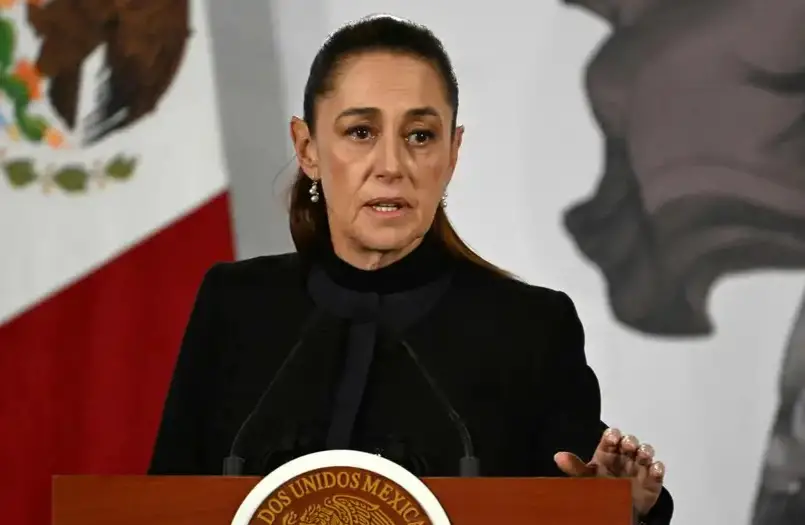
President Claudia Sheinbaum attempted to allay fears by assuring that the government will guarantee a safe tournament and that Mexico is prepared to welcome the world. Similarly, FIFA President Gianni Infantino called for confidence: “Of course, we are monitoring the situation, but we are fully confident that everything will go very well.”
However, from Berlin, the German Foreign Ministry maintains travel warnings pointing to high levels of violence in several regions of the country. And the Federal Government’s tourism coordinator, Christoph Ploß, told the Handelsblatt newspaper: “FIFA, in collaboration with the governments of Canada, the United States, and Mexico, must ensure that fans are not in danger and that the host countries comply with security regulations.”
From the business sector, the tone is more nuanced. Björn Lisker, of the German-Mexican Chamber of Commerce and Industry, noted in an interview with DW that “the security situation in Mexico is a constant concern for many companies, completely independent of the World Cup.”
He explained that “almost half of the companies indicate that the effects of insecurity on their business remain unchanged,” while a third perceive greater impacts. But he emphasizes a relevant fact: “So far, we are unaware of any cases in which a member company has left the country for security reasons.”
Regarding the tournament, the chamber operates on the premise that “the authorities will do everything possible to ensure the safe and smooth running of the championship.”
US President Donald Trump, Mexican President Claudia Sheinbaum, and Canadian Prime Minister Mark Carney take a selfie with FIFA President Gianni Infantino during the draw for the 2026 FIFA World Cup.
The political analysis paints a more troubling picture. Florian Huber, head of the Mexico and Caribbean office of the Heinrich Böll Foundation, linked to the Green Party, told DW that the recent violence was also a “demonstration of the cartel’s power, both against the state and against society, under the motto: ‘We’re in charge here.'”
Huber also warned that the cartels operate as “criminal economic conglomerates” that extend far beyond drug trafficking and that a mega-event could generate new opportunities for illicit income.
Víctor Hugo López Rodríguez, executive secretary of the Mexican human rights network Red TDT, maintains that the recent riots in 22 states demonstrate “the firepower, mobilization capacity, and control they have over most of the country.” He also warned of the risk of a “kind of temporary ‘narco-peace'” during the tournament.
Helena Raspe, an expert on organized crime with the German Catholic development organization Misereor, told DW that violence in Mexico is structural and that there are “more than 130,000 missing persons according to official figures.” She believes the militarization strategy “is doomed to failure” and that the problem is not limited to drug cartels, but involves networks that have infiltrated institutions and social structures.
Source: dw