
Today in Michoacán, the roadblocks were lifted and classes resumed, but the truly explosive element isn’t the calm, but rather what the prosecutor just confirmed in an interview. While authorities were removing the last burned vehicles from the Ecuandureo tollbooth, they began receiving threats to prevent them from clearing the highway, and these threats weren’t coming from armed criminals.
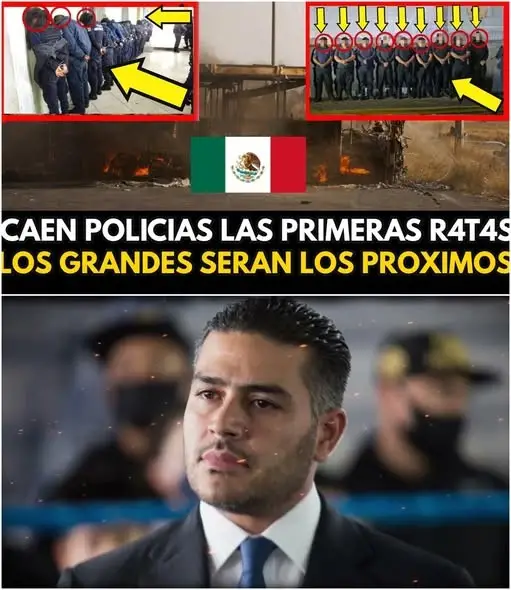
In the mountains, they were coming from municipal police officers. Eleven officers were disarmed and arrested because conversations and WhatsApp groups with direct links to organized crime were found on their phones. These groups contained orders to report on the movements of federal and state forces and to prevent the removal of the roadblocks.
And the fact that sets off all the alarms is that ten of these officers were from Jalisco and one from Michoacán. In other words, we’re not just talking about highway violence; we’re talking about infiltrated police forces being used as lookouts and for territorial control. Stay tuned because we’re going to break down exactly how the infiltration was detected, what evidence they claim to have on the devices, and why the prosecutor himself has already announced that they will be reviewing other agencies in the region.
And if you want to follow these confirmed news stories with full context and without missing any updates, subscribe now and turn on notifications, because what they’re revealing today could uncover a much larger chain of complicity. What the prosecutor explained is even more serious because the arrest wasn’t the result of an anonymous tip, but rather a direct response on the ground when Civil Guard personnel went to remove the burned vehicles and abandoned trucks on the Western Highway and began receiving messages and warnings not to move the roadblocks. Tracing the origin of these threats, it was discovered that they came from within the municipal public security forces of Ecuandureo. This led to a crackdown on the force and the seizure of their phones, where conversations were found that not only revealed membership in groups linked to organized crime, but also specific instructions to report the movements of federal and state forces on Sunday and to obstruct operations the following day. In other words, it wasn’t a case of omission, but of active collaboration. Therefore, the immediate decision was made to disarm them and turn them over to the State Attorney General’s Office to initiate legal proceedings and formally extract the information from their devices to determine the extent of their involvement and whether other officials were operating under the same modus operandi.
The key finding that changes the scope of the case is that, according to the interview, these 11 officers did not act in isolation, but rather in coordination through messaging groups where they received direct instructions to accompany, inform, and report in real time the movements of state and federal law enforcement agencies. In other words, they functioned as an early warning network for the criminal group, precisely at the most critical moment after the arrest of one of its leaders. This implies that the infiltration was not passive, but operational. For this reason, the prosecutor announced that they will not limit themselves to this municipality, but will also review other law enforcement agencies in the area to rule out any further sources of information leaks.
While digital forensics continues to extract conversations, contacts, and possible additional links that will help determine whether it was a specific cell or a broader network embedded within municipal structures—a scenario that, if confirmed, would significantly expand the scope of the investigation in Michoacán—the investigation will proceed in a different direction.

Source: refugiodeamor