Every first weekend of March, the festival in honor of the Lord of the Conquest, a religious image housed in the Parish of Saint Michael the Archangel, takes place in San Miguel de Allende.
The celebration draws local dance groups and visitors from various states across the country, as well as faithful who come to fulfill vows and participate in liturgical acts.
The image, also known in the past as the Lord of Battles, dates back to the viceroyalty period. According to local historical records, it was introduced during the evangelization process in the region and, over time, gained prominence among indigenous communities and the mestizo population.
It currently resides on one of the side altars of the parish church.
Starting the night before the first Friday of March, vigils are held in different neighborhoods. Organized groups prepare their participation with traditional music and floral arrangements.
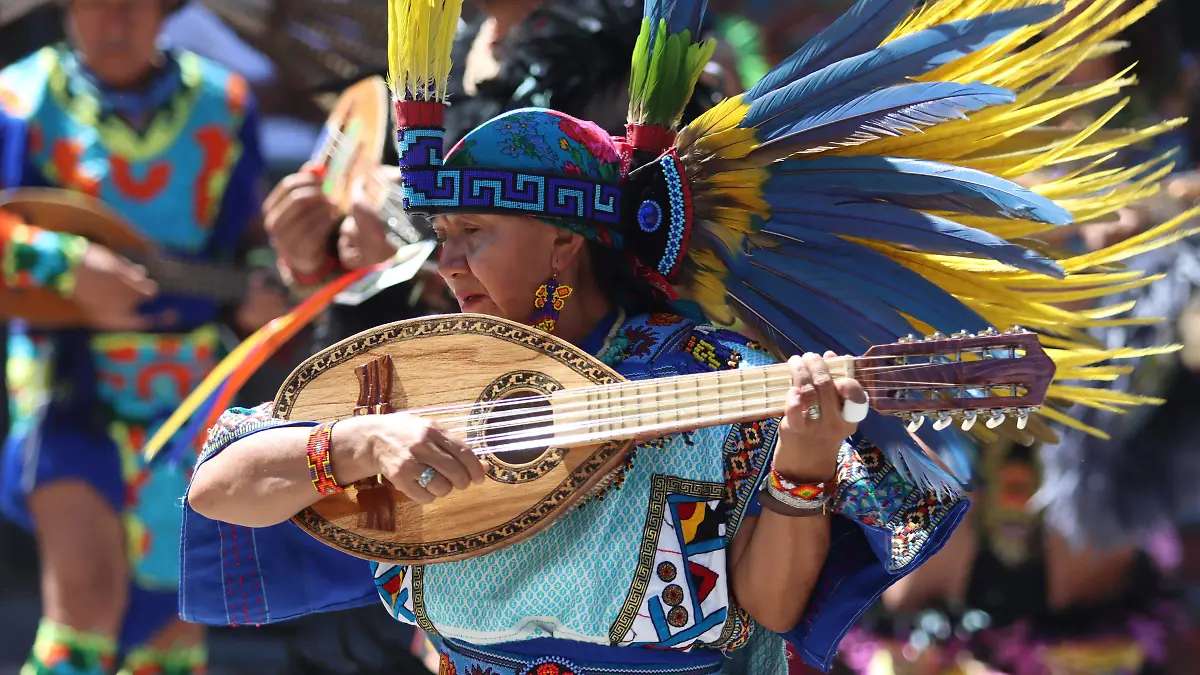
During the early hours of Saturday, groups of conchero dancers and other ritual dance troupes begin to gather in the city’s main square.
Throughout Friday and Saturday, the participants perform dances in front of the church atrium and in the main plaza. The performances take place in shifts and can last for several hours.
The groups wear traditional clothing and carry percussion instruments and, in some cases, conch shells used as wind instruments.
Inside the church, the faithful approach the altar to recite the so-called 33 Creeds, referring to the years of life attributed to Jesus Christ.
The practice consists of the consecutive repetition of the Creed as an act of personal devotion. Throughout the day, a constant flow of people can be seen entering, remaining for a few minutes in prayer, and then leaving.
Among the expressions associated with the festival are the offerings known as parandes. These may include bread, fruit, flowers, and other foods that are later shared. The traditional procession of oxen is also commemorated, a representation linked to ancient agricultural practices of the region.
Religious elements and community practices converge on this date. The celebration maintains a structure organized by mayordomías (stewardships) and dance groups that coordinate schedules and participation.
Church authorities officiate masses throughout the day, while cultural activities unfold simultaneously outside.
The Feast of the Lord of the Conquest is part of the municipality’s annual calendar of religious celebrations in March and remains one of the largest gatherings of traditional dances of the year in the historic center.
Source: oem