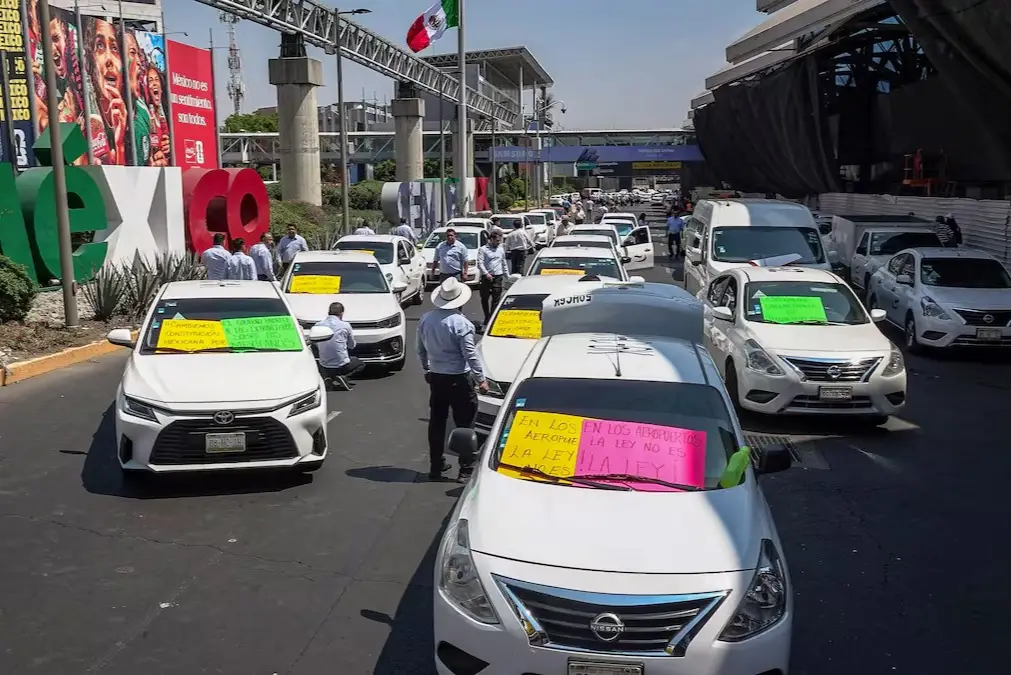

“We’ve been fighting for almost 50 years. This is our livelihood. Get rid of the apps!” These are the demands shouted by about a hundred taxi drivers as an operation involving some 800 police officers confronted them. This is Mexico City International Airport, which has been blocked by drivers protesting what they call “unfair” competition from platforms like Uber and DiDi. Wednesday’s protest lasted almost four hours, causing chaos amidst traffic jams and leaving confused travelers stranded.
The protest began shortly after 10:00 a.m., although the police had been in the area for at least three hours. The country’s most important airport, already affected by the usual traffic and the rapidly progressing renovations in preparation for the World Cup, was also the scene of another clash between taxi drivers and ride-hailing platforms. The protesters denounced “unfair” competition. In their call to action, which circulated on social media yesterday, they accuse the Ministry of Infrastructure, Communications and Transportation and airport authorities of “failing to enforce the law,” holding them responsible for allowing the apps to operate in areas where regulations prohibit it. They also point to the Senate and the Chamber of Deputies for “tailoring legislation” to benefit the platforms.
“We are blocking access to both airport terminals because, unfortunately, the authorities have been negligent in combating the illegal services offered by these apps,” explained José Romero, a member of one of the taxi drivers’ groups. “We want the current legal framework to be respected. These vehicles can operate outside the federal zone, but due to the authorities’ complicity, they do so here without limitations, even though it is against the law.” Romero maintains that the conflict is not against competition itself. “We are not opposed to competition; we are not afraid of competition. What we want is for the law to be respected,” he says. According to the drivers, since 2015, “thousands of families linked to airport services” have seen their source of income affected. “We’ve exhausted all communication channels. We’ve requested working groups and haven’t been heard,” they added.
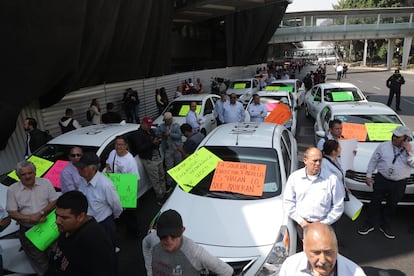
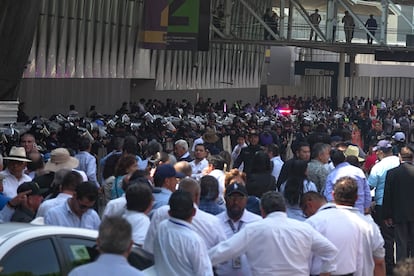
While the taxi drivers were setting up their vehicles, some passengers arrived on foot, dragging suitcases, and others were ironically looking for a way out by Uber. Airport staff explained to the frustrated tourists how to get to the nearest subway or avenue.
“The taxi drivers dare to protest and provide the worst service,” complained Edwin Luna, a 26-year-old Mexican traveler. Since Monday, Benito Juárez International Airport has asked users to anticipate delays and take precautions during their travels to avoid problems. This warning hasn’t reached international tourists. “We’re going to have to walk a long way to get out of here,” said coach Manuel Millán to his youth soccer team, who had traveled from Spain, at the airport entrance.
The Mexico City government, which has deployed police and marines, has assured that it will respect the right to free expression, although it called for the protests not to disrupt the movement of citizens.
Minutes before the demonstration, the airport announced on social media that the National Guard would begin on Thursday to “reinforce actions to inhibit the operation of irregular ground transportation services.” Even so, the protest continued until the taxi drivers relented, though they expressed dissatisfaction with the resolution and asserted that they will monitor the operation of the ride-hailing platforms at the hangars or the protests will continue until they receive a formal written commitment from the authorities. “It’s not enough for the National Guard to tell us they’re going to start operations tomorrow,” said another driver, “we want it to be permanent and in writing.”
Uber has also reacted. The platform released a statement demanding that the “definitive suspension ordering the National Guard to cease arresting drivers be respected.” With a judge’s ruling ordering compliance with the definitive suspension granted to the transportation service last October, the company defends itself: “Uber is confident that this ruling and the definitive suspension granted in October 2025 will be respected by the authorities on the eve of the World Cup, the most important sporting event on the planet, which will bring more than five million additional visitors to Mexico.”
Source: elpais