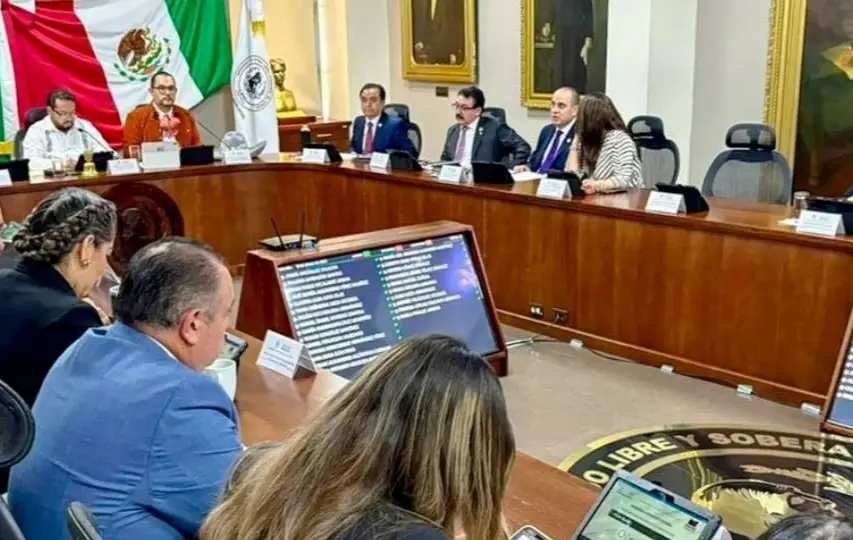

In Hidalgo, each of the 30 local deputies represents an annual cost of 11,045,659 pesos, according to the budget allocated to the state Congress for 2026, which totals 331,369,765 pesos. With these figures, the state ranks 23rd nationally in terms of cost per legislator, from highest to lowest.
The data was presented after Mexican President Claudia Sheinbaum unveiled the so-called “Plan B” for electoral reform during her morning press conference on Thursday, March 12, following the Chamber of Deputies’ rejection of the electoral reform previously submitted by the Executive Branch.
During her presentation, the president proposed establishing a maximum spending cap for local congresses and the Senate, noting the significant disparity in the cost of each legislator across the states.
According to the information presented, Baja California tops the national list: its Congress has 25 legislators and a budget of 871,687,582 pesos, meaning each representative costs 34,867,503 pesos.
Morelos ranks second, where the 20 legislators represent an individual cost of 31,865,600 pesos, while Michoacán occupies third place, with 40 representatives, whose average cost is 30,227,857 pesos each.
In contrast, the congresses with the lowest cost per legislator are found in Colima, Campeche, and Yucatán. In Colima, each representative costs around 5,170,000 pesos; in Campeche, 6,129,000 pesos; and in Yucatán, 6,269,000 pesos.
The president clarified that these figures do not correspond to the legislators’ direct salaries, but rather to the total expenses involved in their operation, such as services, building maintenance, and staff salaries.
“It’s not that the legislator earns that much per year; it includes payments for electricity, water, buildings, and staff,” she pointed out.
As part of the same proposal, she also suggested reducing the number of council members in municipalities, arguing that the resources saved could be allocated to public works and municipal needs.
In that context, she mentioned that in Hidalgo there are municipalities with 19 council members, including Huejutla, Mineral de la Reforma, Pachuca, Tizayuca, Tula, and Tulancingo.
Nationally, she indicated that Monterrey leads the list of municipalities with the highest number of council members, with 28, followed by Puebla with 23, in addition to other municipalities with 20 and 21 council members.
Sheinbaum questioned the fact that some municipalities have up to three trustees, pointing out that these positions were created through political agreements.
“There are municipalities that have three trustees, who are essentially treasurers. Why do they have three? At one time, there were quotas, and more council seats were opened up to create more space, but the country doesn’t need that,” she stated.
The head of the federal executive branch affirmed that reducing the number of seats in state legislatures and positions in city councils would allow for an estimated savings of 4 billion pesos, resources that, she said, could be allocated to strengthening the finances of states and municipalities.

Source: lasillarota