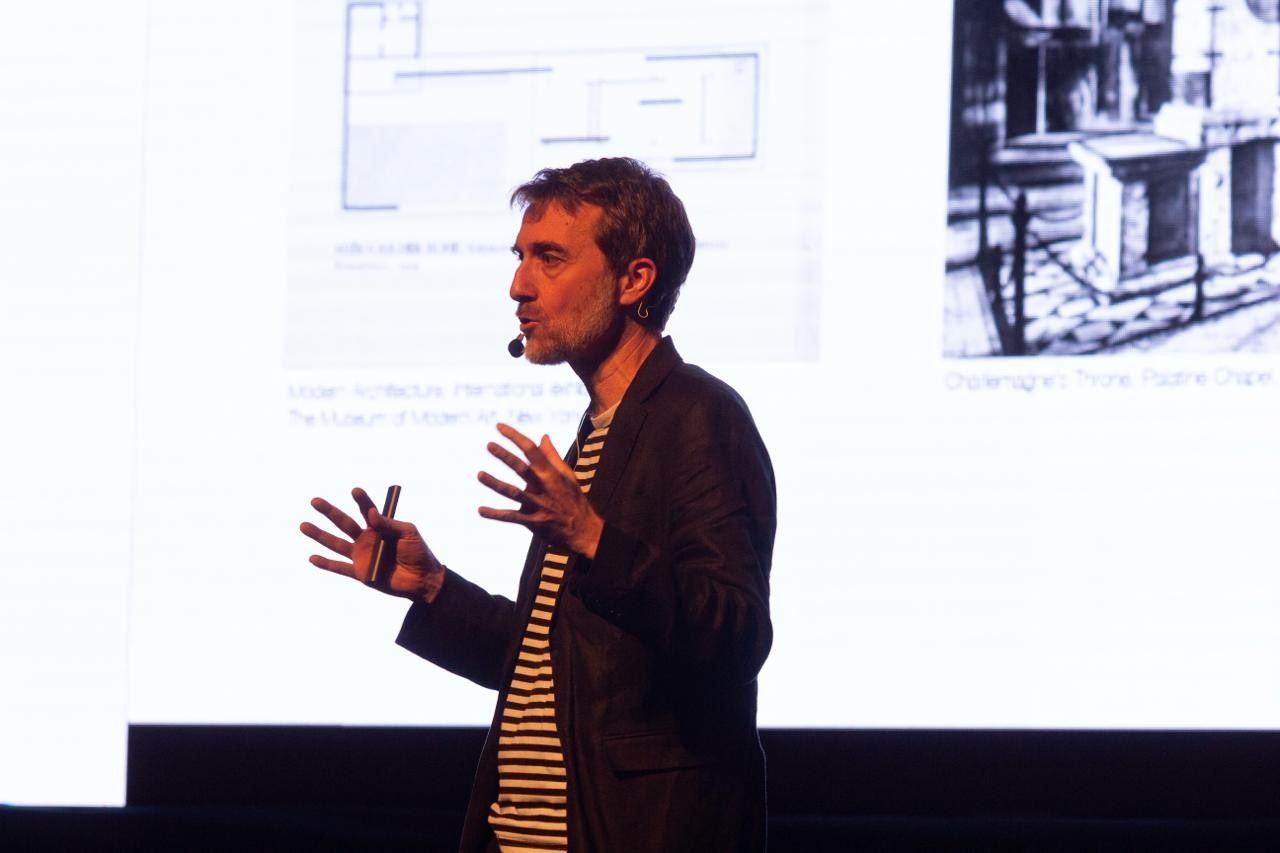

Querétaro is solidifying its position as a meeting point for ideas, perspectives, and proposals that explore the art of inhabiting the world, while also fostering the creative economy. This was the case at the fourth edition of the International Architecture Congress, which featured 14 speakers from 10 countries across three continents. These speakers engaged in dialogues that transcended geographical boundaries, defined the current era, and brought contemporary practice to the forefront.
To begin, Zhang Ke from China presented a selection of his work, distinguished by its independent approach to media trends. He focuses on materializing urban visions with projects that, while visually provocative, are always rooted in historical and cultural contexts. Among his recent works are the Novartis Campus building in Shanghai, numerous interventions in hutongs and traditional courtyards in Beijing, and projects in the landscapes of Tibet.
On the other hand, Kevin Carmody and Andy Groarke, of Carmody Groarke, presented their research- and innovation-based designs, showcasing cultural, heritage, and urban projects developed in sensitive contexts, ranging from museums and archives to educational spaces and offices. They combine a rigorous and collaborative design process with a strong commitment to academic research.
Likewise, Robert Hutchison, of RHA Architecture, presented how he achieves contemporary designs where beauty and efficiency coexist in balance and in close relationship with nature. The firm specializes in homes organized around courtyards that open the house to its surroundings, promote natural ventilation, and deepen the connection with the landscape, always seeking to introduce an unexpected element that gives character to each project.
Regarding the Spanish brand Anna & Eugeni Bach, attendees at the Congress appreciated their approach, which encompasses everything from urban planning to interior and object design. Their work has been recognized with awards such as the FAD and the European AHÍ, and has been exhibited at the Venice Biennale and in institutions across Europe and the Americas.
The state capital thus becomes a hub for change agents who envision new ways of creating that are environmentally sustainable, tailored to the needs of each city, and compatible with the urban needs and characteristics of the future. They emphasize architecture as a language of identity, a tool for transformation, and a reflection of collective values. The complete program of the event can be found at casadearquitectura.com.
Source: noticiasdequeretaro