If you’ve been to Cancún, you’ve probably experienced the same thing: short trips that take much longer than expected, especially when crossing into the hotel zone. The city relies heavily on a connection that, during rush hour or peak season, becomes a bottleneck that’s difficult to avoid. This is the problem that Mexican authorities have been trying to alleviate for years. Now, it seems the solution is close to materializing with the Nichupté Vehicular Bridge, an infrastructure project that aims to offer a direct alternative and significantly reduce travel times.
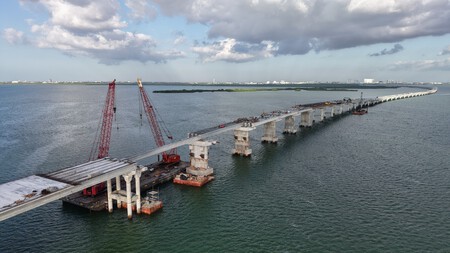
The answer to this problem isn’t just a distant promise, but a project nearing completion. According to the Ministry of Infrastructure, Communications and Transportation (SICT), the Nichupté Vehicular Bridge is in its final stages, and the most recent official estimate places its opening toward the end of April. In this final phase, work is focused on verifying that the structure responds as expected, with load tests of up to 150 tons and vibration measurements using accelerographs.
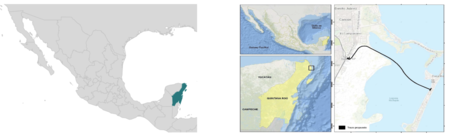
To understand the scope of the project, it’s important to consider its dimensions, which are not always clearly explained. The infrastructure totals 11.2 kilometers: 8.8 km correspond to the bridge over the lagoon and 2.4 km to the interchanges at both ends. According to the SICT (Secretariat of Infrastructure, Communications and Transportation), this is the key difference between the complete project and the section that directly crosses the Nichupté Lagoon system. In addition, there are three traffic lanes, one of them reversible, as well as a 103-meter metal arch and a bike path.
Beyond its dimensions, the key lies in how it integrates into the city’s actual mobility. The new route will connect Boulevard Luis Donaldo Colosio with Boulevard Kukulcán, two essential points for accessing the hotel zone, one of Cancún’s main tourist and traffic hubs. This connection, officials explain, would reduce journeys that currently can take up to an hour and a half to just 10 minutes, an estimate that should be understood as the project’s objective. Furthermore, the infrastructure is designed as an alternative route in emergency situations, something especially relevant in an area prone to natural disasters.
The scope of the project is also measured by its intended impact. According to data from the Mexican government, the bridge is designed to benefit more than 1.3 million residents of the region, in addition to the more than 20 million tourists who visit Cancún each year. Regarding expected traffic, official figures have not been entirely consistent: in November 2025, the Ministry of Infrastructure, Communications and Transportation (SICT) projected an average annual daily traffic of 12,612 vehicles, while in January 2026 it raised that forecast to 20,000. Added to this is its impact during construction, with approximately 51,000 direct and indirect jobs generated, according to the ministry itself.
But it’s not all about mobility and travel times. The bridge’s passage through the Nichupté lagoon system introduces a delicate variable: the impact on a sensitive ecological environment. The Ministry of Infrastructure, Communications, and Transportation maintains that the project has been developed under 10 environmental programs and 25 subprograms focused on mitigating this effect. Within this framework, 306 hectares of mangroves have been restored, 118 hectares of seagrass beds rehabilitated, and more than 2,100 animals have been relocated, in addition to the rescue of native vegetation.
Cancun has been living with a clear limitation on its mobility for years, especially in accessing its main tourist area, and this pressure has only increased over time. The Nichupté Vehicular Bridge is envisioned as one of the most ambitious solutions to this problem, both because of its scale and the role it aspires to play in the city’s daily life. With the work in its final phase and an opening planned for the end of April according to the most recent official communication, it will soon be possible to verify to what extent it meets the expectations that have accompanied the project since its inception.
Source: xataka