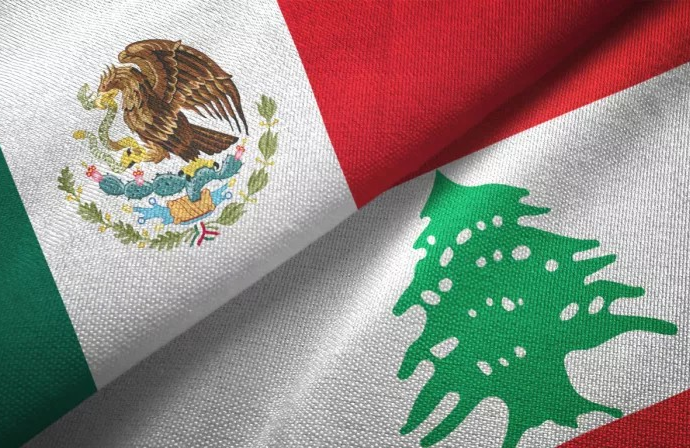

Lebanon is once again embroiled in war. The country became entangled in the conflict between Iran and Israel on March 2, when Hezbollah launched a retaliatory attack following the assassination of Iran’s Supreme Leader, Ali Khamenei. The Israeli response has resulted in the deaths of 2,387 people.
The conflict may seem very distant from Mexico, separated from Lebanon by more than 12,000 kilometers. However, the two countries share a history that dates back to the late 19th century, with the arrival of the first Lebanese in Progreso, Veracruz, and Tampico, fleeing persecution.
The Lebanese community in Mexico has grown with new waves of migration and has enriched the country’s culture. Mexicans of Lebanese descent have occupied prominent positions in the economic, political, social, and cultural spheres of our country.
Despite their deep ties to Mexico, this community continues to look to their country of origin and hopes that lasting peace will soon become a reality for Lebanon, a country marked by years of conflict.
The history of Lebanese migration dates back to 1878, when the first records of Lebanese nationals entering Mexico were made.
According to the Mexican Ministry of Foreign Affairs, the first Lebanese migrant to enter Mexico was Father Boutros Raffoul, who arrived through the port of Veracruz in 1818. A year later, in 1879, Don Santiago Sauma arrived.
“One of the first Lebanese compatriots on record was Don Domingo Curi, who welcomed fellow countrymen as they disembarked from the ships in Veracruz,” says Jorge Serio, president of the Executive Council of the Lebanese Center, in an interview with Expansión.
Curi helped the newcomers find their families or other members of their community. “This is how the Mexican-Lebanese community began to spread throughout Mexico,” Serio explains.
These first immigrants arrived in the late 19th century, during the decline of the Ottoman Empire. They were fleeing dire sociopolitical and economic conditions, such as famine, religious oppression against Christians, and the instability that would eventually lead to civil war.
Most of the Lebanese who arrived in Mexico were Maronite Christians. Only a small number of Muslims came to the country.
After these initial steps in 1878, migration continued in successive waves that intensified in the early 20th century, reaching its peak in the 1920s and 1930s.

Source: expansion