
In Los Cabos, the city’s growth and hotel activity have increased the demand for public services, including waste management.
Grupo Solmar recently learned the results of its sustainability program, which has reduced the amount of waste reaching landfills or open dumps in Baja California Sur.
The system consists of separating waste from the beginning and giving some materials another use; for example, cooking oil and glass are no longer discarded, but are processed to become new products, such as fuel or decorative pieces.
Figures shared by the company in the context of World Earth Day reveal the real impact of this effort during 2025, in which 103.2 tons of used vegetable oil were prevented from reaching the region’s soil or drainage systems. This is in addition to 35.31 tons of plastic, 8.84 tons of cardboard, 2.9 tons of glass, and 2.5 tons of aluminum.
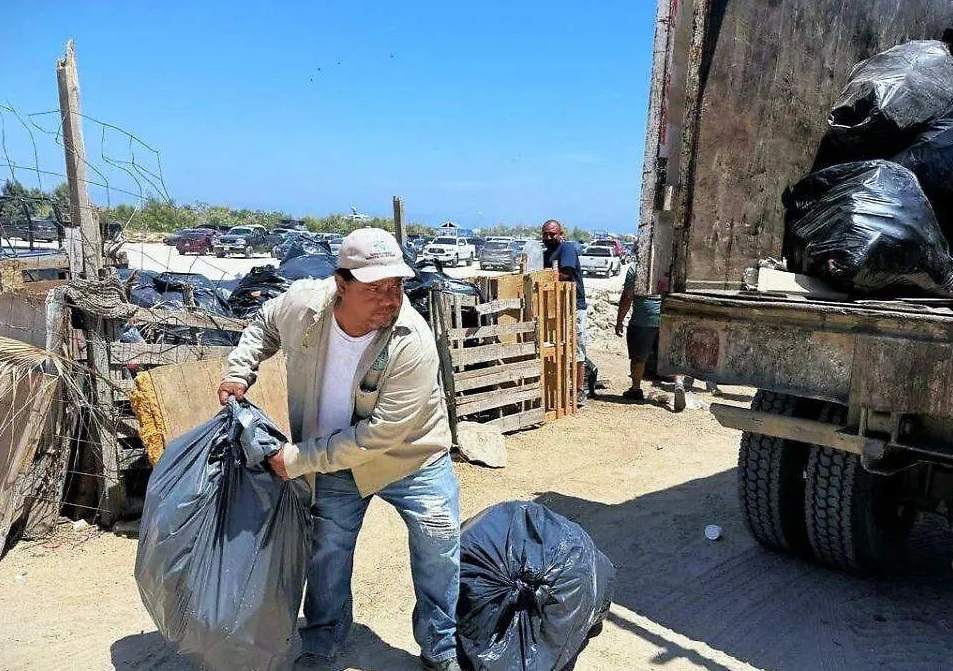
Instead of sending these materials to landfills, the hotel group implemented a waste management program that involves separating all the waste generated at its seven resorts.
These materials are then delivered to authorized suppliers who process them and repurpose them for various production processes, either within the region or elsewhere in the country.
For example, plastic and cardboard are collected in industrial volumes for processing, while other materials are handled in a more artisanal and local manner.
The system operates under a traceability scheme, meaning the company knows exactly where each piece of waste ends up from the moment it leaves a guest room or restaurant.
It all starts with the cleaning staff and administrative areas, who separate glass, plastic, cardboard, and aluminum into specific containers. Organic waste from the kitchens is stored in cold storage and removed daily to prevent the spread of germs.
One of the most striking aspects is the destination of the clear glass, which is sent to a local factory where artisans transform it using the glassblowing technique into decorative pieces that are then returned to the same hotels.
On the other hand, the cooking oil follows an industrial path: it is filtered, stored in 20-liter drums, and collected twice a week to be transformed into biodiesel.
According to Mauricio Salicrup, Operations Director of Grupo Solmar, this circular economy model allows waste to cease being an environmental problem and become a useful resource.
The importance of these actions lies in the fragility of the Baja California Sur ecosystem and the limited capacity of its landfills; in fact, the success of this method led the company to be the only one to formally complete the “Increase Impact, Reduce Waste” project in 2024.
This initiative was coordinated by the Los Cabos Hotel Association and the Municipal Planning Institute (IMPLAN), with the specific goal of finding ways for the hotel sector to stop overloading the municipal landfill.
In addition to the environmental benefit, the program has become self-sustaining, since the Director of Operations explains that the money obtained from the sale of recyclable materials is not deposited into a general account, but is instead reinvested directly in tools and equipment for the recycling facility.
This ensures that the staff has what they need to maintain operations. For a region that depends entirely on its natural beauty to attract tourism, large companies taking responsibility for their waste is a necessary step to ensure that Los Cabos does not collapse under its own growth.
Source: oem