
The state of Durango registered a new all-time heat record for April after the municipality of Tamazula reached 48.5 degrees Celsius, surpassing the previous record for that month in the state. This data was confirmed by the Meteorology and Hydrology Department of the National Water Commission (Conagua), which warned of unusual weather patterns in several regions of Durango.
According to the official Conagua report, the extreme temperature occurred in the community of El Real, located in the municipality of Tamazula. The measurement broke the previous April record of 47.5 degrees Celsius, also set in Tamazula in 2006. The increase reflects the intense heat wave affecting northwestern and northern Mexico in recent weeks.
Statistics released by the National Water Commission show that the municipality of Tamazula experienced extreme temperatures throughout almost all of April.
According to local weather records, every day of the month saw highs exceeding 40 degrees Celsius, while the monthly average reached 42.5 degrees, a figure considerably higher than the historical average for April in that region, which hovers around 38 degrees.
This temperature pattern caught the attention of specialists because the difference from normal values was consistent and not an isolated event lasting only one or two days.
Another phenomenon highlighted in the climate report was the complete absence of sub-zero temperatures in the state on the morning of April 30th.
The community of La Rosilla, known for recording some of the coldest temperatures in the country during winter and spring, reported a temperature of 3.5 degrees Celsius, unusual considering that it typically experiences sub-zero temperatures during the first months of the year.
With this, April ended as the first month of 2026 in which no region of Durango reported freezing or sub-zero temperatures.
What is the highest temperature ever recorded in Mexico?
The highest temperature recorded traditionally accepted by the National Meteorological Service (SMN) and CONAGUA (National Water Commission)
San Luis Río Colorado, Sonora, July 6, 1966.
Temperature: 58.5 °C (138.5 °F)
Although this is the most frequently cited historical record, some international meteorologists consider it an “anomalous” reading due to the measurement conditions at the time.
Mexicali, Baja California: It is considered the hottest city in the country on a consistent basis. It has reached temperatures of 52.0 °C (128.5 °F) (August 2021), and peaks of 52.7 °C (138.5 °F) have even been reported at local stations during extreme heat waves in 2025.
Huetamo, Michoacán: In the Tierra Caliente region, temperatures of up to 51.2 °C (124.5 °F) have been documented.
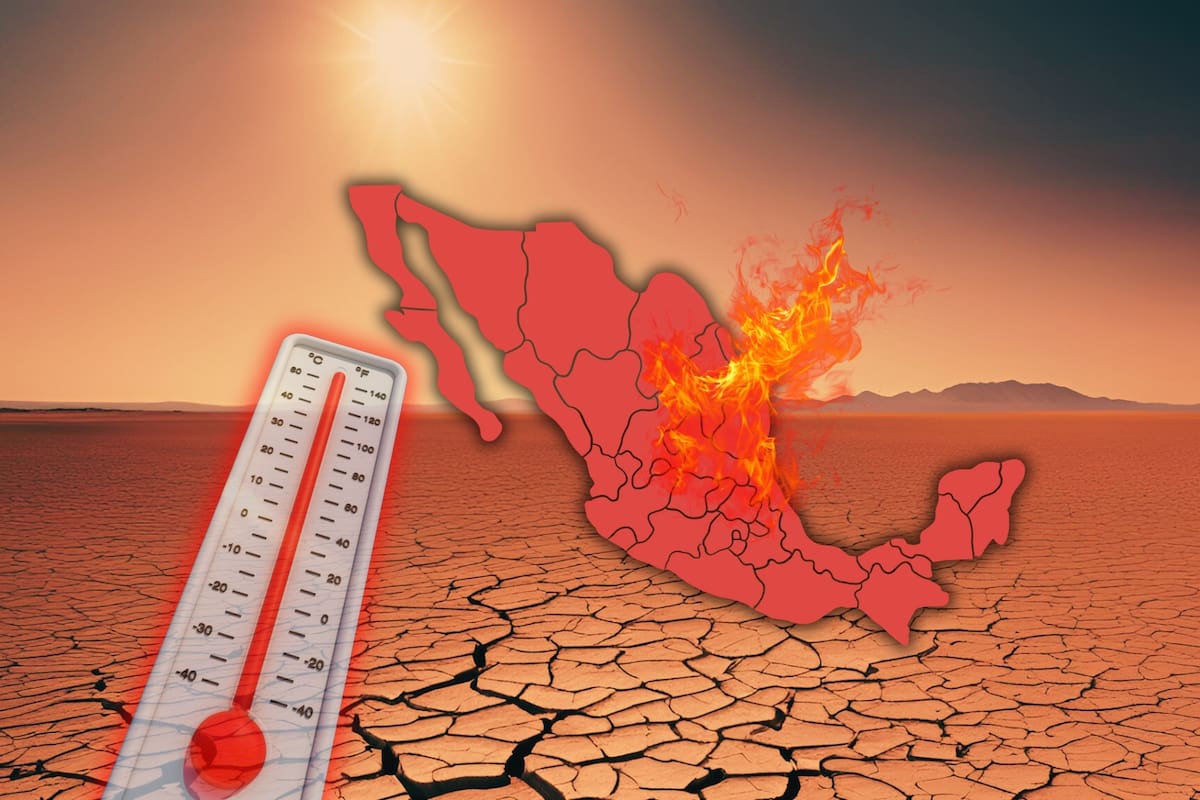
Among the states that frequently report extreme temperatures are:
Sonora
Baja California
Coahuila
Nuevo León
Sinaloa
Durango
Historical data on extreme heat in Mexico can be found in the climatological databases of the National Water Commission (CONAGUA) and the National Meteorological Service (SEM), the agencies responsible for national weather monitoring.
Extreme heat has become more frequent in several regions of the country.
Climate specialists have warned in recent years that extreme temperature events are becoming more frequent and prolonged in different parts of Mexico.
The increase in heat waves, the reduction in rainfall, and drought conditions have caused municipalities in the north and northwest of the country to register higher temperatures from the early stages of spring.
In states like Durango, where historically freezing mornings and hot afternoons coexisted during April, periods with less temperature contrast and persistently high maximum temperatures are now being observed.
While high temperatures continue across much of the country, meteorological authorities are monitoring for possible new heat records as the hottest season of the year in Mexico progresses.

Source: elimparcial