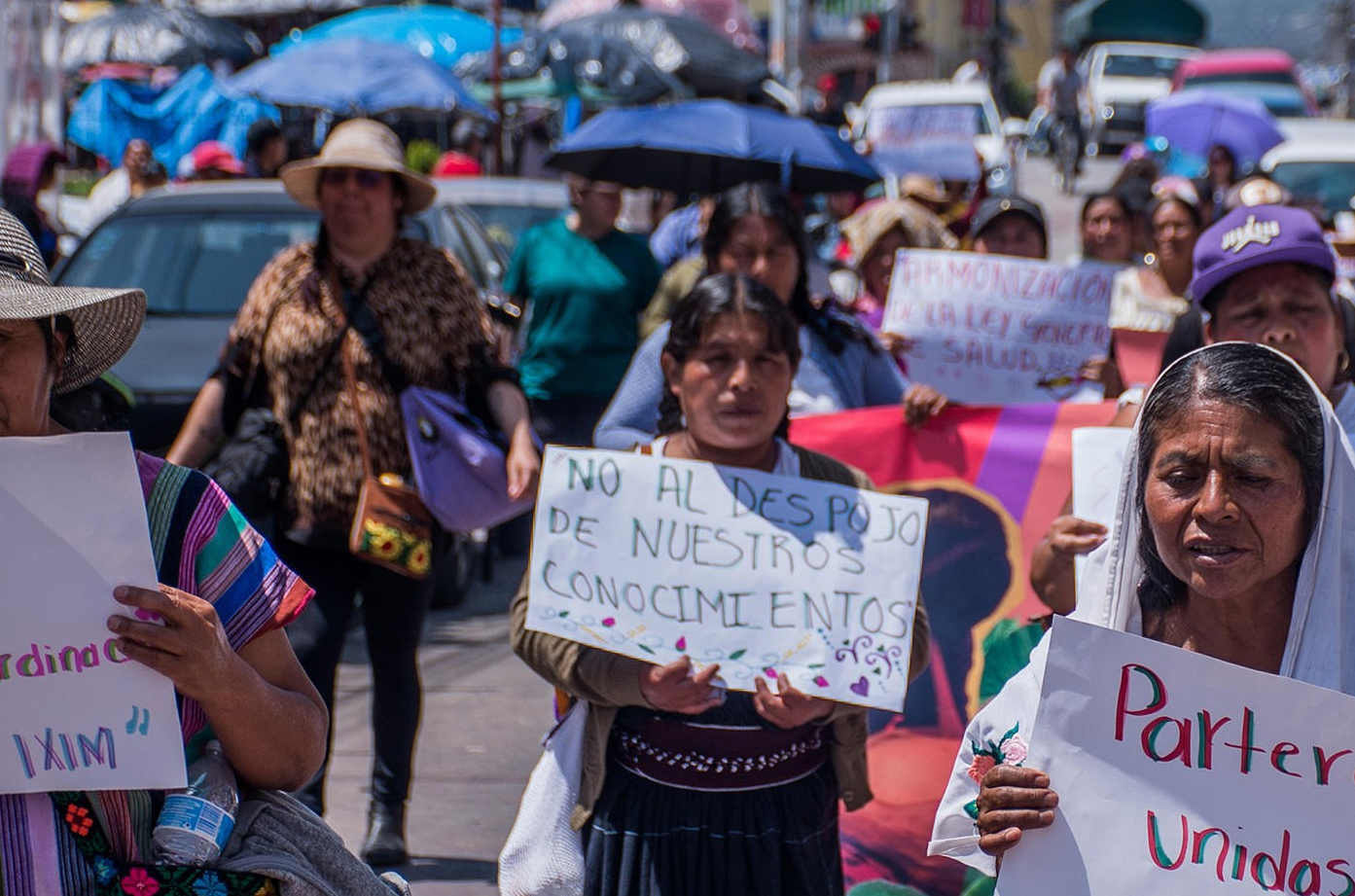

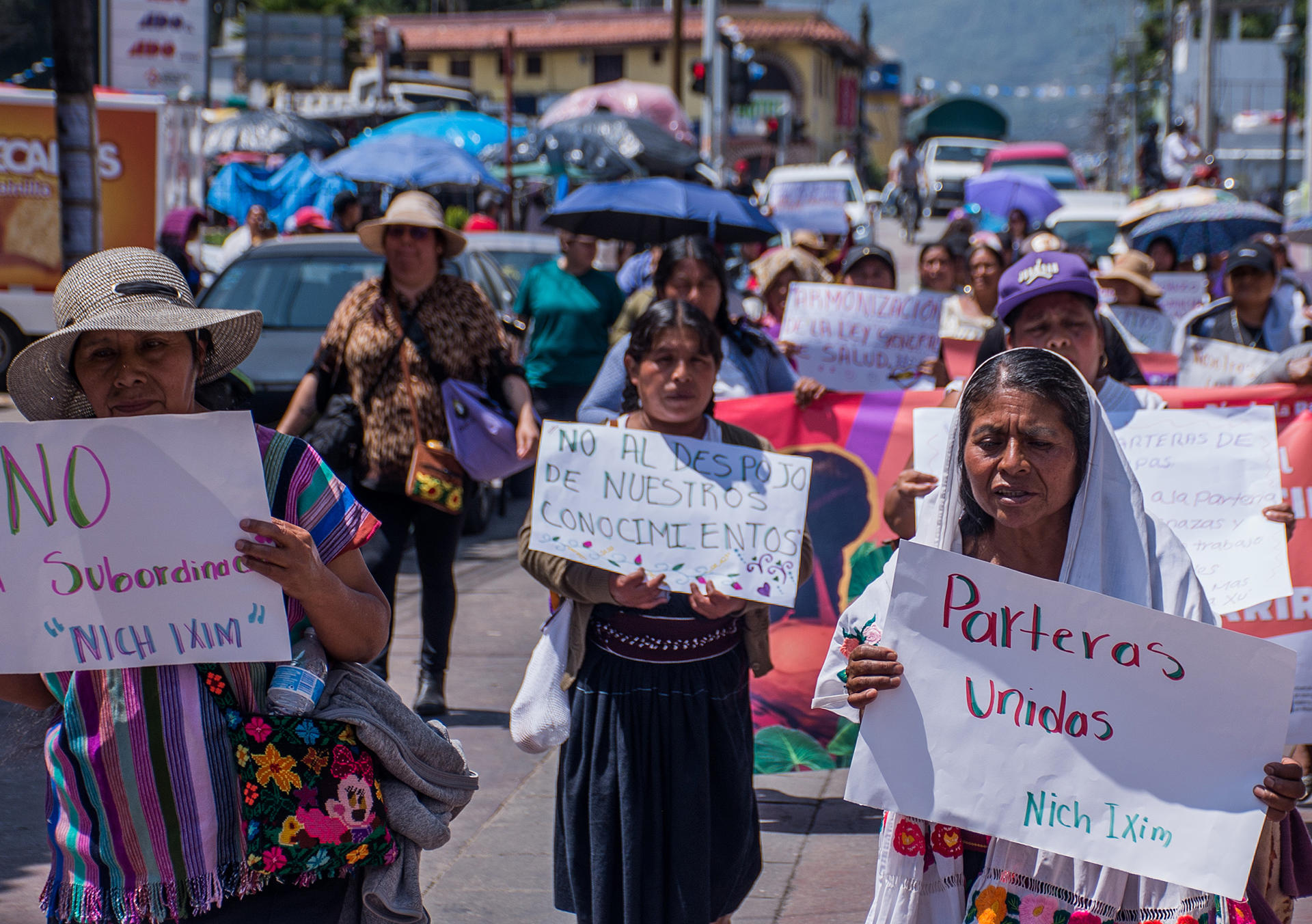
A hundred rural midwives marched through the streets of San Cristóbal de las Casas, the most populous city in Chiapas, to defend traditional midwifery amidst regulations that threaten its continuity.
During the march, held in commemoration of International Midwives Day on May 5, they made their demands visible with slogans such as: “We demand equal treatment for doctors and midwives!”, “Long live the midwives!”, and “No to the certification of midwives! Autonomy, bodies, knowledge, and territories!”
The activists pointed out that this ancestral practice, deeply rooted in Indigenous communities, faces risks stemming from medical modernization and policies that seek to standardize childbirth.
Rosa Hernández, a Tzeltal woman from Tenejapa with 51 years of experience, affirmed that “being a midwife is something significant” because “we are guardians of the lives of women and babies; we are the ones who help women bring new beings into this world.”
The midwives demanded respect for their worldview and an end to all criminalization, threats, and harassment against them, as well as women’s right to decide about their bodies and guarantees to choose how and with whom to give birth.
They also requested recognition as their own health system.
“That the states see Indigenous midwifery as an autonomous system (…) not as something subordinate.”
Furthermore, they requested that protocols be applied respectfully by health system personnel toward women, and that the general inter-institutional collaboration agreement for obstetric emergencies be fulfilled, “without rejecting any woman.”
Among their demands, they considered binding participation necessary, granting them a vote in the spaces where maternal and community health policies are decided.
According to the Mexican Social Security Institute (IMSS), there are approximately 6,600 midwives in Chiapas, who attend up to 70% of births in urban areas and 100% in rural communities.
Juana Pérez Hernández, a Tzotzil woman from San Juan Chamula, recounted that she began this work at age 14. “At 16, by chance, a birth occurred… and we were able to attend to the delivery with the help of another neighbor.”
However, she criticized the fact that in healthcare systems, “they often tell you there’s no bed… no gynecologist… no anesthesiologist,” and she praised her work attending births in remote areas.
Before the march, they set up an altar with yellow, purple, maroon, and white flowers to offer a prayer, asking permission from nature to continue the mission to which they have dedicated their lives.
Source: lopezdoriga