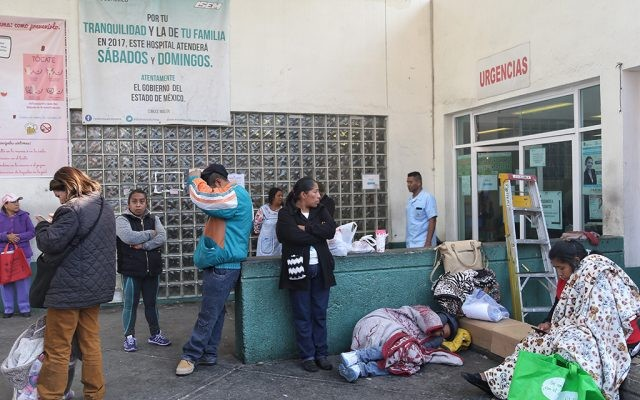

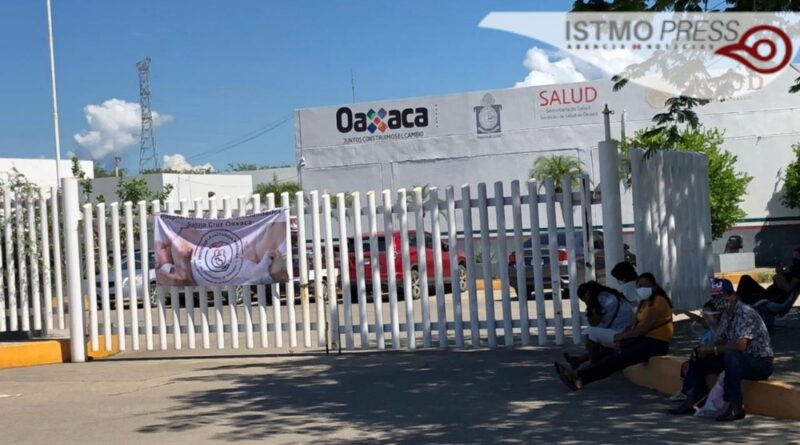
Oaxaca remains among the states with the greatest obstacles to guaranteeing effective access to health services, according to recent measurements by public agencies and national indicators that place the state with high levels of deprivation, limited hospital capacity, and persistent territorial barriers to receiving medical care.
According to the 2024 Multidimensional Poverty Measurement, based on data from INEGI (the National Institute of Statistics and Geography), 43.9 percent of the population in Oaxaca lacks access to health services, a figure that places the state among the five with the greatest deficiencies in the country in this area. Only Chiapas, Puebla, Michoacán, and Morelos have higher levels.
This data confirms that, despite institutional adjustments in recent years, millions of people in the state continue to lack regular access to medical care, in a state where dependence on the public system is a determining factor due to its levels of poverty and high population dispersion.
In addition to administrative deficiencies, there is also operational fragility. The Mexican Institute for Competitiveness’ State Competitiveness Index reported that Oaxaca has only 0.5 hospital beds per 1,000 inhabitants, one of the lowest rates in the country, and is also among the states with the fewest specialist physicians per capita.
Geographic accessibility exacerbates this deficiency. The National Institute of Statistics and Geography’s (INEGI) Social Rights Information System identified Oaxaca and other southern states as having the least access to hospital care due to travel times, a consequence of complex terrain, dispersed communities, and limited road connectivity.
Regarding supplies, the 2023 National Survey on Government Quality and Impact (ENCIG) also reflected low levels of satisfaction with the availability of medications in state health services, another essential component for measuring effective access to and continuity of treatment.
Although the Oaxaca government has reported a reduction in the lack of access to health services between 2022 and 2024, with more people enrolled in institutional programs, available indicators show that the state remains among the most disadvantaged in the country.
This contrast exposes a fundamental flaw: being registered with an institution does not guarantee a consultation, medication, a hospital bed, an available specialist, or even the possibility of reaching a medical unit in time.
In reality, the main challenge is not expanding enrollment, but rather converting reported coverage into concrete care. Until that happens, Oaxaca will continue to be among the states where the right to health depends more on location and economic capacity than on public policy.
Source: hojaderutadigital