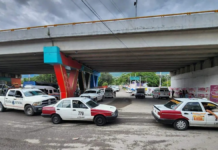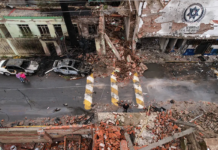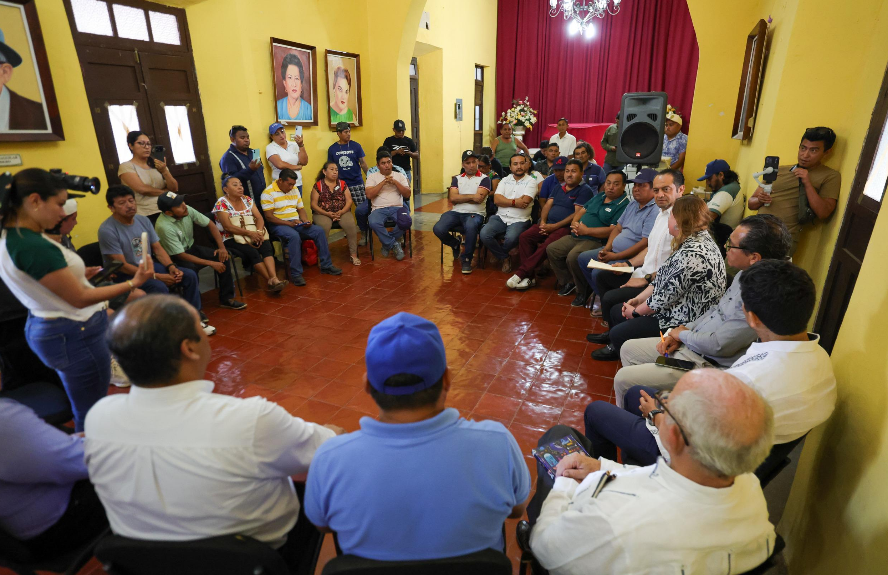

In a statement, the Indigenous Governing Council of Pisté Chichén Itzá alleged that the State Government and the National Institute of Anthropology and History (INAH) have merely feigned dialogue and remain intent on imposing the closure of the old Tourist Center, ensuring that the Chichén Itzá Visitor Attention Center (CATVI) becomes the sole point of access to the archaeological zone.
Representatives of the Maya community assert that no agreement has been reached—despite numerous meetings held with federal and state authorities—due to internal fragmentation within the community, as some artisans and service providers have already agreed to utilize the new facility.
“Prior to the scheduled meeting (this Thursday, May 21) with the Indigenous Governing Council of Pisté, the State Government orchestrated a charade by convening a ‘shock group’ to counter public opinion. This small group has decided to relocate to the CATVI, and the community respects their decision; however, they do not represent the majority of the Pisté community—nor the neighboring communities. Yet, the Government has chosen to heed a group of 50 individuals rather than an assembly of over 3,000 people who signed the assembly minutes the previous night,” the Council declared.
They noted that the specific conditions for reaching an agreement have yet to be formally established in writing, and they affirmed that they will not accept any imposed terms.
For its part, the State Government issued a statement reiterating its openness to dialogue with the artisans and tour guides of Chichén Itzá. It further reported that the CATVI currently houses 262 occupied stalls within its artisan market, where visitors can purchase products crafted locally within the region. Additionally, the facility features five service modules where—since last March—all of the area’s tour guide associations have been providing guided tour services. “Dialogue on the part of state and federal authorities has been open and clear, fulfilling the primary request not to displace any artisans from within the Chichén Itzá archaeological zone,” stated the official communiqué.
However, the Indigenous Council rejects the notion that this constitutes progress, as dissatisfaction persists regarding the threat of being removed from the entrance to the archaeological site.
“They insist that they have already made their decision and that their role is merely to verbally inform the community, without providing any formal written documentation,” states the text circulated by the community.
Furthermore, they asserted that it is the INAH and the State Government—not the community—that are keeping the archaeological zone closed.
They emphasized that they remain united, holding assemblies to make decisions—efforts in which the communities of Xcalacoop, San Felipe, Ticimul, Xkatún, Tohopku, Kaua, San Francisco Grande, Xocempich, Dzitás, Yokdzonot, Chendzonot, Popolá, and Yaxuná have joined.
“We call upon the general public and various movements to stand in solidarity with the community; likewise, we ask them to remain vigilant, as we fear for the safety of the population,” noted the Council.
Source: lajornadamaya