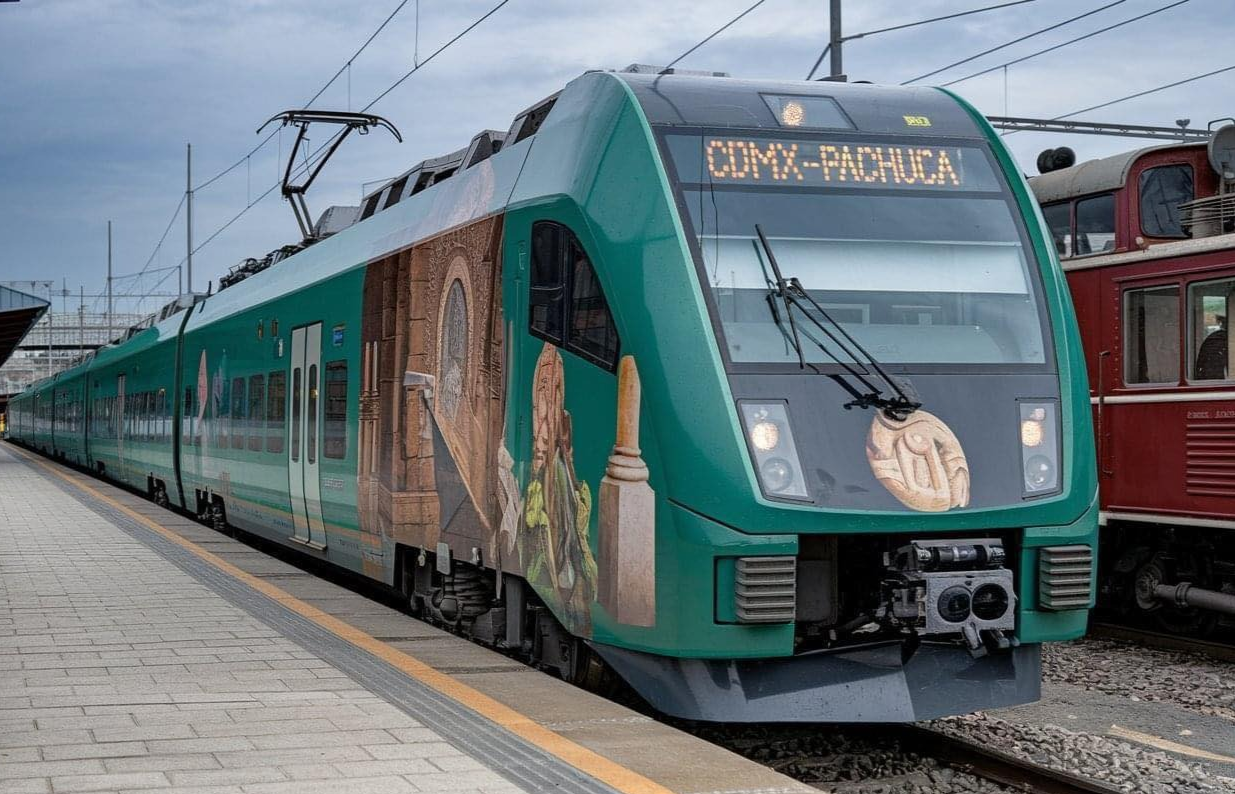

For decades, the idea of traveling between cities by rail seemed like a postcard from the past, an image frozen between abandoned stations and forgotten routes. Today, however, that image is being revived with a different kind of force: that of a country that is once again thinking of itself on rails.
The Mexico–Pachuca Train does not emerge as an isolated project, but as part of a broader strategy that seeks to reshape national mobility. At its core, what is being attempted is something more ambitious than connecting points on a map: it is about redrawing the way people inhabit the territory, shortening physical distances and, with them, economic and social ones.
Mexico presented this Tuesday, May 20, the progress of the country’s priority railway projects, including the Mexico–Pachuca, Mexico–Querétaro, Querétaro–Irapuato, and Saltillo–Nuevo Laredo routes, as well as the cargo infrastructure of the Maya Train.
An ongoing project
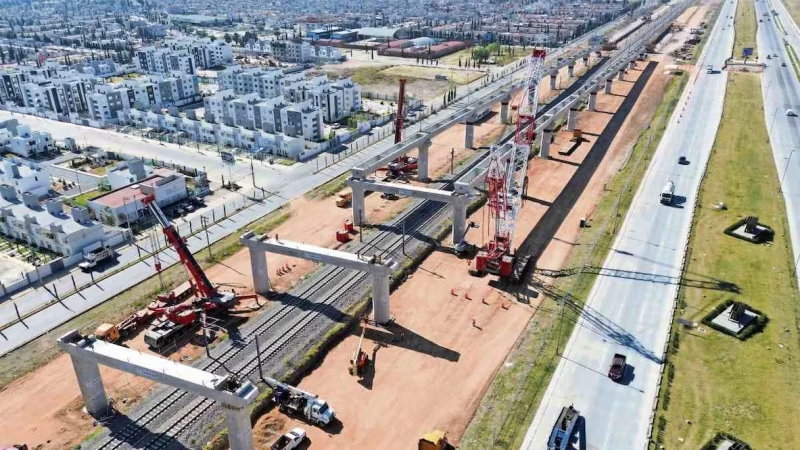
After a little more than a year since construction began, the Mexico–Pachuca Train has reached approximately 34% progress. The figure is not minor if one considers the scale of the project: dozens of kilometers of track, complex infrastructure, and the daily participation of thousands of workers who, more than building a train, are shaping a new logic of mobility.
The route envisions a strategic connection between Mexico City, the Felipe Ángeles International Airport, and the city of Pachuca. In practical terms, this means that journeys that today require long highway travel could be reduced to just over an hour, transforming the daily experience of thousands of people.
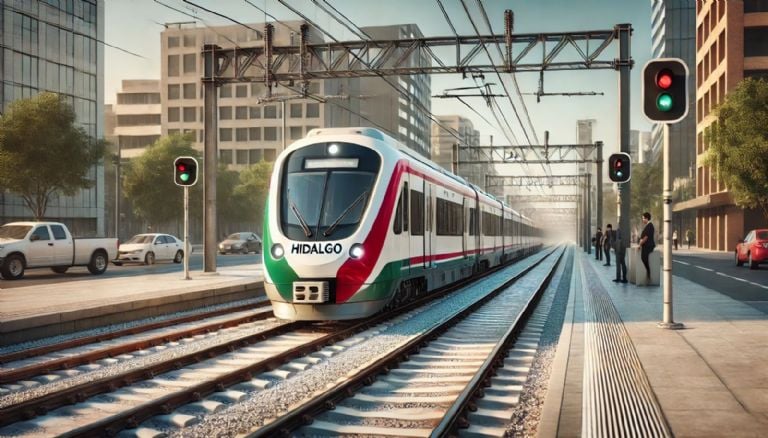
But the impact is not limited to time. The project also projects demand of more than 100,000 daily passengers, which anticipates a profound change in regional travel flows.
The progress of the Mexico–Pachuca Train is closely tied to a broader narrative: the return of passenger rail as a backbone of development. Under this logic, the project is part of a set of routes that include connections to Nuevo Laredo, Guadalajara, and Querétaro, with the goal of building more than 1,500 kilometers of track during the presidential term.
This vision not only aims to improve mobility, but also to reactivate entire regions. Historically, railways have been engines of growth: where the train arrives, new economic dynamics, opportunities, and ways of living also emerge.
In addition, the project is part of a public policy that seeks to recover state control of the railway system and consolidate it as an accessible service. The creation of specialized agencies and integration with other transport systems aim for a more coherent network, where the train is not an exception, but a daily option.
When the CDMX–Pachuca Train will open
The CDMX–Pachuca Train already has an estimated opening date. During the morning press conference on Monday, April 27, President Claudia Sheinbaum stated that the project could begin operations in 2027, although details are still being finalized.
“In 2027. We are still seeing which month we will inaugurate, possibly in stages if possible, but it is going very well and very advanced,” Sheinbaum said.
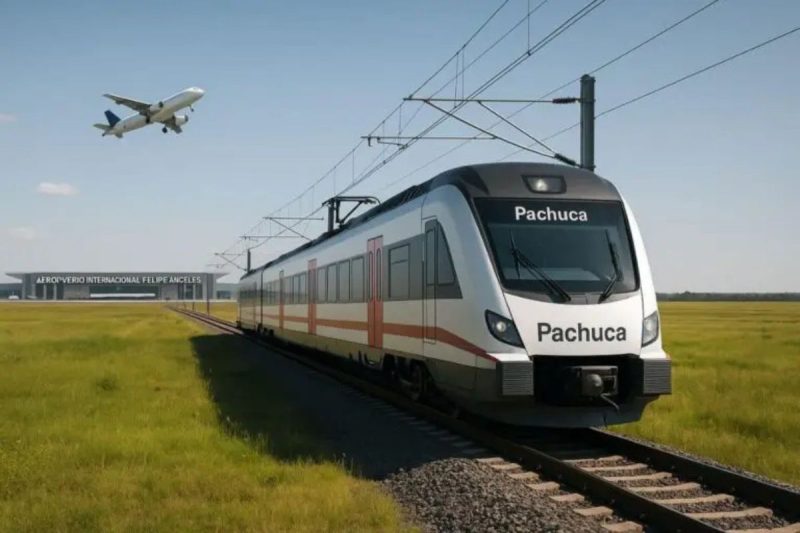
Rather than a single launch date, the federal government leaves open the possibility that the CDMX–Pachuca Train will begin operating in phases. In other words, some sections could be inaugurated before the entire route is completed, something that has already been considered in other recent railway projects.
This model is also explained by the fact that the CDMX–Pachuca Train does not start from scratch. In reality, it will connect with existing infrastructure toward the Felipe Ángeles International Airport (AIFA), which will allow the route to be extended from that area to the capital of Hidalgo. In that sense, the system is shaping up as a gradually expanding network.
Progress of the Mexico–Pachuca and Mexico–Querétaro trains
The Mexico–Pachuca train will have 58.12 kilometers of double electrified track and shows 34.8% progress. Construction began on March 24, 2025, and is expected to be completed on June 30, 2027.
The project includes stations in:
Jaltocan II
Tizayuca
Temazcalapa
Jagüey de Téllez
Pachuca
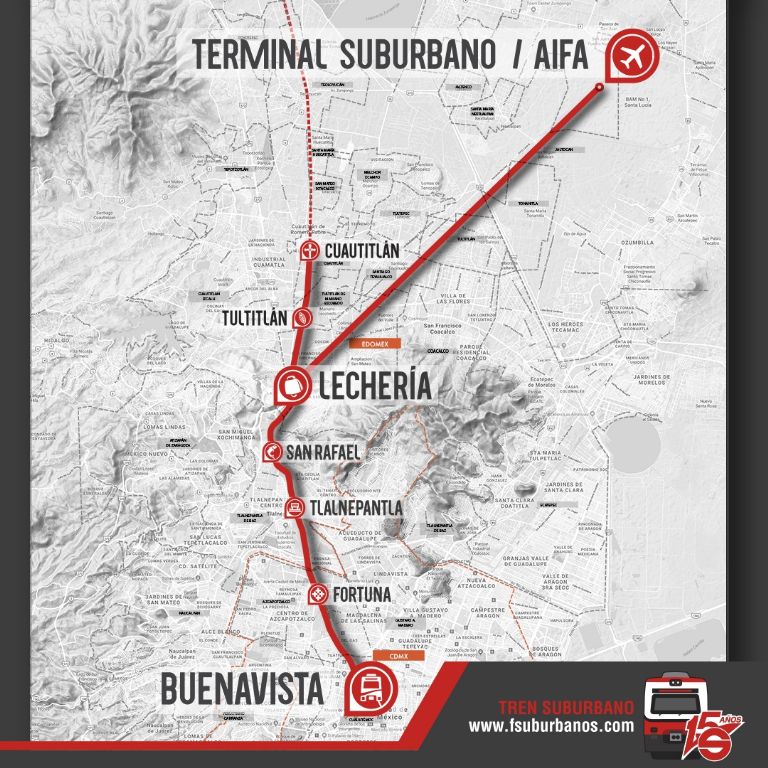
As well as four stops and electrical complexes in Tecámac and Mineral de la Reforma.
General Vallejo detailed that the project is already generating more than 16,000 direct jobs.
For its part, the Mexico–Querétaro train will have 232.42 kilometers of double track and reports 15.18% progress. Construction began on April 28, 2025, and completion is scheduled for September 2027.
The planned stations are:
Buenavista
Huehuetoca
Tula
San Juan del Río
El Marqués
La Corregidora
The project includes 14 work fronts and more than 22,000 jobs generated.
Source: mxc