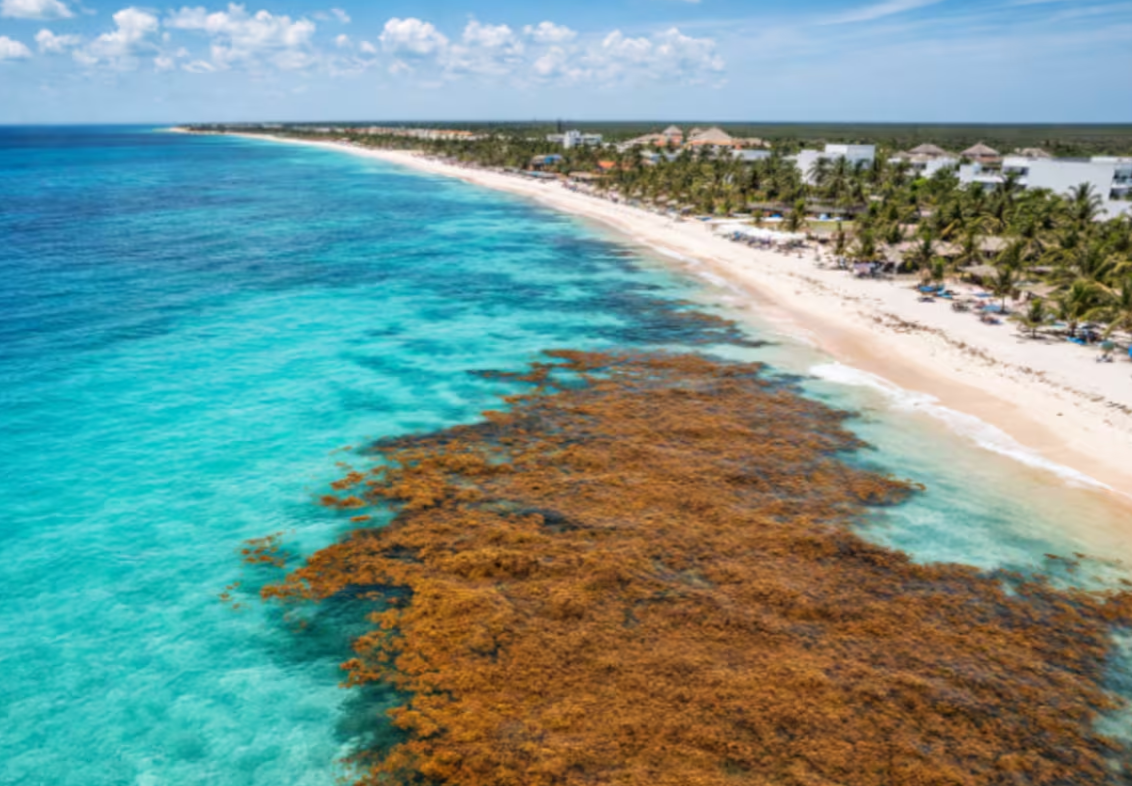

The beaches of Quintana Roo are experiencing a new massive arrival of sargassum, with at least 11 coastal areas now classified under a red alert for excessive accumulation, according to the latest update from Sargazo Monitor, a platform that tracks daily shoreline conditions using satellite imagery, citizen reports, and data from specialized organizations.
Among the most affected areas are Mahahual, Tulum, and Punta Allen, while some beaches in Cozumel have recorded lower levels of accumulation due to their geographical characteristics. Sargassum levels have increased in recent weeks after researchers identified the formation of a large Atlantic sargassum belt.
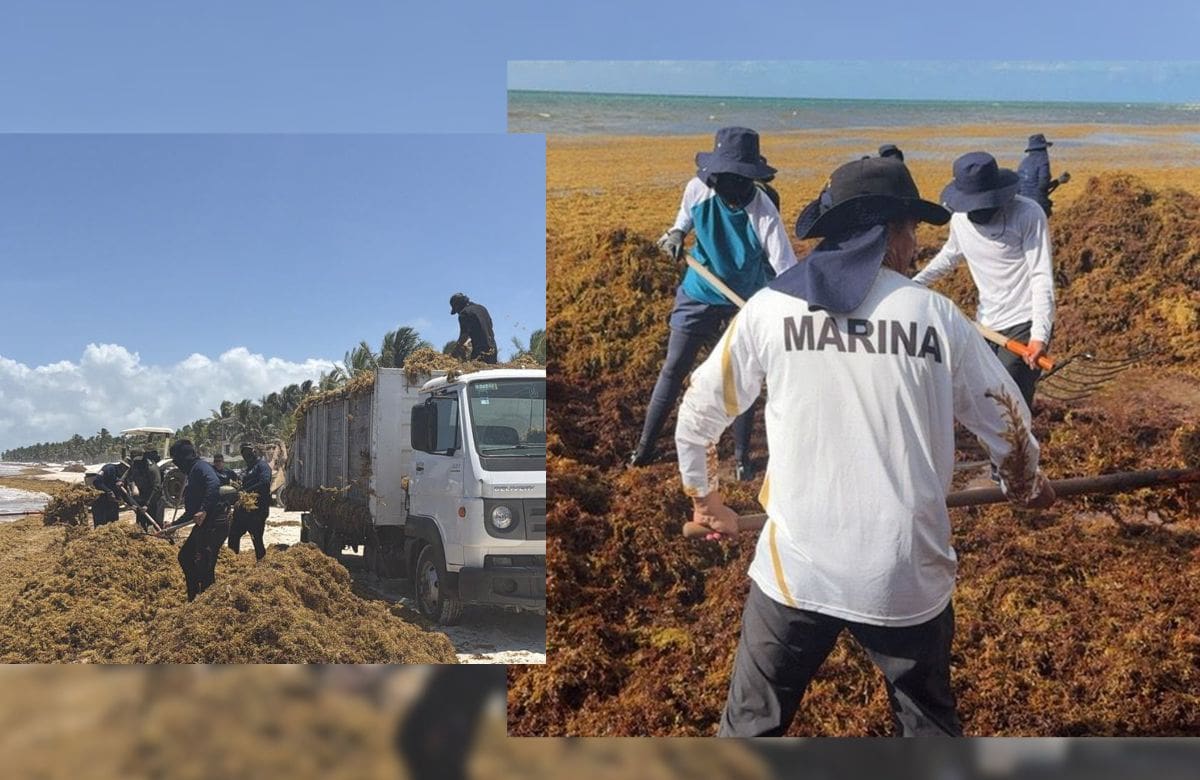
In response, the Government of Mexico continues to implement the National Strategy to Address Sargassum, coordinated by the Ministry of the Navy (Semar), with efforts focused on protecting marine ecosystems and responding to affected coastal areas.
Which Beaches Are Currently Under Red Alert?
According to Sargazo Monitor, the following beaches currently have excessive sargassum accumulation:
- Playa Ixpalbarco
- Playa Mezcalitos
- Playa Punta Morena
- Playa Chen Río
- El Mirador
- Punta Celarayn
- Tulum Hotel Zone
- Playa Punta Piedra
- Playa Paraíso
- Mahahual
- Punta Allen
A red alert indicates that the amount of sargassum present may significantly affect recreational activities, beach access, and the visitor experience.
The platform also uses the following color classification:
- Red: Excessive sargassum
- Orange: High sargassum accumulation
- Yellow: Moderate sargassum
- Green: Minimal sargassum
- Blue: No sargassum
How Is Sargassum Monitored?
Sargazo Monitor combines information from public sources, satellite imagery, live cameras, and user reports.
Its data incorporates information from organizations including:
- National Oceanic and Atmospheric Administration (NOAA)
- Ministry of the Navy (Semar)
- SAMMO
- USF Ocean Lab
The platform notes that it is independent of both the government and the tourism industry, and its reports represent conditions at the specific time measurements are taken.
It also warns that beach conditions can change within hours due to:
- Ocean currents
- Wind
- Wave activity
- Weather changes
- New sargassum arrivals from the Atlantic Ocean
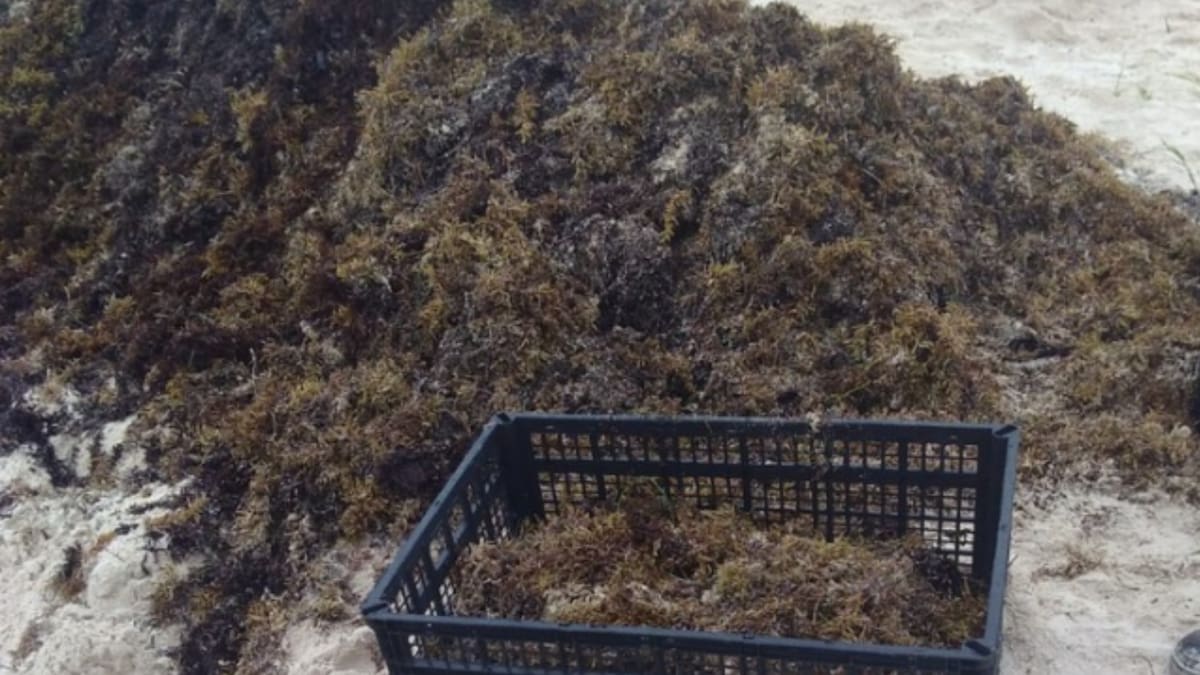
How Much Sargassum Has Arrived in 2026?
According to Sargazo Monitor, 88,998 metric tons of sargassum have been collected during the 2026 season.
The platform also estimates that an additional 179 tons could arrive at various locations, including:
- Southern Isla Mujeres
- Nizuc
- Puerto Aventuras
- Playa del Carmen
- Akumal
- Tulum
- Mahahual
- Xcalak
Actual amounts may vary depending on ocean conditions and current patterns.
Why Is So Much Sargassum Reaching Mexico?
Since mid-June, researchers at the Harbor Branch Oceanographic Institute have identified a significant concentration of sargassum across the Atlantic Ocean.
This massive belt of floating seaweed extends from the western coast of Africa toward the Caribbean Sea and the Gulf of Mexico.
Although sargassum naturally forms floating marine ecosystems that provide habitat for numerous species, excessive accumulations along coastlines can create environmental, economic, and tourism-related challenges.
As it decomposes on beaches, sargassum can cause:
- Unpleasant odors
- Changes in water quality
- Disruption of sea turtle nesting areas
- Negative impacts on tourism
What Is Mexico Doing to Address the Problem?
The Ministry of the Navy (Semar) continues implementing the National Strategy to Address Sargassum, which focuses on monitoring, containing, and removing the seaweed.
Current efforts include:
- Monitoring arrival zones
- Beach cleanup operations
- Deployment of containment barriers
- Specialized response teams
- Coordination with state and municipal authorities
The strategy aims to reduce the environmental and economic impacts on coastal ecosystems and tourism.
Which Beaches Currently Have Better Conditions?
Despite the 11 beaches under red alert, Sargazo Monitor reports that most monitored beaches remain in favorable condition.
According to its latest update:
- 52 of the 74 beaches evaluated along the Riviera Maya currently have favorable conditions.
- 22 beaches are experiencing some level of sargassum accumulation.
This indicates that the seaweed is not affecting the entire coastline equally.
How Can Tourists Check Beach Conditions?
Before visiting a beach, tourists and residents are encouraged to consult updated sargassum monitoring platforms.
Because conditions can change within hours, checking reports close to the date of travel is recommended.
Authorities also emphasize that the presence of sargassum does not necessarily mean a beach is closed, although the visitor experience may vary depending on the amount accumulated.
A Continuing Environmental Challenge for the Mexican Caribbean
Sargassum has become a recurring environmental challenge for Quintana Roo in recent years.
Authorities continue monitoring the coastline, as the volume of incoming seaweed depends on rapidly changing ocean conditions.
While cleanup and monitoring efforts continue, officials recommend checking updated beach conditions before visiting and following all guidance issued by personnel responsible for protecting the coastline.
Source: elimparcial