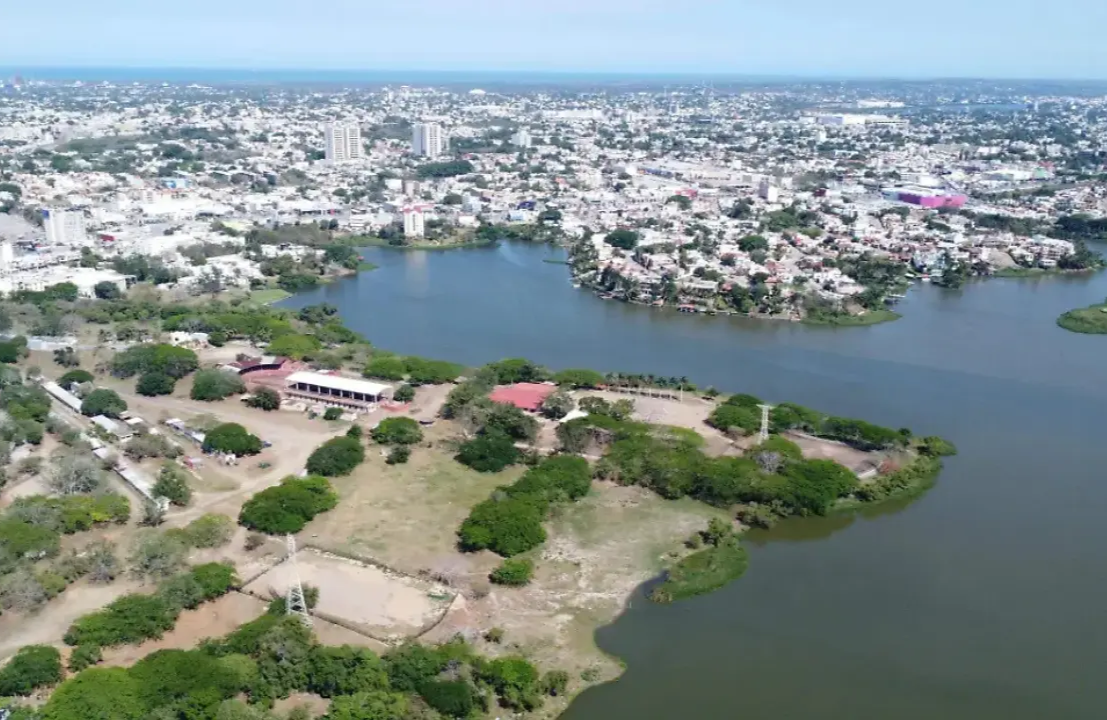

Recent rainfall across northern Mexico has begun to boost water levels at the country’s major international reservoirs that supply Tamaulipas. According to the latest report from Mexico’s National Water Commission (Conagua), both Falcon Dam and Amistad Dam increased their storage levels between May and July 2026. The recovery has raised positive expectations for the upcoming agricultural season while ensuring a stable water supply for domestic use.

Although both reservoirs remain below their optimal capacity, the increase in storage represents a significant relief after months of drought and critically low water levels that affected the border region.
Recent Rainfall Begins to Refill Major Reservoirs.
How Much Did Water Levels Increase?
According to Conagua’s report dated July 18, 2026, Falcon Dam reached 11.2% of its total storage capacity. Just two months earlier, on May 18, it stood at only 4.8%, meaning the reservoir more than doubled its storage thanks to the accumulated rainfall during recent weeks.
The recovery was also evident at Amistad Dam, where storage increased from 4.6% in May to 6.2% in July. Although the gain was more modest, it confirms a positive trend driven by rainfall throughout the Rio Grande (Río Bravo) basin.

In addition to these two international reservoirs, other dams across Tamaulipas also showed improved storage levels, according to the federal agency’s report.
What Impact Will This Have on Agriculture in Tamaulipas?
Agricultural producers believe the recovery of the reservoirs is an encouraging sign for the upcoming growing season, particularly for farmers who rely on stored water to irrigate their crops.
The additional water could support irrigation scheduling across northern Tamaulipas, where water availability is essential for producing sorghum, corn, and other economically important crops.
However, specialists caution that efficient water management will remain necessary, as reservoir levels are still low compared to their full storage capacity.
Is the Water Supply for Residents Guaranteed?
Regarding urban water supplies, the outlook remains stable. According to the information released, the water currently stored in the international reservoirs is sufficient to meet the drinking water needs of the 10 municipalities in northern Tamaulipas that depend on this hydraulic system.
Although the recovery does not fully eliminate the effects of the prolonged drought experienced over recent years, authorities consider the recent rainfall an important step toward improving water availability and reducing pressure on the region’s water storage system.
Conagua will continue monitoring reservoir conditions throughout the rainy season, as additional inflows during the coming weeks will play a crucial role in strengthening the recovery of these reservoirs and improving long-term prospects for both water supply and agricultural production.

Source: posta