
The intelligence agencies of the United States government have a “mapping” of huachicol activity in Mexico. This includes states where there are facilities belonging to the state-owned oil company Petróleos Mexicanos (Pemex), as well as the pipeline network most affected by organized crime.
They have testimonies and evidence involving politicians, public figures, and police chiefs at all three levels of government. For years, all of them allegedly participated in the business and consolidated criminal organizations and mafia cartels.
The reports highlight names of leaders, operating points, infrastructure, storage centers and locations, operators by locality, region, city, ports, authorities involved, collaborators, buyers, and distribution systems for illicit fuel.
Through the exchange of information with Mexico —the Financial Intelligence Unit and the National Banking and Securities Commission— they have account numbers, CLABEs, and cards into which deposits are made or from which transfers involving significant amounts of money are carried out.
Grupo Sol Corporativo learned that a critical area is the region bordering Veracruz and Tabasco, which has allegedly been abandoned by authorities, either through omission or through direct participation in the huachicol business.
In this area, groups formed by Gabriel Eduardo González Alejandro, “El Gabo,” allegedly operate with complete freedom. He also delegated responsibilities to two principal operators identified as “El Chicles” and “El Junior.”
It is established that, by locality or municipality, there are bands and gangs (suppliers) that guarantee that illicit fuel is always available for sale to the public, productive sectors, or companies.
In La Tinaja, Veracruz, forces associated with Guillermo Lerma and Ever García Ortíz were identified, while in Cárdenas, Tabasco, Alberto and/or Gilberto Samaria, “Hammer,” were identified.
The information is so precise that financial routes were established and bank accounts were identified, including one reportedly linked to Alberto Carbajal Morales and/or Alberto Morales Castro, “El Beto,” a leader of cells involved in the sale of hydrocarbons.
The “huachicoleros,” in addition to having warehouses and open-air storage sites in mountainous areas to avoid risks, store stolen fuel at mobile locations.
In other words, tanker trucks and tankers with capacities of 80,000 and 60,000 liters are used. Among other operators, Oscar Puente, Eric Cornejo, Alfredo Pérez, Eric García, Jaime Castillejas, Max Bartolo, Rosalio Colorado, Mario Quintero, and Samuel Muñoz were identified.
The business would not be possible without the complicity of public servants from the state-owned company, and from there N “Miranda,” in charge of the Macropera; Óscar Astudillo; Alberto “N”; and Gaspar “N,” who is responsible for loading and preparing documentation with other accomplices, were identified.
On the highway network, the heads of criminal cells allegedly reached agreements with members of the National Guard (GN), including Eder García Espinoza, an officer assigned to Acayucan, responsible for vehicle 19311.
“N” Mata Capitán, a National Guard Sub-Inspector also in Acayucan, appears to be involved and is said to have contact with civilian authorities in both states.
In other words, just as former Secretary of Security and Citizen Protection Hernán Bermúdez Requena was identified as an alleged accomplice of operators of “La Barredora,” a cell of the Jalisco New Generation Cartel, members of the National Guard have also allegedly been discovered protecting “huachicoleros.”
The network identified Víctor Carvajal Zurita and another person known by the nickname “Kike,” who were responsible for managing resources and contacting “clients” who purchase the fuel.
Such individuals include those known as “Calsontzin,” “Samaria,” Samuel Muñoz, Fausto, and “HN1.”
Unlike Mexico, in the United States, information is cross-referenced to determine whether the allegations made against former Tabasco Governor Adán Augusto López Hernández, regarding alleged protection of “huachicoleros,” have a factual basis.
It should be remembered that on August 16, 2022, Gabriel Eduardo González Alejandro, “Gabo,” allegedly told Víctor, who was responsible for obtaining tanker trucks, that he would continue loading with Alberto “Hammer,” because of the contacts he had with the SEIDO.
He even boasted of having relationships with former Tabasco Governor Adán Augusto López Hernández, now a senator of the Republic, whom he called “uncle.”
On that occasion, “Gabo” stated that Adán Augusto would intervene on behalf of the criminals with the National Guard and SEIDO in the event of problems.
The reports held by both Mexico and the United States clearly describe alleged corruption and networks involving criminals, Pemex personnel, National Guard officers, police officers, and possible political operators.
They also establish quantities and volumes of fuel extracted, stolen, transported, and sold. It should be remembered that the United States government has hundreds of informants and collaborators who, in recent years, have cooperated in exchange for procedural benefits and have provided valuable information.
Based on these statements, there is a long list of possible huachicol sites, including locations along the Villahermosa–Coatzacoalcos Highway, near the Íride Separation Battery, along the Villahermosa–Chetumal Highway, and in areas near Chichonal, Belén, Los Naranjos, Río Seco, and Montaña.
The exact coordinates and banking information contained in the original report have been omitted here because they constitute highly sensitive financial information and precise location data.
The illicit extraction of hydrocarbons currently remains at its highest levels in these two states of the Mexican Republic. In Tabasco alone, more than 16.8 million liters of huachicol were seized in 2025.
The municipalities most affected are Cárdenas, Comalcalco, Cunduacán, and Centro, all of which are part of the metropolitan area surrounding the state capital. All of them would receive fuel from the Cactus petrochemical complex, in Reforma, Chiapas, with a final destination in Dos Bocas, Paraíso.
The Secretary of Security and Citizen Protection (SSPC), Omar García Harfuch, is aware of the events and maintains information-sharing cooperation with the United States.
Officially, the Mexican government acknowledges that during the last 13 operations in Tabasco, carried out between January 30 and July 1, 2025, a total of 6,879,450 liters of huachicol were seized.
Unofficially, it is estimated that the actual amount of fuel stolen in Tabasco could reach 15 million liters of fuel during the first part of 2025 alone.
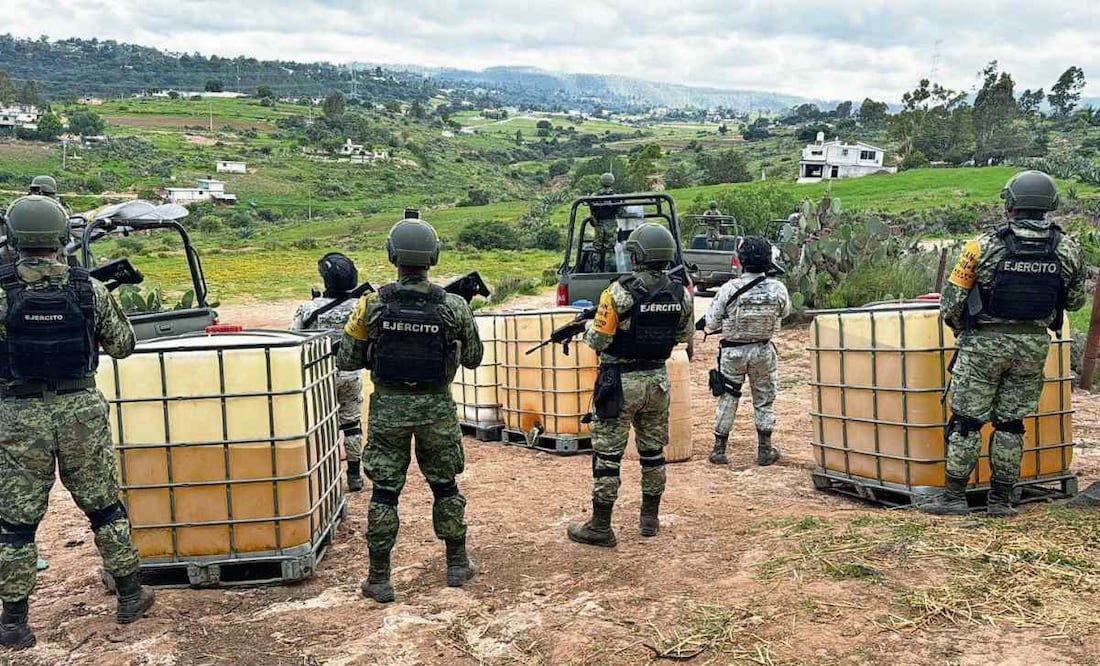
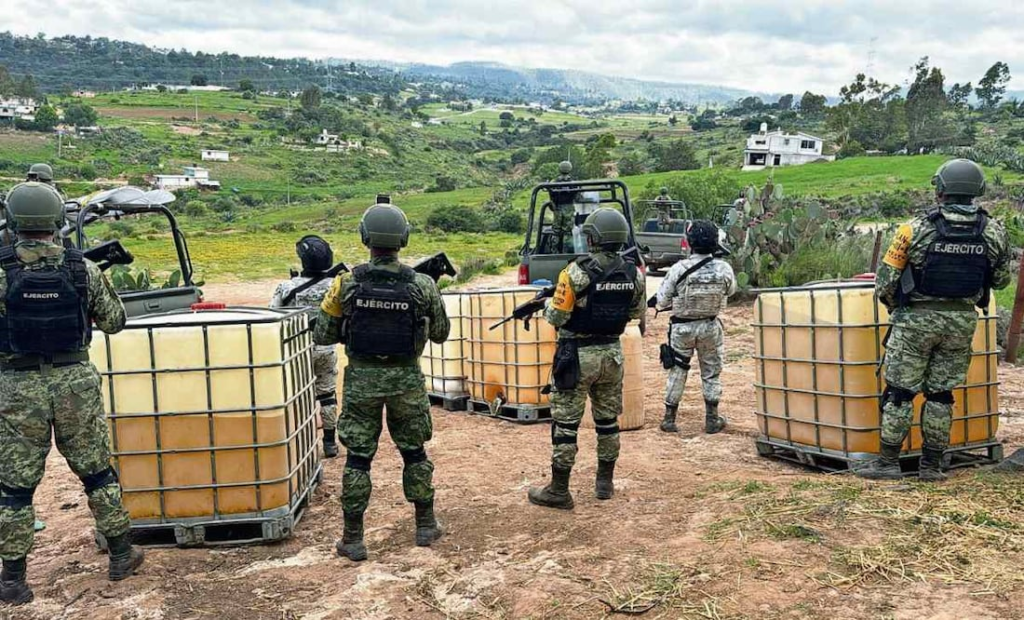
This year, in Tabasco, seven people have been arrested in connection with fuel theft, while authorities have seized 3,904 containers, 27 pickup trucks, two motor pumps, five tankers, three tanker trucks, 24 tractor-trailers, one power generator, and 13 properties in four municipalities in the metropolitan area surrounding Villahermosa.
Source: laopiniondemexico